Does a Pool Add Value to a Home? What to Expect in 2026
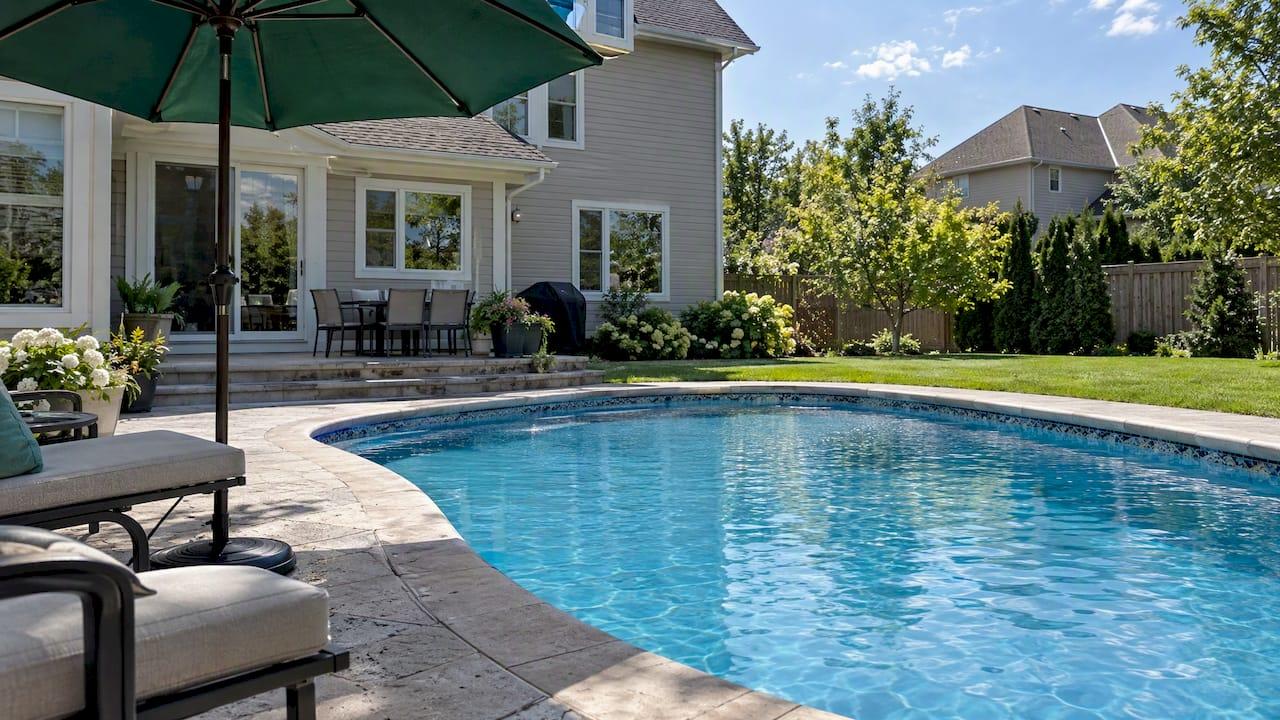
Sometimes, but less than it costs. Nationally, an inground pool typically adds 5% to 8% to a home’s value. That is a dollar range of roughly $11,000 to $90,000+, depending on the home’s price, the climate, what neighbors have and the pool’s condition. The same source puts the return on installation cost at 40% to 60%. Few owners get their money back at resale, and the pool’s real payoff is often the years of use before that.
This guide explains why the numbers vary so much, how appraisers see a pool differently from buyers, and how to decide whether yours is worth building or keeping.
TL;DR
- An inground pool typically adds 5% to 8% to a home’s value nationally, and the installation cost is rarely recovered in full (ROI of about 40% to 60%).
- Climate is the biggest variable: warm Sun Belt markets can see 10% to 15% or more, while short-season cold markets often see a flat or negative effect.
- Above-ground pools usually add nothing to the appraised value. Inground and semi-inground pools are the ones that count.
- A well-kept pool with current safety features helps. A worn, neglected one can hurt the sale.
- Price your own yard before deciding: dimensions, access and local labor change the cost far more than national averages suggest.
Table of Contents
- The short answer: it adds some value, not all of the cost
- Appraised value and sale price are not the same thing
- Why climate and neighborhood decide the outcome
- Pool type: which kinds count
- Polarizing by nature: some buyers walk away
- Condition matters as much as the pool itself
- Perspective: price the pool on your own lot first
- How to decide: a short checklist
- Map your pool and see a local range
- Is a pool worth it if you are selling soon?
- Can you deduct a pool on your taxes?
- FAQ
- Sources
The short answer: it adds some value, not all of the cost
Two numbers matter, and they are easy to mix up. One is what the pool costs you. The other is what it adds to the price a buyer pays.
In-ground installation can run from $50,000 to $100,000+, and the same source puts the return at 40% to 60%. Take a $60,000 pool as an example. At that rate it adds about $24,000 to $36,000 to the home’s value, not $60,000. The Opendoor analysis uses that exact example and reaches the same conclusion.

So if your only goal is resale profit, a pool is rarely the best use of that money. If you also want to swim, host and enjoy the yard for years, the picture changes. Part of what you pay for is use, not equity.
Appraised value and sale price are not the same thing
This is the point most articles skip. Licensed appraisers often use a cost approach for a pool. They start with the installation cost, then subtract depreciation. That usually gives an added value well below the construction cost.
The sale price follows a different logic. It depends on how many buyers in your neighborhood want a pool at that moment. In a street where every other yard has one, a buyer may pay more than the appraiser credits. In a street with few pools, the premium may be smaller than the appraisal, or absent.
Two practical consequences:
- If you are refinancing, expect the appraisal to credit the pool conservatively.
- If you are selling, ask a local agent for recent sales of comparable homes with and without pools, in your own neighborhood. That comparison beats any national percentage.
Why climate and neighborhood decide the outcome
Opendoor reports that in Sun Belt markets, premiums can reach 10% to 15% or more. In cold-climate markets with short swimming seasons, the lift is often flat or negative. That spread explains why one homeowner says a pool paid off and another says it was a mistake.
There is a second effect in hot markets. In many Sun Belt neighborhoods a pool is standard equipment. It is already built into local prices. There, having a pool keeps your home competitive, and not having one can count against you. That is a different thing from a pool adding value on top.
The New York Times piece also notes that not everyone wants a pool, especially where summers are short and the weather is unreliable. If you live in the Mountain West, think about your own stretch of the map. A house in St. George, where summers are long and hot, faces different buyer expectations than one in a higher-elevation Idaho town. Local sales data will tell you which describes your block. For a view of how weather shapes what buyers value in a property, see how climate affects property features in a Southern California market.
The pandemic premium has cooled
Pool prices jumped in 2021 and 2022. Realtor.com’s research shows that those premiums have receded since. Pools still help a listing stand out and can shorten time on market. But they are no longer the extreme value-add they briefly were, so a seller who prices on 2021 stories may overshoot.
Pool type: which kinds count
| Pool type | Typical effect on appraised value | Notes |
|---|---|---|
| Inground (concrete, fiberglass, vinyl liner) | Counts as a real-property improvement; 5% to 8% nationally | Strongest case for added value |
| Semi-inground | Often counts | Treated closer to inground |
| Above-ground | Often $0 | Generally classed as personal property |
Experts cited by Opendoor say inground pools are the only type that consistently contributes, and that above-ground pools often add nothing to the appraisal. They can also shrink your pool of buyers. If you want an above-ground pool for the family, build it for the summers, not the sale.
Polarizing by nature: some buyers walk away
Real estate expert Jonathan J. Miller told the New York Times that a pool divides buyers. Some love the lifestyle. Others see a safety liability and a money pit. That is why the value is tied to who the buyer is, not just to a formula.
The objections come down to a few things:
- Upkeep. Annual maintenance averages $1,200 to $1,800 in one estimate. The National Association of Realtors cites $1,000 to $4,000 a year, with many owners mixing professional help and DIY.
- Safety and liability. Families with small children often rule out a pool.
- Yard space. A pool takes much of a lot that could otherwise be a lawn, a patio or a sport court.
Condition matters as much as the pool itself
A clean pool with current safety features adds value. A neglected or aging one can subtract it and cause insurance and inspection problems. Buyers inspect the surfaces, the equipment and the barrier.
Safety barriers
Barrier rules vary by jurisdiction. As an example, one county’s published pool rules call for barriers at least 48 inches high, with self-closing, self-latching gates and gaps that stop a 4-inch sphere. Some places require 60 inches. Check your own city or county. A missing latch can stall a sale.

Surfaces and equipment
Tile, coping and decking show wear first, and they are what buyers see. Regular care of the waterline and hard surfaces protects the look of the pool, and guidance on pool tile maintenance and value explains how neglect adds up.
Equipment is the other lever. NAR notes that upgrades such as a variable speed pump, which can cut pump energy use by 50% to 75%, plus automated and energy-efficient systems, appeal to modern buyers. The U.S. Department of Energy says pool pumps can use 3,000 to over 5,000 kWh a year, so the savings are real. For an existing pool, these upgrades often return more per dollar than the pool itself did.
Perspective: price the pool on your own lot first
We built our tools around one frustration: generic numbers. A national percentage tells you nothing about your slope, your access for an excavator or your local labor rates. The same pool can cost very different amounts on two lots in the same county.
Our advice is to do it in this order. Draw the pool on your actual property. Get a range that reflects your dimensions and local costs. Then compare that cost to what the pool is likely to add in your neighborhood, using the 40% to 60% ROI range as a sanity check. If the gap is large and you would use the pool every summer, that can still be a good decision. If you are building mainly to sell, the math is tougher, and a smaller project may do more for your return.
We also see how much layout matters. Orientation, slope and where the equipment sits all change cost and enjoyment. Our guides on pool orientation and building a pool on a sloped yard go through both.
— Christian
How to decide: a short checklist
- Check the neighborhood. Look at recent sales of similar homes with and without pools within a mile or so. Ask a local agent for the price difference.
- Check the season. Count the months you would realistically swim. Fewer months means a smaller premium and fewer buyers who care.
- Get the full cost. Include excavation, equipment, safety barrier, decking, permits and landscaping. Our inground pool cost guide and pool cost breakdown show what goes into a price.
- Add the running costs. Maintenance, energy, insurance and water. Use the ranges above as a start.
- Confirm permits. Rules differ by city and county, and we explain the usual steps in what permits a pool needs.
- Decide how you will pay. Financing adds interest to the real cost. See pool financing options.
- Plan the build. Our pool construction planning guide walks through the sequence.
Map your pool and see a local range
If you are weighing a pool, the useful next step is to see what it would cost on your own lot. With our Pool Estimator you can draw the pool on a satellite view of your property, adjust its size and position, and get a locally adjusted planning range with no account required. When you are ready, you can send the same drawing and measurements to contractors as a quote request, so they bid on the same scope.
Is a pool worth it if you are selling soon?
Usually not as a pure resale move. If you will list within a few years, the 40% to 60% return means you would likely lose money on the project itself. A pool already in place is a different matter: keep it clean, keep the safety features current and consider an efficiency upgrade before listing.
If you will stay for many years, the calculation shifts toward use. You spread the cost across summers of enjoyment, and the resale effect becomes a bonus or a minor drag rather than the main point.
Can you deduct a pool on your taxes?
Generally no. Under IRS Publication 502 for 2025, a pool is not deductible as a medical expense even when a doctor recommends it, unless it is specifically for treating a diagnosed physical condition and does not increase the home’s value. If it does add value, only the part of the cost above that added value can qualify. Medical expenses are deductible only above 7.5% of your adjusted gross income. If you think your situation might qualify, talk to a tax professional before you build.
FAQ
Do pools increase home value?
Yes, usually by about 5% to 8% for an inground pool, though the range depends on the market. In warm areas the lift can be higher, and in cold areas it can be flat or negative. The pool rarely adds as much as it cost to build.
Does an above-ground pool add value?
Usually not. Appraisers generally treat above-ground pools as personal property rather than a real-property improvement, so they often add $0 to the appraisal. They can also narrow your buyer pool.
Does a pool make a house harder to sell?
It can, depending on the buyer. A pool appeals strongly to some buyers and puts others off because of upkeep and safety concerns. In markets where pools are common it can help a home sell faster, while in short-summer areas it can limit interest.
What is the best way to protect a pool’s resale value?
Keep it clean, keep the barrier and gate hardware up to code and keep the surfaces in good shape. Efficient equipment, such as a variable speed pump, also helps. Keep records of maintenance so buyers see a pool that is looked after.
Sources
- Does a Pool Add Value to Your Home? What the Data Actually Shows (Opendoor)
- Does a Pool Increase Home Value? (Redfin)
- Will a Pool Help or Hurt Your Property Value? (The New York Times)
- Swimming Pools in the Housing Market (Realtor.com Economic Research)
- Buying a Home With a Pool (National Association of Realtors)
- Swimming pool barrier requirements (Henrico County)
- Replacing Single-Speed Pool Pumps with Variable Speed Pumps (U.S. Department of Energy)
- Publication 502 (2025), Medical and Dental Expenses (IRS)