Match Swim Hours First: Map Pool Orientation and Costs for Homeowners
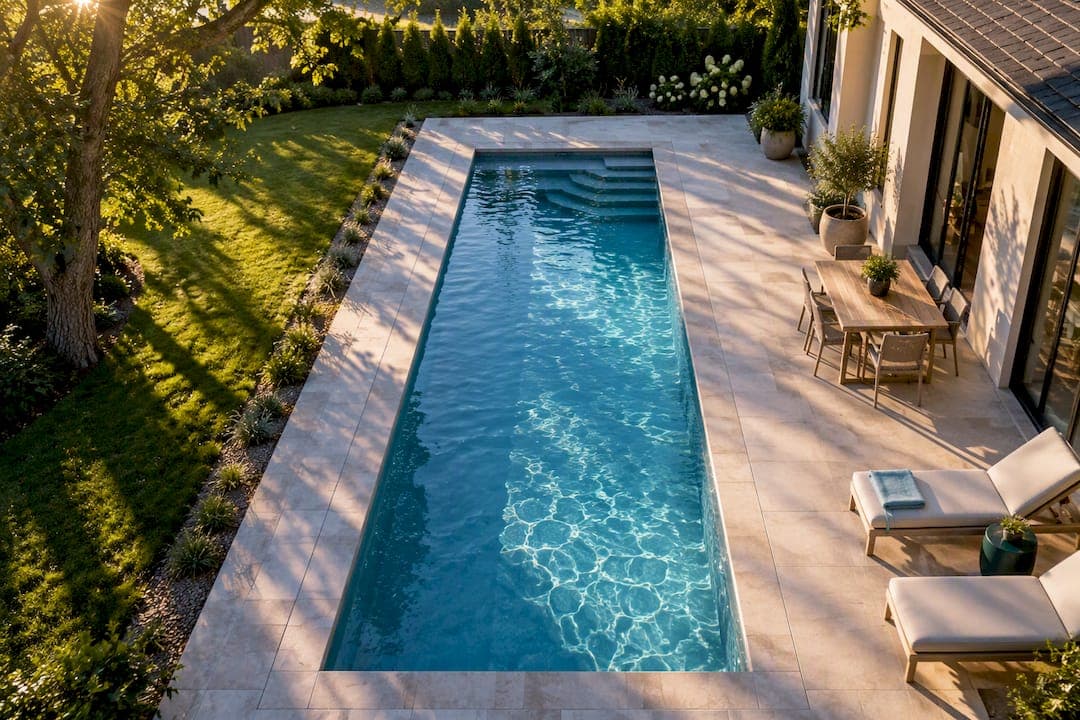
For most yards, a north-south long axis gives the most balanced sunlight across the day, and a south-facing layout suits homeowners who want maximum sun and warmth. That said, your house, mature trees, and the hours you actually plan to swim can override any general rule. So treat this as a starting point, not a final answer.
TL;DR:
- A north-south pool orientation typically offers the most even sun exposure but may need adjustments based on trees, house shadows, and swim timing.
- Solar pool heating systems sized at 50% to 100% of the pool surface area can mitigate orientation concerns and extend swimming seasons.
- Maintain a distance of about 4 to 5 meters from the house to balance accessibility with creating usable outdoor space, while ensuring easy sightlines for supervision.
- Prioritize your actual swimming hours and shadow patterns over theoretical maximum sun exposure when choosing pool placement.
- Using site-specific tools like aerial mapping and cost Estimators ensures your pool layout matches your property, budget, and sunlight needs before digging.
Table of Contents
- Sun Path and Pool Orientation Basics
- Orienting the Pool Around the House and Access
- Matching Orientation to When You Actually Swim
- How Trees and Landscaping Can Undo Good Orientation
- A Checklist for Finalizing Your Pool’s Orientation
- Turning Orientation Choices Into a Site-Specific Plan
- What Most Homeowners Get Wrong About Pool Orientation
- Get a Site-Specific Plan Before You Dig
- Where to Learn More About Solar Sizing and Siting
- Sources
- FAQ
Sun Path and Pool Orientation Basics
The sun rises in the east and sets in the west, and that arc determines which side of a pool gets hit hardest at any given hour. A pool built with its long axis running north to south tends to get sun on both long sides through the day, since the sun crosses overhead rather than beaming from one fixed direction for hours at a stretch. An east-west long axis, by contrast, often leaves one long side shaded for extended periods depending on nearby fences, trees, or the house itself.

Orientation also affects how much a pool warms on its own. A pool that captures long, direct sun exposure stays warmer without mechanical help, which can cut down on heater use in the right climate. That is where solar pool heating comes in: these systems typically use unglazed flat-plate collectors sized at roughly 50% to 100% of the pool’s surface area, with larger collector arrays stretching the usable swim season further into spring and fall.
A few practical takeaways:
- North-south orientation spreads sunlight more evenly across both long sides of the pool.
- East-west orientation can concentrate shade on one side for hours at a time.
- Solar collectors reduce how much orientation matters, since they add heat regardless of the pool’s angle to the sun.
Solar collector sizing: Systems in warm, year-round swimming climates are often sized near 100% of the pool’s surface area, while seasonal-use pools may only need 60% to 70% coverage.
Orienting the Pool Around the House and Access
Sun matters, but so does how the pool connects to the rest of your property. Sightlines from the kitchen or living room let parents keep an eye on kids in the water without stepping outside, and that visibility should factor into where the pool sits relative to the house.
Distance from the house matters just as much as angle. Designers commonly recommend keeping the pool around 4 to 5 meters from the house, close enough for convenient access but far enough to create a usable terrace or lounging area in between. Too close, and you lose that transition space. Too far, and the pool feels disconnected from the home, which makes everyday use less likely.
That in-between zone is also where outdoor kitchens, sliding doors, and foot traffic patterns come into play:
- Position the pool so sliding doors or patio exits lead directly to it, not around obstacles.
- Keep outdoor kitchens or dining areas within easy reach of both the house and the pool deck.
- Avoid routing daily foot traffic through tight side yards to reach the water.
Matching Orientation to When You Actually Swim
Morning sun from the east warms a pool gently and tends to suit people who swim laps before work or want a cooler, calmer start to the day. Afternoon sun from the west runs hotter and brighter, which fits families who use the pool after school or work but can also mean glare and intense heat during peak hours.
Winter sun sits much lower in the sky than summer sun, which shrinks the window of usable direct light and shifts shadows further across the yard. A spot that gets full sun in July might sit in shade for most of the day in January, so year-round usability depends on checking both extremes, not just peak summer.
A simple way to nail this down before committing to a layout:
- Mark your preferred swim hours, whether that is early morning, midafternoon, or evening.
- Stand at the proposed pool location during those hours on a few different days and note where shadows fall.
- Repeat the check in both summer and winter if the pool will be used year-round.
- Compare notes against neighboring structures and trees that might block low winter sun.
Pro Tip: Take phone photos of the same spot at the same time across a few weeks. Shadows shift faster than most people expect, and photos make the pattern obvious.
How Trees and Landscaping Can Undo Good Orientation
A well-oriented pool can still end up shaded and covered in debris if nearby trees are not chosen or placed carefully. Large deciduous trees drop leaves that clog filters and skimmers, and some species send roots far enough to threaten a pool shell or deck if planted too close.

Shade from trees also shifts with the seasons in ways that can either help or hurt. A deciduous tree that shades the pool deck in summer will drop its leaves and let winter sun through, which can be an asset rather than a problem if placed on the west side where afternoon heat gets intense.
A few landscaping guidelines worth following:
- Set back trees far enough that root systems cannot reach the pool shell or plumbing lines.
- Favor low-litter species near the water instead of trees that shed heavily each fall.
- Use screening or hedges for privacy on sides that do not block your key sun corridors.
- Consider working with a landscaping professional when choosing species and placement near a pool.
A Checklist for Finalizing Your Pool’s Orientation
Before locking in a layout, walk the site with a specific list in mind rather than relying on guesswork.
- Measure sun exposure at your actual target swim hours, not just at noon.
- Map shadows cast by your house, fences, and any neighboring structures.
- Note utility lines, easements, and required setbacks that might restrict placement.
- Check drainage patterns so runoff does not pool near the shell or deck.
- Confirm sightlines from main living areas for supervision and everyday visibility.
- Walk the proposed access route from the house to the pool for convenience.
- Consider wind exposure, since open, windy sites cool water faster and stress covers.
- Factor in maintenance implications like debris load and cleaning access.
- Verify permit requirements and setback rules with your local building department.
When talking to a designer, ask directly: how many hours of usable sun will this exact spot get in the month I swim most, and what would change if we shifted the layout by a few feet? In tighter yards, designers often prioritize sightlines and access over maximizing sun hours, and partial shade during peak afternoon heat is sometimes the more comfortable choice anyway.
Pro Tip: If your yard forces a trade-off, prioritize the hours you will actually swim over theoretical maximum sun exposure. A pool that is comfortable at 5 p.m. beats one that is technically sunnier at 1 p.m. when nobody is home.
Turning Orientation Choices Into a Site-Specific Plan
Once you have a general orientation in mind, the next step is testing it against your actual property lines, house footprint, and local costs. Aerial mapping tools let you draw a proposed pool directly onto satellite imagery of your yard, so you can compare a north-south layout against an east-west one without guessing at distances.
The Pool Estimator from Property Improvement Estimator works this way: you sketch the pool’s shape, size, and orientation on your own property map, and it generates a site-specific cost range based on local pricing rather than a generic estimate. That drawing, along with dimensions and notes, becomes the starting point for a contractor-ready packet, so whoever bids the job sees exactly what is planned instead of reconstructing it from a phone call.
What Most Homeowners Get Wrong About Pool Orientation
Most orientation advice treats sun exposure as the deciding factor, but the bigger mistake is ignoring when you actually swim. A textbook north-south layout means little if it puts the pool in shade during the two hours a day your family is home to use it. Rank your priorities as use pattern first, sun exposure second, and maintenance considerations third, and the right orientation usually becomes obvious.
— Christian
Get a Site-Specific Plan Before You Dig
Reading about orientation only gets you so far. The real test is seeing how a north-south or south-facing layout actually fits your lot, your house, and your budget.

The Pool Estimator lets you draw your proposed pool directly on a map of your property, adjust the orientation, and see how that choice affects cost before you ever talk to a contractor.
- Draw the pool’s exact shape, size, and orientation on aerial imagery of your yard.
- Get a site-specific cost range based on local pricing, not a generic average.
- Hand contractors a packet with drawings, measurements, and options already spelled out.
Try the Pool Estimator now to test your orientation and request quotes from local contractors.
Where to Learn More About Solar Sizing and Siting
For deeper technical detail, consult the DOE solar heating chapter and siting guidance from Parrot Bay Pools & Spas.
Sources
- U.S. Department of Energy — Solar Water Heating and Solar Pool Heating (technical booklet)
- U.S. DOE/EERE — Chapter on Solar Heating (Solar Heating and Cooling Resource)
- Godo Pools — How to orient the pool?
- Parrot Bay Pools & Spas — Pool placement impacts privacy, sun exposure & long-term enjoyment
FAQ
What is the best orientation for a pool?
A north-south long axis generally gives the most balanced sun exposure across both sides of the pool through the day. Homeowners who want maximum warmth often prefer a south-facing layout instead, though house shadows and trees can shift the ideal choice on any given lot.
What direction should pool returns face?
Pool return placement depends on circulation and filtration design more than compass direction, and there is no single standard direction that applies to every pool. A pool designer typically positions returns based on the pump and skimmer layout for that specific shape and size.
What is water orientation in swimming?
This term is not a standard industry phrase, and definitions vary depending on the source. In most contexts discussing pools, orientation refers to the compass direction of the pool’s long axis relative to the sun, not a swimming technique term.
What are the 5 rules in a swimming pool?
There is no single, universally recognized “5 rules” standard for swimming pool orientation or design; conventions vary by pool builder and jurisdiction. Homeowners are better served checking sun exposure, distance from the house, access, drainage, and local permit requirements as the core siting factors covered in this guide.