Save 20–60% Water: Idaho Xeriscaping by Region With a Mapping Tool
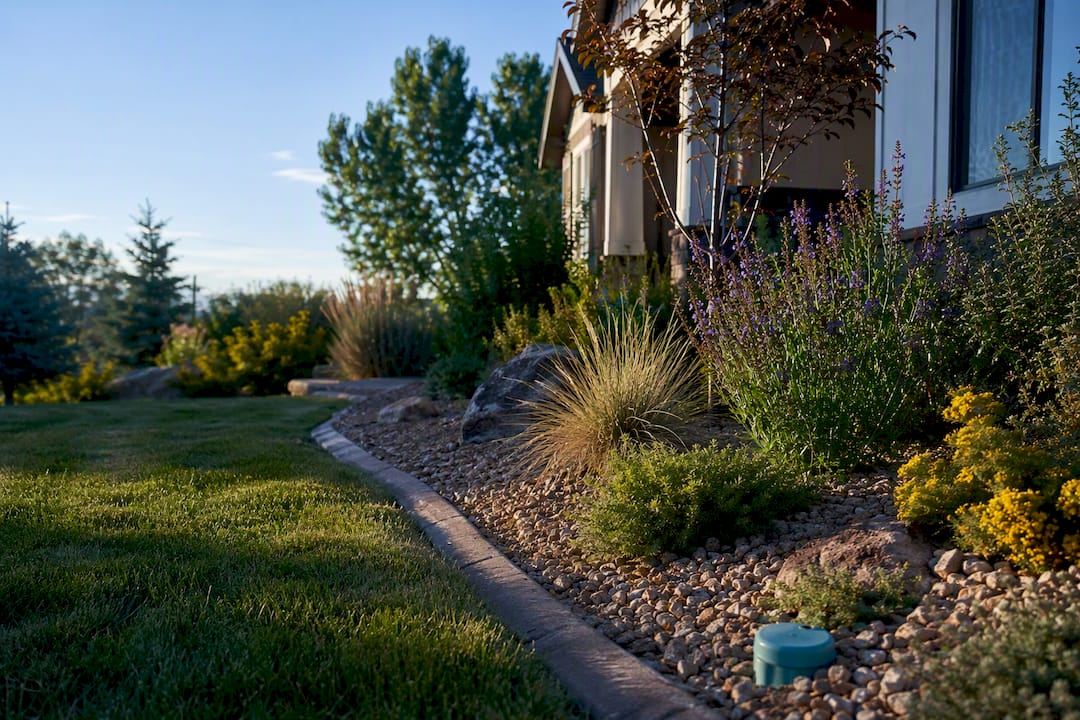
Yes, xeriscaping works for most Idaho yards, and it works well when you match plants and irrigation to your specific site. Homeowners who convert even part of their lawn typically cut outdoor water use by roughly twenty to sixty percent, depending on their specific circumstances. The exact number depends on your soil, elevation, and how much turf you actually remove, so start with one bed, watch how it performs through a season, then expand from there.
TL;DR:
- Most Idaho yards can significantly reduce water use by converting parts of their lawn, especially through full-yard overhauls with drought-tolerant plants and drip irrigation.
- Prioritizing soil amendments, zone-specific plant choices, and efficient irrigation retrofits can lower water consumption by 50 to 60 percent if properly implemented.
- Native plant selection tailored to Idaho’s different climate zones supports water savings, pollinators, and resilience, while avoiding invasive species like purple loosestrife.
- Starting with a small pilot bed and using mapping tools for accurate budgeting improves project success and keeps costs aligned with actual site needs.
- Regular maintenance such as pruning, weed control, and irrigation checks remains essential, particularly during establishment, to ensure long-term xeriscaping effectiveness.
Table of Contents
- What Xeriscaping Idaho Really Means
- How Much Water Does Xeriscaping Actually Save in Idaho?
- Best Plants for Xeriscaping in Idaho by Region
- Retrofitting Soil, Mulch, and Irrigation
- Reducing Your Lawn Without Losing Your Yard
- Maintenance, Trade-Offs, and Fire Safety
- Planning a Xeriscape Conversion with a Mapped Estimator
- Managing Pests and Disease in a Xeric Idaho Garden
- Start Small, Watch a Season, Then Scale
- Plan Your Xeriscape Budget Before You Dig
- Where to Learn More Locally
- Sources
- FAQ
What Xeriscaping Idaho Really Means
Xeriscaping is not the same as “zeroscaping,” a rock-and-gravel yard with no plants. It is a design approach built around seven principles: planning around your site, grouping plants by water need (hydrozoning), improving soil, choosing low-water plants, using efficient irrigation, minimizing turf, and doing regular maintenance. In Idaho’s dry, high-desert climate, that last principle matters more than most guides admit. Xeriscaped yards still need weeding, pruning, and irrigation checks. The Idaho Botanical Garden proves the point with its dry garden, which is full of color and texture rather than bare gravel.
The seven principles adapted for Idaho conditions:
- Planning and design: map sun, slope, and soil before buying a single plant.
- Hydrozoning: group thirsty plants together and drought-tolerant ones separately.
- Soil improvement: amend clay-heavy Treasure Valley soil with compost before planting.
- Practical turf areas: keep grass only where you use it, not as filler.
- Efficient irrigation: drip lines for beds, matched-precipitation heads for remaining turf.
- Mulch: two to three inches of organic mulch to hold moisture and block weeds.
- Maintenance: seasonal upkeep instead of weekly mowing.
How Much Water Does Xeriscaping Actually Save in Idaho?
Outdoor watering, mostly lawn irrigation, is the single biggest water draw at most Idaho homes during summer. Turf grass demands frequent, deep watering to stay green through July and August heat, which is exactly why it dominates residential water bills.
Converting even a portion of your lawn can cut outdoor water use by 20 to 60 percent, according to Lawn Care Kuna’s analysis of Treasure Valley xeriscaping. Modest conversions, like swapping a side strip or parking area, land closer to 30 to 40 percent. Full-yard overhauls with drought-tolerant plants and drip irrigation can reach 50 to 60 percent.
Before you start, check what’s available locally:
- Municipal water providers sometimes offer rebates for turf removal or irrigation upgrades.
- Some cities provide free water audits to identify leaks and overwatering.
- City of Nampa’s water-wise landscape guidelines include approved plant lists and irrigation standards worth reviewing even if you live elsewhere in the valley.
Best Plants for Xeriscaping in Idaho by Region
Plant choice depends heavily on where you live. Boise sits in a different climate zone than Coeur d’Alene, and a plant that thrives in the Treasure Valley might struggle at 5,000 feet near Sun Valley.
Treasure Valley and southern Idaho (hot summers, alkaline soil):
- Blue flax, penstemon, and rabbitbrush for color and pollinator support
- Blue grama and Indian ricegrass for a xeric lawn alternative
- Western sandcherry and rockspray cotoneaster as low shrubs
- Honeylocust or Idaho’s native netleaf hackberry for shade trees
Northern and cooler Idaho zones (more rainfall, shorter dry season):
- Oregon grape and serviceberry for structure and wildlife value
- Kinnikinnick as a shade-tolerant groundcover
- Ponderosa pine where space allows for a mature canopy
High-elevation and short-season areas:
- Blanket flower and yarrow, both tough enough for late frosts
- Basin wild rye for texture without heavy watering
- Rocky Mountain juniper for year-round structure
Native species are worth prioritizing everywhere in the state. Plants adapted to southwest Idaho’s growing conditions need less supplemental water and support far more pollinators than nonnative ornamentals. Skip purple loosestrife, Scotch broom, and yellow flag iris entirely. All three are considered invasive or noxious in parts of Idaho and can spread well beyond where you planted them.
Pro Tip: Buy three of a plant you’re unsure about and try it in a low-visibility spot for one season before committing to a full bed. Idaho’s swings between hard freeze and summer heat kill more new plantings than drought does.
Retrofitting Soil, Mulch, and Irrigation
Most Idaho xeriscape failures trace back to skipped soil prep or lazy irrigation retrofits, not bad plant choices. Fix those two things first.
- Test and amend soil. Clay-heavy soil common in the Treasure Valley needs compost worked in six to eight inches deep to improve drainage. Sandy soil in parts of southern Idaho needs organic matter to hold moisture longer.
- Mulch at the right depth. Two to three inches of bark or wood chips works for most beds. Keep mulch at least six inches away from siding and foundations, since Idaho’s wildfire risk makes flammable material near structures a real hazard.
- Convert irrigation zone by zone. Swap sprinkler heads feeding beds for drip lines, and replace old spray heads on remaining turf with matched-precipitation heads so water lands evenly instead of pooling in spots.
- Add a smart controller. Weather-based controllers and simple moisture sensors reduce unnecessary watering by adjusting automatically instead of running on a fixed timer, a change that cuts waste more than almost any other single retrofit.
- Program cycle-and-soak schedules. Shorter, repeated watering cycles let water absorb into Idaho’s often-compacted soil instead of running off.
Pro Tip: A retrofit that keeps your existing controller but switches it to weather-based programming, paired with drip lines on select beds, usually delivers strong savings without the cost of replacing the whole irrigation system.
Reducing Your Lawn Without Losing Your Yard
You don’t have to rip out every blade of grass. Local water-wise practitioners recommend a hybrid approach: keep turf where people actually use it, and convert the rest.
- Smothering (sheet mulching): layer cardboard and mulch over unwanted turf; slow, cheap, but takes a full season to clear the area.
- Mechanical removal (sod cutting): fast and ready to plant immediately, but costs more in labor and disposal fees.
- Solarization: clear plastic traps heat to kill grass in a few weeks during summer; works well but only during hot months.
A phased plan reduces financial risk. Start with a pilot bed, roughly 100 to 200 square feet, and track how it performs before committing to the whole yard. Treasure Valley xeriscaping guidance points to this pilot-first approach as the way most successful conversions actually happen, since it gives you real performance data instead of guesswork. Budget drivers to expect: labor for removal, disposal fees if you haul away sod, plant material, and any irrigation changes. Some municipal programs offer turf-reduction rebates, so check with your local water provider before you budget the full cost yourself.
Maintenance, Trade-Offs, and Fire Safety
Xeriscaping shifts your workload rather than eliminating it. You’ll mow less but prune, weed, and check irrigation more, especially in the first two years while plants establish root systems.
Seasonal rhythm in Idaho looks like this:
- Spring: check drip lines for winter damage, refresh mulch, divide overgrown perennials.
- Summer: monitor new plantings closely; established natives need little to no supplemental water.
- Fall: cut back spent perennials, add compost, inspect controller settings before shutting off for winter.
- Winter: minimal work, though evergreen structure plants need occasional wind protection.
The real friction points are establishment time (native plants often take two to three seasons to look full) and HOA rules that still favor traditional lawns. Talk to your HOA before ripping out turf; many are updating guidelines as water restrictions tighten.
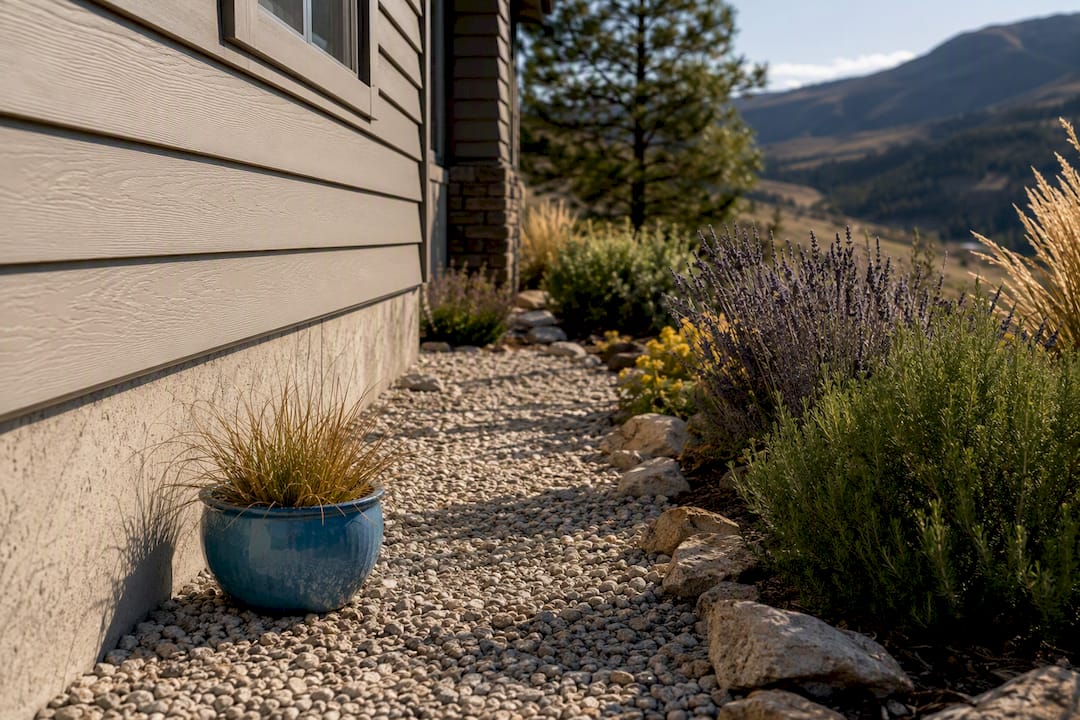
For fire safety, especially in foothill and wildland-adjacent areas, keep a noncombustible zone immediately around your foundation, space larger shrubs to avoid continuous fuel, and skip bark mulch within a few feet of siding in favor of gravel or rock.
Planning a Xeriscape Conversion with a Mapped Estimator
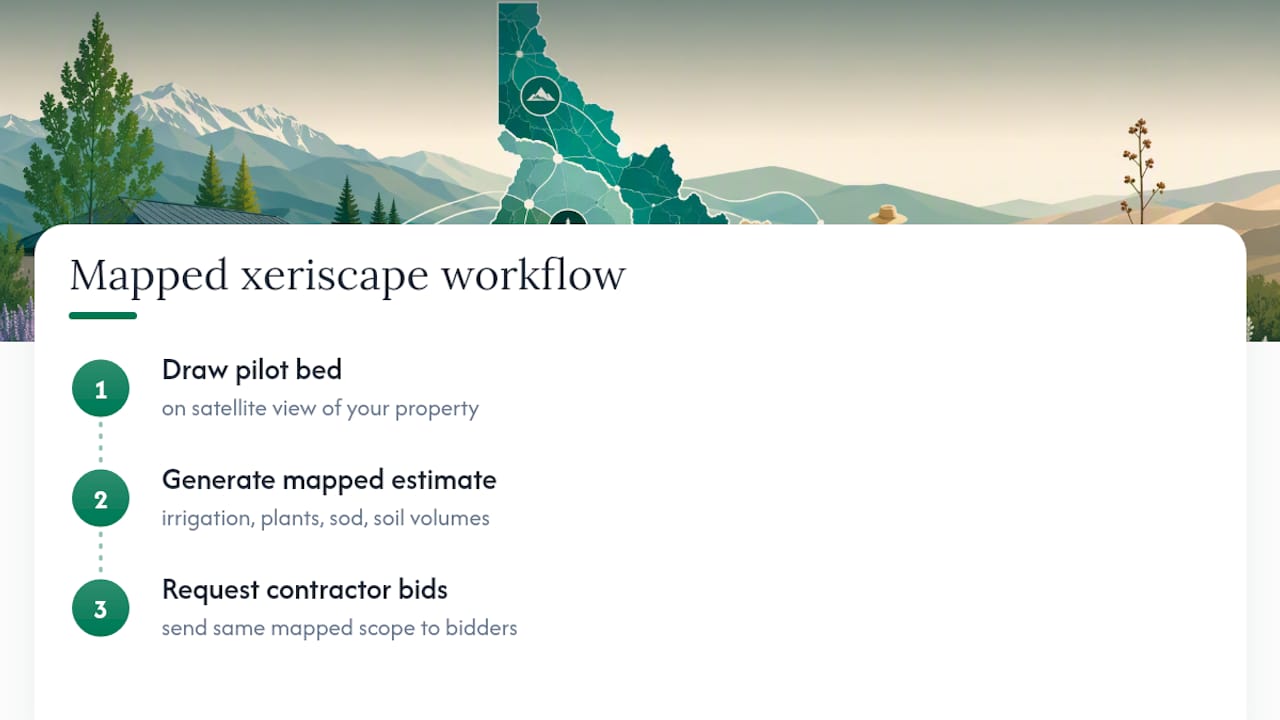
Guessing at materials and labor is how xeriscape budgets blow up. A property-mapped tool lets you draw the exact area you’re converting on a satellite view of your own yard, whether that’s a 150-square-foot pilot bed or the entire front lawn.
That kind of mapped estimate clarifies cost categories that are easy to underestimate on your own: irrigation retrofit (new drip zones, controller upgrades), plant material by quantity, demolition and sod removal, and soil amendment volume based on square footage. The workflow that works best: estimate your pilot bed first, then use that mapped scope when requesting contractor bids so every bidder is pricing the same project.
Managing Pests and Disease in a Xeric Idaho Garden
Drought-tolerant landscapes generally face fewer pest problems than thirsty, high-maintenance lawns, but they aren’t pest-free. Overwatering new xeric plantings, a common mistake, creates the fungal conditions that cause root rot in penstemon and other native perennials. The fix is straightforward: water deeply but infrequently once plants establish, and let soil dry between waterings.
Aphids sometimes show up on new growth in spring, particularly on shrubs like rabbitbrush. A strong spray of water or a introduction of beneficial insects like ladybugs usually handles small infestations without pesticides. Spider mites can stress plants during Idaho’s hottest, driest stretches in July and August; keeping plants appropriately watered (not overwatered) reduces their appeal to mites, which favor drought-stressed foliage.
Powdery mildew occasionally appears on shrubs planted too close together with poor airflow. Spacing plants according to their mature size, not their nursery-pot size, prevents most of this problem before it starts. Grasshoppers can be a seasonal nuisance on ornamental grasses in southern Idaho; row covers on young plantings protect them until they’re established enough to tolerate light grazing.
Rabbits and deer browse on new xeric plantings more than on established turf, since they’re drawn to tender new growth. Wire cages around young shrubs for the first year or two solve most of this without chemical repellents. Once native plants mature and toughen up, browsing damage typically drops off on its own.
Start Small, Watch a Season, Then Scale
Rip out one strip of lawn before you touch the rest of the yard. Watch how it handles an Idaho summer and winter, then visit a demonstration garden or call your local extension office before scaling up. Bigger phases go smoother with mapping tools and a contractor who’s seen your plan.
— Christian
Plan Your Xeriscape Budget Before You Dig
Traditional bidding means calling three contractors, describing your yard from memory, and hoping their quotes are even comparing the same project. Some online platforms allow you to draw your pilot bed or full-yard conversion on a satellite map of your property, and break out cost categories like irrigation retrofit, plant material, and soil amendment based on the real dimensions you drew.

That mapped scope becomes what you hand to contractors, so every bid you get back is priced against the identical project instead of three different guesses. If you’re also considering hardscape edging or lighting to finish off a converted bed, you can layer those into the same estimate. Start with your satellite property estimator and map your first pilot bed today.
Where to Learn More Locally
- University of Idaho Extension: plant lists and step-by-step native garden guidance for southwestern Idaho.
- Idaho Botanical Garden: a dry garden demonstration proving xeriscapes can be lush, not just gravel.
- City of Boise and City of Nampa water-wise programs: local plant lists, irrigation standards, and rebate information.
- FWS Native Garden Guide: species selection focused on pollinator support and low water need.
Sources
- Xeriscaping Idaho: Water-Wise Landscaping for Treasure Valley | Lawn Care Kuna
- Native Garden Guide for Homeowners — Southwest Idaho (FWS / partner guide)
- University of Idaho Extension — Native Garden Guide for Homeowners
- Boise State Public Radio — Conserving water outdoors with native species and design
FAQ
What are the disadvantages of xeriscaping?
Establishment takes two to three seasons for native plants to fill in, upfront costs can be higher than reseeding a lawn, and some HOAs still resist non-turf landscaping, though that resistance is easing as water restrictions tighten.
What is the most invasive plant in Idaho?
Several species are classified as noxious weeds in Idaho, including purple loosestrife and yellow flag iris; both spread aggressively near water and are worth avoiding entirely in home landscaping.
What is the cheapest way to xeriscape?
Smothering unwanted turf with cardboard and mulch costs far less than sod cutting or hiring removal, though it takes a full season to clear the area; pairing that with a small pilot bed keeps early costs low while you test what works.
What are the seven principles of xeriscaping?
Planning and design, hydrozoning, soil improvement, practical turf areas, low-water plant selection, efficient irrigation, and ongoing maintenance make up the seven core principles.
How do I get a realistic cost estimate for my xeriscape project?
Mapping your specific project area on a tool like Propertyimprovementestimator gives you itemized costs for irrigation, plants, and soil work based on your yard’s actual dimensions, not a generic average.