Types of Deck Materials and Their Cost

Building a deck is one of the most popular outdoor improvement projects for homeowners in 2026, offering expanded living space and increased property value. However, the type of decking material you choose dramatically affects both the initial investment and long-term maintenance costs. Understanding the various options available helps you make an informed decision that aligns with your budget, aesthetic preferences, and lifestyle needs.
This comprehensive guide explores the most common deck materials available today, detailing their characteristics, benefits, drawbacks, and associated costs to help you plan your outdoor project effectively.
Pressure-Treated Wood Decking
Pressure-treated lumber remains the most economical and widely used decking material in North America. This wood undergoes a chemical preservation process that protects it from rot, decay, and insect damage, making it suitable for ground contact and outdoor exposure.

The most common pressure-treated wood is southern yellow pine, though other species like hem-fir are also used. The treatment process forces preservatives deep into the wood fibers, extending the material's lifespan significantly compared to untreated lumber.
Cost Range: Pressure-treated wood decking typically costs between $3 and $6 per square foot for materials only. For a standard 300-square-foot deck, expect to pay approximately $900 to $1,800 for materials, with total project costs ranging from $4,500 to $9,000 including professional installation. If you're looking for more detailed breakdowns, learn How to Estimate Deck Building Cost in 2026.
Advantages:
- Most affordable initial investment
- Widely available at lumber yards and home centers
- Easy to cut and work with standard tools
- Can be painted or stained in various colors
- Repairable with readily available materials
Disadvantages:
- Requires annual maintenance including cleaning and sealing
- Prone to warping, cracking, and splintering over time
- Shorter lifespan compared to premium materials (15-20 years)
- Can feel hot underfoot in direct sunlight
- Chemical treatment raises environmental concerns for some homeowners
Cedar and Redwood Decking
Cedar and redwood represent premium natural wood options that offer superior aesthetics and natural resistance to decay and insects without chemical treatment. These softwoods contain natural oils and tannins that provide inherent protection against the elements.
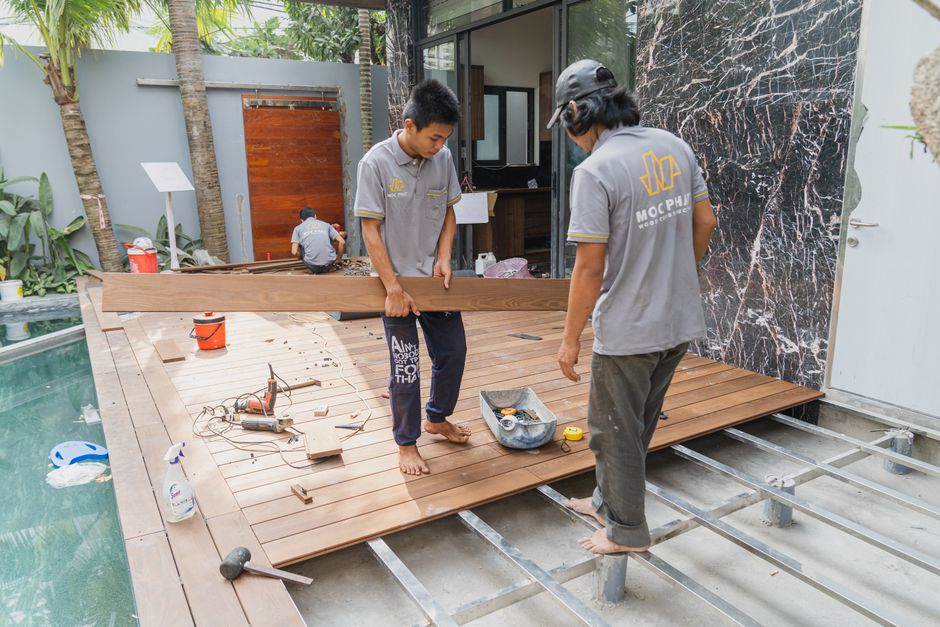
Western red cedar is particularly popular for decking, while California redwood offers exceptional durability and a distinctive rich color. Both materials deliver a classic, natural appearance that many homeowners prefer over treated lumber or synthetic alternatives.
Cost Range: Cedar decking materials cost between $6 and $10 per square foot, while premium redwood ranges from $10 to $15 per square foot. For a 300-square-foot deck, material costs alone run from $1,800 to $4,500, with complete installation ranging from $9,000 to $18,000.
Advantages:
- Beautiful natural grain patterns and rich colors
- Naturally resistant to decay and insects
- No chemical treatment required
- Pleasant aromatic qualities, especially cedar
- Lightweight and easy to work with
- Can be left to weather naturally or maintained with stain
Disadvantages:
- Higher initial material costs
- Requires regular maintenance to preserve color and prevent weathering
- Will turn silvery-gray if left untreated
- Softer wood is more susceptible to denting and scratching
- Limited availability in some regions increases costs
Composite Decking Materials
Composite decking has revolutionized the outdoor living industry since its introduction, combining wood fibers and recycled plastics to create a low-maintenance alternative to traditional wood. Major manufacturers continue to improve their formulations in 2026, offering products that closely mimic natural wood grain while eliminating many maintenance headaches.

Leading brands include Trex, TimberTech, and Fiberon, each offering multiple product lines ranging from budget-friendly to premium options. Modern composite boards feature protective shells, realistic wood textures, and fade-resistant colorants that maintain their appearance for decades.
Cost Range: Composite decking materials range from $8 to $15 per square foot for standard lines, with premium capped composite reaching $15 to $20 per square foot. A 300-square-foot deck requires $2,400 to $6,000 in materials, with total installation costs between $12,000 and $22,000.
Advantages:
- Minimal maintenance required—no staining or sealing needed
- Resistant to rot, splintering, and insect damage
- Long lifespan of 25-30 years or more
- Consistent color and appearance
- Many color and texture options available
- Comprehensive manufacturer warranties (often 25-50 years)
- Environmentally friendly with recycled content
Disadvantages:
- Higher upfront costs than pressure-treated wood
- Can feel hot in direct sunlight, especially darker colors
- Heavier than wood, requiring more structural support
- May fade slightly over time despite warranties
- Scratches and dents are difficult to repair
- Thermal expansion requires proper installation gaps
PVC and Plastic Decking
PVC (polyvinyl chloride) decking represents the premium end of synthetic decking materials, containing no wood fibers whatsoever. Manufactured entirely from plastic materials, PVC decking offers maximum durability and the lowest maintenance requirements of any decking option.
Unlike wood-plastic composites, PVC boards are 100% synthetic, making them completely impervious to moisture and extremely resistant to staining, scratching, and fading. They're ideal for pool decks, waterfront properties, and homeowners who prioritize minimal maintenance above all else.
Cost Range: PVC decking is the most expensive option, ranging from $12 to $20 per square foot for materials, with premium products reaching $25 per square foot. Material costs for a 300-square-foot deck run $3,600 to $7,500, with complete installation costing $15,000 to $25,000 or more.
Advantages:
- Absolutely no maintenance required beyond occasional cleaning
- Completely waterproof and stain-resistant
- Will not rot, warp, splinter, or support mold growth
- Excellent for high-moisture environments
- Lightest-colored options available without fading concerns
- Longest lifespan of any decking material (30+ years)
- Comprehensive manufacturer warranties
Disadvantages:
- Highest initial investment
- Can feel noticeably hot in direct summer sun
- Less natural appearance than wood or composite
- Significant thermal expansion requires careful installation
- Limited color selection compared to composite options
- May appear plastic-like to some homeowners
Tropical Hardwood Decking
Tropical hardwoods like Ipe, Tigerwood, Cumaru, and Massaranduba represent the ultimate in natural wood decking. These extremely dense materials come from sustainably managed forests in South America, Africa, and Asia, offering unparalleled durability and stunning natural beauty.
Ipe (pronounced "ee-pay") is the most popular tropical hardwood for decking, known for its exceptional hardness—three times harder than cedar—and rich brown color. These materials are so dense they resist scratching, denting, and wear far better than any domestic wood species.
Cost Range: Tropical hardwood decking ranges from $10 to $20 per square foot for materials, with rare species exceeding $25 per square foot. A 300-square-foot deck requires $3,000 to $7,500 in materials alone, with total installation costs ranging from $15,000 to $30,000 due to specialized tools and expertise required for installation.
Advantages:
- Exceptional durability lasting 40-50 years or more
- Naturally resistant to rot, insects, and fire
- Beautiful, rich colors and tight grain patterns
- Extremely hard surface resists scratches and dents
- No chemical treatment needed
- Can be left to weather naturally to silvery-gray
- Increases property value significantly
Disadvantages:
- Premium pricing rivals or exceeds synthetic materials
- Very heavy, requiring robust structural support
- Difficult to cut and install—requires carbide blades
- Pre-drilling necessary for all fasteners
- Color will fade to gray without UV-protective treatments
- Limited availability; longer lead times
- Sustainability concerns despite certification programs
Aluminum Decking Systems
Aluminum decking represents a niche but growing segment of the decking market in 2026, offering unique benefits for specific applications. These powder-coated aluminum boards provide a completely non-combustible, maintenance-free surface ideal for fire-prone regions and commercial applications.
Modern aluminum decking systems feature textured, slip-resistant surfaces and come in various colors. They're particularly popular in areas with wildfire risks, for rooftop decks, and in extreme climate conditions where wood and composite materials struggle to perform.
Cost Range: Aluminum decking costs between $18 and $30 per square foot for materials. A 300-square-foot deck requires $5,400 to $9,000 in materials, with total installation ranging from $20,000 to $35,000.
Advantages:
- Completely fireproof—ideal for wildfire zones
- Zero maintenance required
- Will never rot, warp, or deteriorate
- Stays cool underfoot even in direct sunlight
- Excellent for rooftop and elevated decks
- Impervious to moisture and insects
- Sustainable and fully recyclable
Disadvantages:
- Premium pricing exceeds most other materials
- Industrial appearance may not suit all homes
- Requires specialized substructure
- Can be noisy during rain
- Limited contractor experience with installation
- Thermal expansion must be accommodated
Making Your Decision: Beyond Initial Cost
When evaluating deck materials, consider the total cost of ownership rather than just initial purchase price. A pressure-treated deck might save you $8,000 upfront compared to composite, but factor in annual maintenance costs of $200-$500 for cleaning, sealing, and repairs over a 20-year lifespan. Those maintenance expenses add up to $4,000-$10,000, narrowing the price gap significantly.
Also consider your climate and intended use. Homeowners in humid regions should prioritize moisture resistance, while those in fire-prone areas might require non-combustible materials. Pool decks benefit from materials that don't absorb water and stay cooler underfoot. For homeowners considering a complete backyard transformation, understanding the Average Cost of an Inground Pool in 2026 could be a useful next step.
Planning tools can help you visualize different materials on your actual property before making a final decision. Property Improvement Estimator enables you to design your deck directly on your property map, experiment with different configurations, and obtain realistic cost estimates based on your specific material choices and local pricing. This visualization process helps ensure your selected material complements your home's architecture and meets your functional needs, much like using a Retaining Wall Cost Calculator Guide for another type of outdoor project.
Local building codes may also influence your material choice. Some municipalities restrict certain materials in wildfire zones, while others have specific requirements for elevated decks or waterfront properties. Always verify code compliance before finalizing your material selection. It's also important to remember that for any substantial outdoor improvement, knowing How to Get Accurate Project Estimates is crucial for budgeting and planning.
Conclusion
Choosing the right deck material balances upfront investment, maintenance commitment, aesthetic preferences, and expected lifespan. Pressure-treated wood offers an economical entry point for budget-conscious homeowners, while composite and PVC deliver long-term value through minimal maintenance. Cedar and redwood provide natural beauty for those willing to invest in regular upkeep, while tropical hardwoods and aluminum serve specialized needs at premium prices.
In 2026, the trend continues toward low-maintenance synthetic materials, but natural wood remains popular among traditionalists and those seeking specific aesthetic qualities. Your best choice depends on your budget, lifestyle, climate, and how you plan to use your outdoor space. By carefully weighing these factors against the costs and characteristics outlined in this guide, you can select a deck material that provides lasting satisfaction and value for your property improvement investment.