Tennis Court Dimensions and Surfacing Options

Building a tennis court on your property represents a significant investment in recreation, fitness, and home value. Whether you're a dedicated player looking to practice at home or a property owner seeking to add a premium amenity, understanding tennis court dimensions and surfacing options is essential for proper planning and budgeting. In 2026, homeowners have access to advanced planning tools and a wider range of surface materials than ever before, making it easier to design a court that meets both regulatory standards and personal preferences.
This comprehensive guide covers everything you need to know about tennis court specifications, from precise measurements to surface characteristics, helping you make informed decisions for your outdoor property improvement project.
Standard Tennis Court Dimensions and Layout
A regulation tennis court follows standardized dimensions established by the International Tennis Federation (ITF). The playing area itself measures 78 feet in length and 36 feet in width for doubles play. For singles play, the width reduces to 27 feet, though the full 36-foot width is typically constructed regardless of primary use.
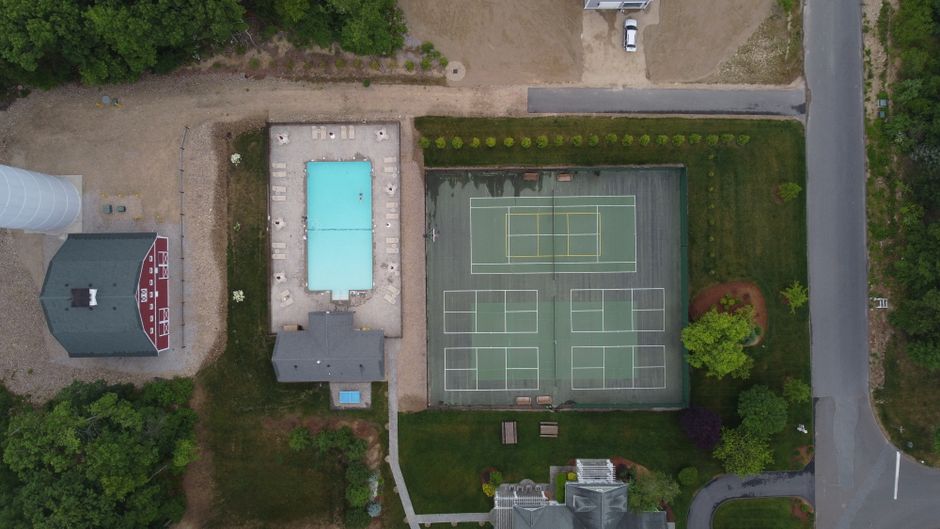
However, the actual space required extends well beyond these playing dimensions. The total area needed for a complete tennis court includes:
- Playing surface: 78 feet × 36 feet (2,808 square feet)
- Run-off space: 21 feet beyond each baseline and 12 feet beyond each sideline
- Total recommended area: 120 feet × 60 feet (7,200 square feet)
The run-off space is critical for player safety and proper gameplay. Players need room to run beyond the baseline when retrieving deep shots and to move laterally for wide balls. Competitive or tournament-level courts often require even more space, with 130 feet × 65 feet being preferred for serious play.
The net height must be exactly 3 feet at the center and 3.5 feet at the posts. Posts are positioned 3 feet outside the doubles sidelines. Line widths typically measure 2 inches for all lines except the baseline, which can be up to 4 inches wide. These precise specifications ensure your court meets standards for competitive play and proper ball behavior.
Hard Court Surfaces: Acrylic and Cushioned Options
Hard courts represent the most popular tennis surface in North America and are featured at the US Open and Australian Open. These surfaces consist of a rigid base (typically asphalt or concrete) topped with acrylic-based coatings.
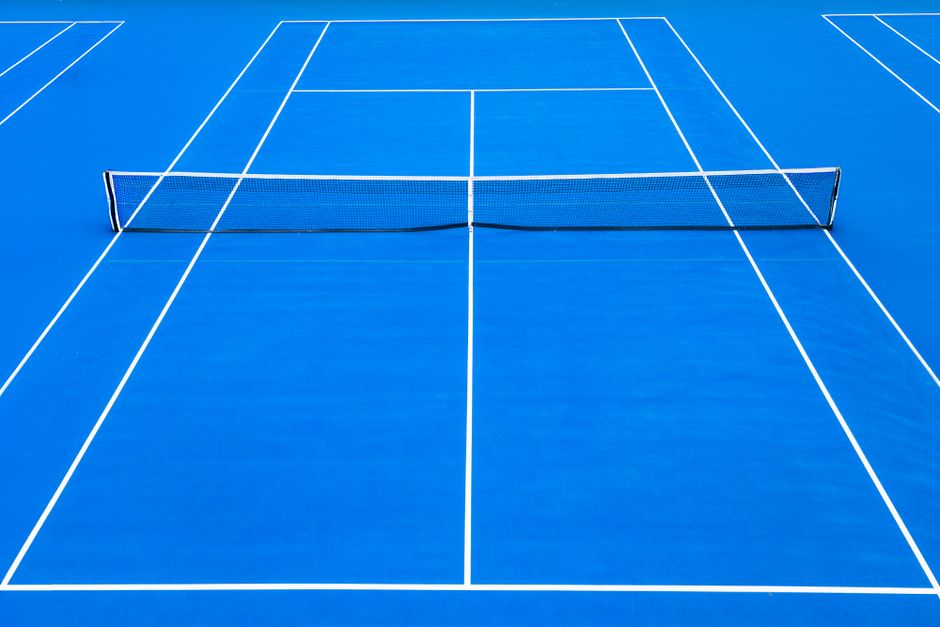
Acrylic hard courts provide a consistent, medium-fast playing surface with predictable ball bounce. The construction process involves multiple layers of acrylic resurfacer and color coatings applied over the base. These courts require minimal maintenance compared to other surfaces and typically last 4-8 years before needing resurfacing. The hard, unforgiving nature of these courts can be tough on joints, making them less ideal for players with knee or ankle concerns.
Cushioned hard courts incorporate rubber particles into the acrylic layers, creating a softer surface that reduces impact on players' bodies. According to the American College of Sports Medicine, playing surfaces that provide some shock absorption can help reduce injury risk during repetitive athletic activities. These cushioned systems add 15-40% to the cost of standard hard courts but offer significant benefits for frequent players or those concerned about joint stress.
Hard courts offer excellent versatility for residential installations. They work in virtually any climate, dry quickly after rain, and can be customized with various colors. The ball plays at a medium-to-fast pace with a true, consistent bounce. Maintenance involves regular cleaning, occasional crack repair, and resurfacing every 4-8 years depending on use and climate.
Clay Court Characteristics and Maintenance
Clay courts deliver the slowest playing surface, featured prominently at the French Open. The soft surface absorbs ball energy, resulting in a higher, slower bounce that favors baseline play and longer rallies. Two main types exist: traditional red clay (crushed brick) and green clay, also called Har-Tru (crushed stone).
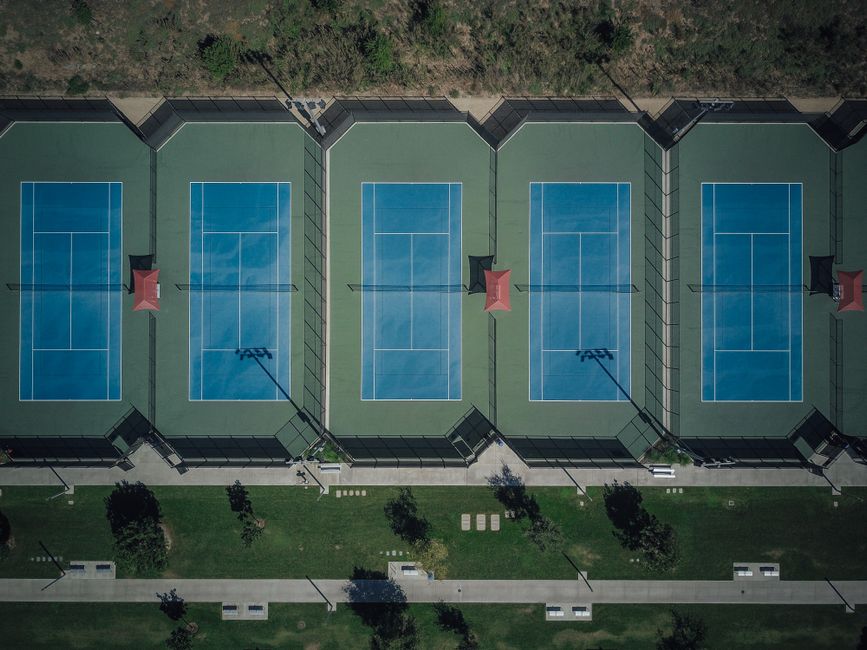
Red clay courts provide the most authentic clay experience but require intensive maintenance. The surface needs daily watering, brushing, and rolling to maintain proper consistency. Lines are typically integrated into the surface itself rather than painted. Red clay is extremely gentle on joints and ideal for players who prefer slower-paced, strategic tennis.
Har-Tru courts offer a more maintenance-friendly alternative while preserving many clay court benefits. The green crushed stone surface still plays slower than hard courts and remains easier on the body, but it requires less water and less frequent grooming. These courts have gained popularity in residential settings because they balance clay court advantages with reduced upkeep demands.
Clay courts do present challenges for property owners. They require regular grooming (brushing and watering), proper drainage systems, and periodic top-dressing with new material. They're also unusable during and immediately after rain. The surface material costs less initially than hard court construction, but ongoing maintenance expenses accumulate over time. Climate plays a significant role—clay courts work best in regions with moderate rainfall and minimal freezing temperatures.
Grass and Artificial Grass Court Solutions
Grass courts represent the fastest tennis surface and the sport's original playing field, still featured at Wimbledon. Natural grass courts provide a unique, low-bounce playing experience but demand exceptional maintenance including mowing, watering, fertilizing, and pest control. The surface deteriorates quickly with play, requiring rest periods to recover. For these reasons, natural grass courts are extremely rare in residential settings and primarily limited to clubs and professional venues.
Artificial grass courts have emerged as a viable alternative in 2026. Modern synthetic turf systems designed specifically for tennis offer several advantages over traditional natural grass while maintaining similar playing characteristics.
Contemporary artificial grass courts use advanced fiber technology and infill systems that simulate grass court speed while providing superior durability. The ball stays low with moderate bounce, and the surface offers excellent traction. Unlike natural grass, synthetic courts withstand heavy use without deterioration, require no mowing or watering, and remain playable year-round in most climates.
Maintenance for artificial grass involves periodic brushing to prevent fiber matting, occasional infill replenishment, and standard cleaning. These courts perform well in various climates and typically last 10-15 years before requiring replacement. The initial installation cost falls between hard courts and clay courts, with significantly lower long-term maintenance expenses than natural grass.
Cost Considerations and Planning Your Court
Tennis court construction costs vary substantially based on surface type, site conditions, and regional factors. As of 2026, typical price ranges include:
- Post-tension concrete courts: $45,000-$80,000
- Asphalt courts: $35,000-$65,000
- Clay courts: $30,000-$70,000
- Artificial grass courts: $40,000-$75,000
These estimates include site preparation, base construction, surface installation, net systems, and fencing. Premium options like cushioned surfaces, advanced drainage systems, lighting packages, and custom colors increase costs accordingly. Site-specific factors dramatically impact pricing—properties requiring extensive grading, drainage work, or access challenges will see higher expenses.
Beyond construction, factor in long-term costs. Hard courts need resurfacing every 4-8 years at $4,000-$8,000. Clay courts require daily maintenance supplies and equipment. All courts benefit from windscreens, net replacement, and periodic fence maintenance. Lighting systems for night play add $15,000-$30,000 initially plus ongoing electricity costs.
Proper planning starts with accurate site assessment. Evaluate your available space against the 120' × 60' minimum recommendation. Consider orientation—north-south alignment minimizes sun interference during play. Assess drainage patterns, existing grades, and proximity to property lines. Check local zoning regulations and homeowners association rules before proceeding.
Using modern property planning tools streamlines this process significantly. Digital mapping technology allows you to visualize court placement, test different orientations, and understand spatial relationships with existing structures. These tools help you calculate project scope accurately and obtain realistic cost estimates before engaging contractors.
Surface Selection Based on Your Priorities
Choosing the right tennis court surface depends on multiple factors unique to your situation. Consider these priorities when making your decision:
Playing style and skill level: Competitive players may prefer surfaces matching their tournament experience. Hard courts suit all-around players, while clay favors baseline strategists. Fast-paced serve-and-volley players might prefer grass or artificial grass.
Maintenance commitment: How much time and money can you dedicate to upkeep? Hard courts require minimal attention, artificial grass needs moderate care, and clay demands daily maintenance. Your willingness to maintain the surface directly impacts long-term satisfaction.
Climate considerations: Local weather patterns influence surface performance and longevity. Hard courts excel in temperature extremes. Clay struggles in freezing climates and heavy rain regions. Artificial grass adapts to most conditions but may heat up in intense sun.
Physical considerations: Players with joint concerns benefit from softer surfaces. Cushioned hard courts and clay provide better shock absorption than standard hard courts. This factor becomes increasingly important for aging players or those with previous injuries.
Budget constraints: Balance initial construction costs against long-term maintenance expenses. The cheapest installation might prove expensive over time, while higher upfront costs could deliver better value through reduced maintenance needs.
Conclusion
Building a tennis court requires careful consideration of dimensions, surface types, and long-term implications. The standard 120' × 60' footprint accommodates regulation play with proper safety zones, while surface selection impacts everything from playing characteristics to maintenance demands and overall costs. Hard courts offer durability and low maintenance, clay provides a unique playing experience with higher upkeep needs, and artificial grass delivers grass-court simulation with modern durability.
Success depends on matching surface characteristics with your playing preferences, maintenance capacity, climate conditions, and budget realities. Take time to evaluate your property, understand local requirements, and use available planning tools to visualize your project accurately. With proper planning and informed decision-making, you can create a tennis court that enhances your property value, supports your fitness goals, and provides years of enjoyment for family and friends. If your property requires a significant base for the court, you might also consider factors like a concrete patio or even the need for a retaining wall for proper leveling and support.