Homeowners & Planners: Plan a Sport Court With Site Specific Estimate
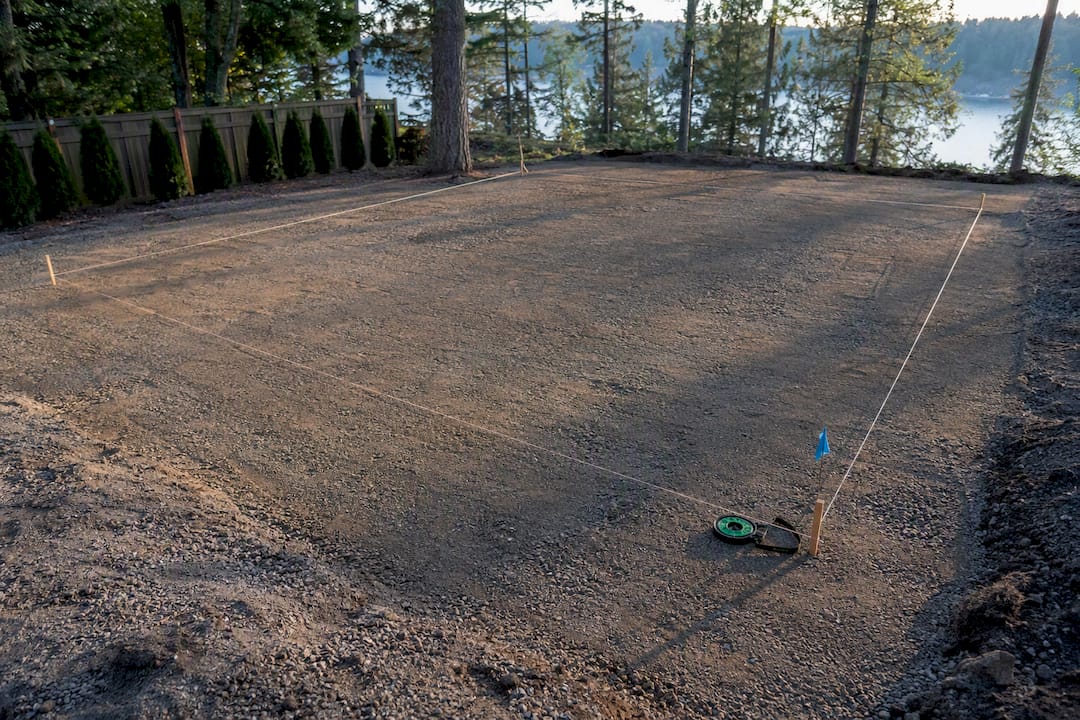
A sport court is a purpose-built, customizable surface designed for basketball, pickleball, tennis, volleyball, or multi-sport play in a backyard or community space. If you want a safe, durable area that handles several sports without constant upkeep, it’s usually the right call. The next move is simple: measure your site and get a site-specific estimate before you talk to contractors.
TL;DR:
- Modular interlocking tiles offer quick installation and easy maintenance, tolerating minor base imperfections and shedding water quickly in wetter climates.
- Acrylic surfaces are more cost-effective initially but demand a crack-free slab and regular recoating, especially in dry, warm regions.
- Site preparation costs vary widely, with drainage, slope, fencing, lighting, and permits significantly impacting overall pricing beyond surface material expenses.
- Accurate bids require detailed site measurements, photos, and a clear list of desired features, preferably processed through a site-specific cost calculator.
- Designing for multiple sports involves careful layout, contrasting boundary colors, adjustable net systems, and orientation considerations to optimize play and safety.
Table of Contents
- Types of Sport Courts and When to Use Each
- Sport Court Cost: What Drives the Price
- How Do You Plan and Prep a Site for a Sport Court?
- Materials and Construction: What’s Under the Surface
- Maintenance and Lifespan: What Ownership Actually Looks Like
- Getting an Accurate, Contractor-Ready Sport Court Estimate
- Designing for Multi-Sport Use and Customization
- Safety Standards and Compliance to Check Before You Build
- DIY Overlay or Hired Contractor: How Do You Decide?
- Get a Site-Specific Sport Court Estimate
- Sources
- FAQ
Types of Sport Courts and When to Use Each
The surface you pick should match your climate, your sport list, and how much disruption you can tolerate during installation. Four families cover most backyard and community projects.
- Modular interlocking tiles: These snap-together systems drain fast, forgive lateral movement during quick pivots, and go down in days rather than weeks. They’re a strong fit for multi-sport backyard courts where basketball, pickleball, and volleyball all need to share one slab.
- Acrylic or acrylic-over-concrete: This is the traditional permanent outdoor surface. It costs less per square foot in material but demands a well-cured, crack-free concrete base, and it needs recoating on a cycle.
- Indoor timber and sprung floors: Gyms and dedicated indoor facilities use these for shock absorption and joint protection during high-repetition play. They’re overkill for a backyard court but standard for serious training spaces.
- Artificial turf: Common for futsal, soccer, and multi-use fields where ball roll and footing matter more than hard-court bounce.
Cold, wet climates tend to favor tile systems because engineered tile designs shed water and allow play soon after rain, while dry, warm regions see more acrylic installs since slab curing and coating adhesion are less weather-dependent there.
Sport Court Cost: What Drives the Price
Sport court pricing swings widely because the site, not just the surface, sets the final number. A rough guide from Outdoor Services Milton, GA | Roberto’s Stump Grinding can help prepare your site and plan effective landscape integration for the court installation:
- Small half-court (20x25 ft or similar): Often the lowest-cost option, especially with a modular tile overlay on an existing slab.
- Full backyard multi-sport court (30x60 ft range): Mid-range pricing, with acrylic-over-concrete and tile systems both common here.
- Community or facility-scale court: The highest cost tier, driven by fencing length, multiple hoop or net systems, and lighting for evening use.
Line items that move the number more than people expect: subbase preparation and concrete work, the surface material itself, fencing height and gauge, lighting and the electrical trenching it requires, permits, and local labor rates. A site with poor drainage or a slope that needs grading can add real cost before a single tile or gallon of acrylic goes down. Generic per-square-foot averages rarely reflect what your yard actually needs, which is why running your own dimensions through a sport court cost calculator gives a far more usable starting number than a rule of thumb.
How Do You Plan and Prep a Site for a Sport Court?
Good planning prevents the two most common surprises: a court that doesn’t fit the yard, and a bid that balloons once excavation starts.
• Measure the full footprint including setbacks, overhangs, and obstacles like trees or utility boxes.
- Check the slope. Anything beyond a gentle grade usually means a slab or drainage trenches before surfacing can start.
- Plan access for equipment and material staging. A narrow side yard can turn a two-day tile install into a four-day one.
- Confirm permitting requirements, HOA rules, and utility locates before signing a contract.
- For community projects, check whether procurement rules require competitive bidding or allow cooperative purchasing.
Public entities in particular can shortcut vendor vetting through Sourcewell’s cooperative purchasing contracts, which satisfy open-bid requirements without a separate RFP process for every project.
Pro Tip: Ask every bidder for the same three things: a dimensioned drawing, an itemized quote broken out by material and labor, and a written timeline. If a bid skips any of these, keep shopping.
Materials and Construction: What’s Under the Surface
A sport court is built in layers, and skipping one is usually where problems start. The standard stack runs from the ground up: compacted subgrade, engineered base or poured slab, an optional shock-absorbing underlay, the playing surface itself, then paint or inlaid lines.
- Modular tiles vs. bonded acrylic: Tiles cost more per square foot but install faster and tolerate minor base imperfections. Acrylic systems cost less in material but need a nearly flawless slab, since every crack or dip telegraphs through the coating.
- Shock-absorbing underlay: This matters most for high-impact sports and for households with kids doing repetitive jumping or pivoting. It’s less critical for a casual pickleball-only court.
- Fencing: Heights typically range from waist-high for pickleball to 10 feet or more around basketball and multi-sport courts to contain stray balls.
- Lighting: LED fixtures rated for outdoor sports use need proper pole placement and wiring runs, which is where electrical permitting and trenching costs tend to surface.
Some tile manufacturers build in patented interlock and shock systems specifically to improve drainage and lateral stability over bare concrete, which is worth asking about if your yard already floods after heavy rain.
Maintenance and Lifespan: What Ownership Actually Looks Like
Surface choice determines how much time and money you’ll spend keeping a court playable for the next decade.
- Modular tile systems generally need occasional rinsing and tile replacement if a section cracks, and manufacturers often market them as needing minimal recoating over their service life.
- Acrylic surfaces need a resurfacing cycle, typically every several years depending on UV exposure and traffic, plus periodic crack repair on the underlying slab.
- Indoor timber floors need refinishing on a longer cycle but are sensitive to moisture intrusion.
- Harsh freeze-thaw climates and heavy daily use shorten all of these timelines, while mild climates and lighter use stretch them.
Beyond upkeep, a well-built court tends to increase how much a family actually uses their yard, and for community sites it becomes a programming asset that draws recurring foot traffic.
Getting an Accurate, Contractor-Ready Sport Court Estimate
Guesswork is the enemy of a clean bid. Contractors price faster and more accurately when they aren’t the ones measuring your yard for the first time.
- A drawn property map with real dimensions, not a verbal estimate of “about 30 by 60.”
- Photos of the site, especially slope, existing concrete, and anything nearby like fences or trees.
- A list of desired games and accessories: hoops, nets, fencing, lighting.
- Any known site issues: drainage problems, utility lines, or HOA restrictions.
Satellite-based drawing tools paired with local cost data convert those inputs into a real cost breakdown, not a generic range. Site-specific estimators that use satellite drawing and local cost variables measurably reduce early-stage budgeting uncertainty compared with flat per-square-foot rules, and they hand contractors a scope package with drawings, measurements, and accessory choices already spelled out. That package alone tends to speed up how fast bidders respond and how tight their quotes are.
Designing for Multi-Sport Use and Customization
The best backyard courts aren’t built for one sport. They’re built for whichever three or four sports your household actually plays, which means the layout has to accommodate overlapping line sets without turning into visual clutter.
A basketball key can share space with a pickleball court if you plan line colors carefully. Contrasting colors for each sport’s boundaries, rather than a single color for everything, cuts down on confusion during play. Net systems that mount and dismount quickly let one surface serve tennis, pickleball, and volleyball without a permanent post in the wrong spot. Portable or adjustable basketball hoops solve the same problem for households that want the court open for other activities some days.
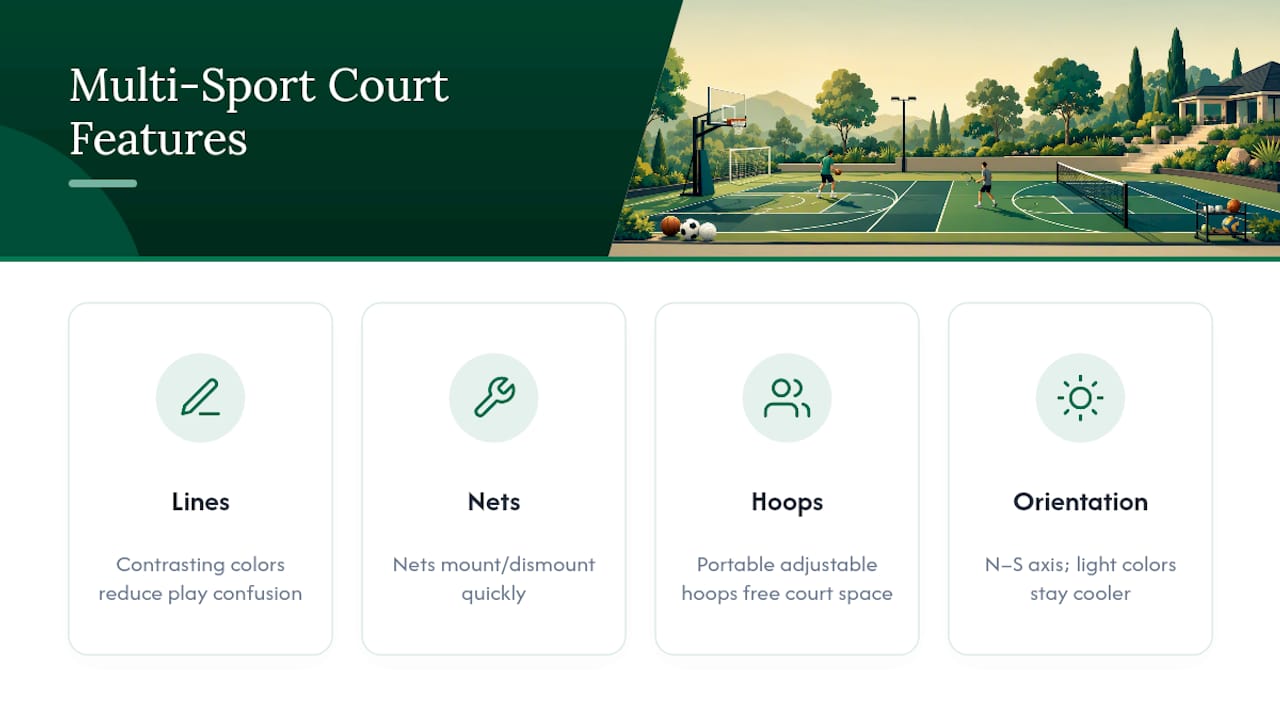
Court orientation matters more than most people expect. Running the long axis north to south reduces how much low sun glares into a player’s eyes during morning or evening games, which is a bigger deal for basketball and tennis than for pickleball.
Color choice isn’t just cosmetic. Darker surface colors absorb more heat and can get uncomfortably hot underfoot in direct summer sun, while lighter colors stay cooler but show dirt and wear faster. Previewing color and line combinations before committing helps avoid a mismatch between how a court looks on a spec sheet and how it looks installed. Tools like a sport court colorizer let homeowners test combinations before ordering materials.
For households or facilities that expect to add a sport later, it’s worth designing the base and fencing to accommodate a slightly larger footprint than the immediate need, since retrofitting a slab is far more expensive than building it right the first time.
Safety Standards and Compliance to Check Before You Build
Safety on a sport court comes down to surface performance, structural fencing, and code compliance, and all three deserve verification before installation, not after.
Surface performance claims like shock absorption and lateral forgiveness aren’t just marketing language. Manufacturer brochures typically detail performance characteristics and reference third-party testing standards that back up how a surface behaves under repeated impact, and asking for that documentation is a reasonable step before signing a contract. ASTM testing references, where a manufacturer provides them, give a more concrete basis for comparing surfaces than a sales pitch.
Fencing height and gauge matter for containing balls and preventing falls, particularly around courts near a street, pool, or slope. Local building codes often set minimum fence heights and setback distances from property lines, and those requirements vary by jurisdiction, so a permit check before construction avoids a costly fence relocation later.
Lighting installations carry their own compliance layer, since electrical work for court lighting typically requires a permit and inspection separate from the court surface itself. Warranty coverage is part of the safety picture too: manufacturer warranties often depend on installation by a certified local installer, meaning a DIY or uncertified install can void coverage even if the material itself is sound. Checking an installer’s standing through a resource like the Better Business Bureau is a reasonable step before signing anything.
DIY Overlay or Hired Contractor: How Do You Decide?
A modular tile overlay on an existing slab is realistic as a DIY weekend project for a handy homeowner. A new slab with bonded acrylic is not; it demands grading, drainage, and cure-time precision that carries real risk if done wrong. Community courts almost always need formal procurement, a manufacturer warranty, and a maintenance plan behind them. Weigh complexity, budget, and who’s liable if something fails before you decide.
— Christian
Get a Site-Specific Sport Court Estimate
Generic price ranges only get you so far once your yard has a slope, a tricky fence line, or a spot where lighting needs its own trench. An online platform allows you to draw your actual property on a satellite map, mark where the court, fencing, and lighting go, and get a cost breakdown built from your real dimensions and local pricing, not a national average.
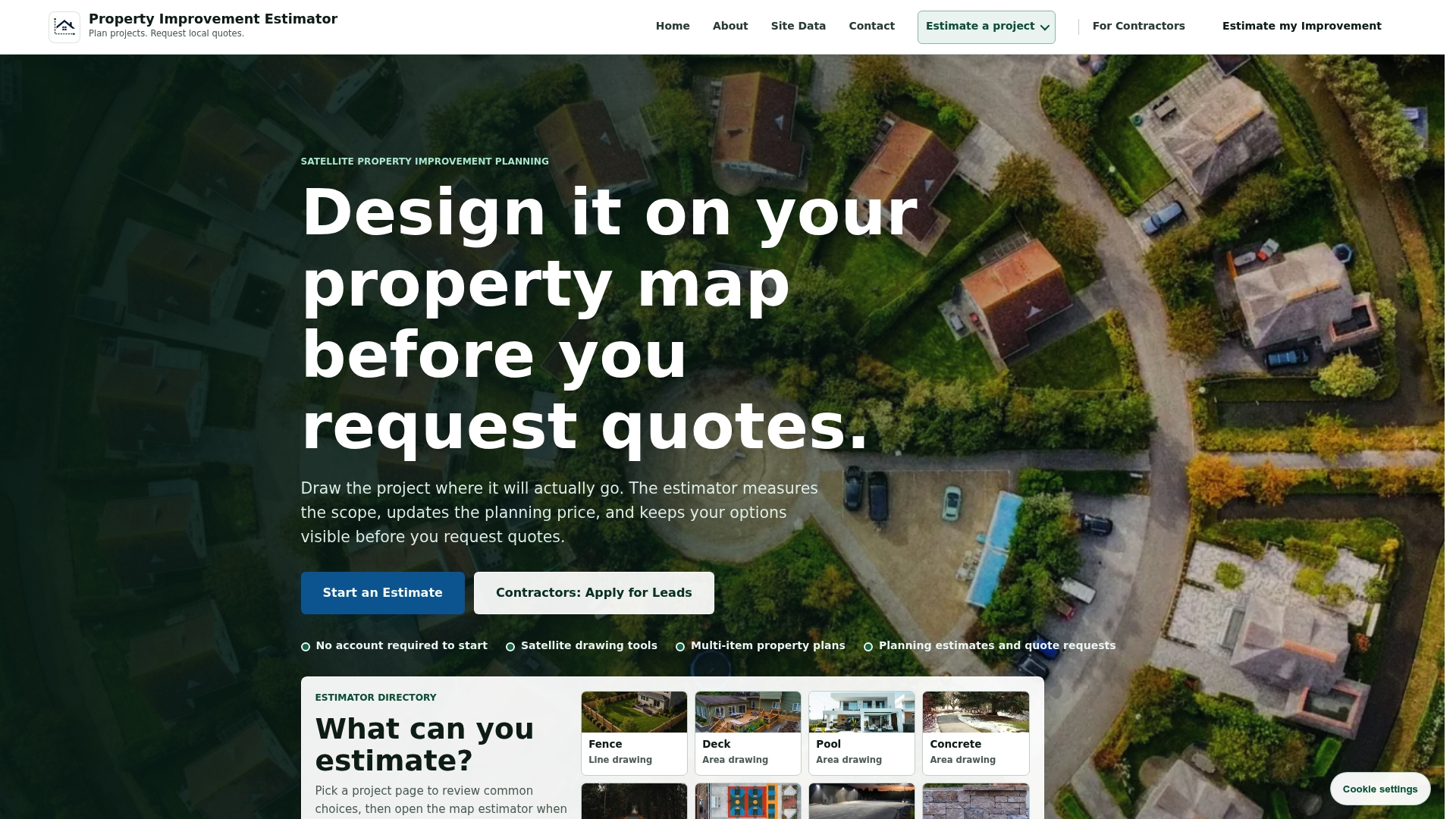
Before you start, gather your court dimensions, a few photos of the site, and your list of must-have accessories like hoops, nets, or fencing height. Feed that into the sport court estimate calculator and you’ll walk away with a contractor-ready scope, not just a ballpark number. If your project includes a fence line or added lighting, the platform can also route fence quotes or lighting estimates from the same site plan. Start your property estimate today and see what your actual yard costs to build on.
Sources
- Cooperative purchasing | Sourcewell
- Outdoor Revolution — SnapSports
FAQ
What Is a Sport Court?
A sport court is a purpose-built surface, usually modular tile or bonded acrylic, designed to support one or more sports like basketball, pickleball, tennis, or volleyball in a backyard or facility setting.
How Much Does a Sport Court Floor Cost?
Cost depends heavily on size, surface type, and site conditions like drainage and slope, with small half-courts costing far less than full-size multi-sport or community installations. Running your dimensions through a sport court cost calculator gives a far more accurate number than a general estimate.
How Do I Build a Sport Court in My Backyard?
Start by measuring your available space and checking slope and drainage, then decide between a modular tile overlay on existing concrete or a new slab with bonded acrylic. From there, confirm permits and HOA rules, get itemized bids from certified installers, and map the site with a tool like the sport court estimator to get contractor-ready numbers.
Are Sport Courts a Good Investment?
A well-built sport court increases how much a family actually uses their outdoor space and can support ongoing community programming when built for public use, though direct resale value varies by market and property. Low-maintenance surfaces tend to protect that investment longer since they avoid frequent resurfacing costs.
What Maintenance Does a Sport Court Need?
Modular tile surfaces mostly need rinsing and occasional tile replacement, while acrylic surfaces require periodic resurfacing on a multi-year cycle depending on sun exposure and traffic. Indoor timber floors need refinishing less often but require moisture control to avoid warping.