Outdoor Lighting Design Principles

Outdoor lighting transforms properties from functional spaces into atmospheric environments that extend usability well beyond daylight hours. Whether you're planning landscape illumination, pathway lighting, or accent features for architectural elements, understanding core design principles ensures your lighting installation delivers both beauty and practicality. As property owners increasingly invest in outdoor living spaces in 2026, strategic lighting design has become essential for safety, aesthetics, and property value enhancement.
Proper outdoor lighting design balances multiple objectives: creating safe navigation paths, highlighting landscape features, providing security, and establishing ambiance. This comprehensive guide explores the fundamental principles that professional designers use to create cohesive outdoor lighting schemes that serve residential and commercial properties effectively.
Layering Light for Functional and Aesthetic Impact
The most successful outdoor lighting designs incorporate multiple layers of illumination, each serving distinct purposes while working together harmoniously. This layered approach prevents the harsh, one-dimensional look that results from relying on a single light source or type.

Task lighting addresses functional needs, illuminating areas where activities occur. This includes pathway lights that guide safe movement, step lights that prevent tripping hazards, and focused illumination for outdoor kitchens, dining areas, or sport courts. Task lighting should provide adequate brightness without creating glare that impairs vision or detracts from the overall atmosphere.
Ambient lighting establishes the general mood and overall visibility of your outdoor space. This layer provides soft, diffused illumination that makes areas comfortable and inviting. Wall-mounted fixtures, post lights, and overhead pergola lighting typically contribute to ambient lighting. The goal is creating sufficient brightness for general visibility without overwhelming brighter task areas or decorative accent lighting.
Accent lighting draws attention to specific features worth highlighting—architectural details, specimen trees, sculptures, water features, or unique landscape elements. This dramatic layer adds visual interest and depth by creating focal points that guide the eye through your outdoor environment. Accent lights typically use narrower beam spreads and strategic positioning to create shadows and contrast that emphasize texture and form.
Understanding Light Temperature and Color
The color temperature of outdoor lighting significantly impacts the atmosphere and how landscape elements appear after dark. Measured in Kelvin (K), color temperature ranges from warm amber tones to cool blue-white hues.

Warm white light (2700K-3000K) creates inviting, cozy atmospheres similar to traditional incandescent bulbs. This temperature range complements natural wood tones, brick, stone, and warm-colored plantings. Most residential outdoor spaces benefit from warm white lighting, as it encourages relaxation and social gathering while rendering skin tones naturally.
Neutral white (3500K-4100K) offers a balanced option that works well for task-oriented areas like outdoor workspaces, garages, or security lighting. This temperature provides clarity and visibility while remaining reasonably flattering to landscaping and architectural features.
Cool white (5000K+) produces crisp, blue-toned illumination that enhances modern architectural styles and provides excellent visibility. However, this temperature can appear harsh and institutional in residential settings. Reserve cool white for specific applications where color accuracy or maximum visibility matters more than ambiance.
Consistency in color temperature throughout your lighting design creates cohesion. Mixing temperatures can work when intentionally separating distinct zones, but random variation typically produces a disjointed, unprofessional appearance.
Controlling Brightness and Preventing Light Pollution
Excessive brightness ranks among the most common mistakes in outdoor lighting design. More light does not automatically equal better results—strategic placement of appropriately powered fixtures outperforms indiscriminate over-illumination every time.
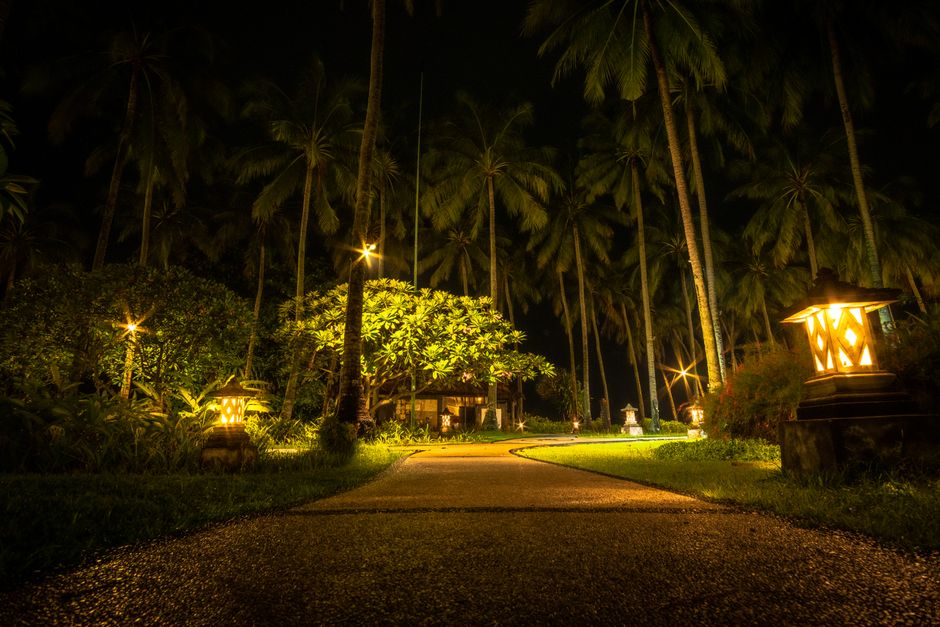
The principle of "less is more" applies particularly to residential outdoor lighting. Human eyes adapt remarkably well to lower light levels, meaning you need far less illumination than intuition suggests. Start with lower wattages and add supplemental fixtures only where truly necessary. Modern LED technology makes this approach easier, as these fixtures consume minimal energy even when providing adequate illumination.
Light pollution extends beyond environmental concerns—it directly impacts your property's aesthetics and functionality. Poorly shielded fixtures that cast light upward waste energy while creating sky glow that obscures stars and disrupts natural darkness. Lights that spill onto neighboring properties create nuisance issues and may violate local ordinances.
Implementing these strategies minimizes light pollution while maximizing effectiveness:
- Use fully shielded fixtures that direct light downward rather than allowing upward spillage
- Position fixtures to illuminate specific targets rather than broadcasting light indiscriminately
- Install timers, photocells, or motion sensors to operate lights only when needed
- Select lower-lumen fixtures and use multiple strategic placements rather than fewer high-output sources
- Angle spotlights carefully to prevent light from extending beyond your property boundaries
Creating Depth Through Shadow and Contrast
Professional outdoor lighting design leverages darkness as actively as light. The interplay between illuminated areas and shadows creates depth, texture, and visual interest that uniform brightness cannot achieve.
When lighting trees, for example, uplighting from the base creates dramatic shadows that emphasize branch structure and canopy texture. This technique, called silhouetting, works particularly well with trees that have interesting branching patterns. Conversely, moonlighting involves mounting fixtures high in trees to cast gentle, dappled light downward, mimicking natural moonlight filtering through leaves.
Grazing techniques illuminate textured surfaces—stone walls, brick facades, or rough-cut wood—from close proximity at acute angles. This approach emphasizes texture by creating small shadows within surface irregularities, adding dimensional interest to flat planes.
Shadow patterns themselves become design elements. Consider how fixture placement creates shadows that change as viewers move through space or as landscaping grows and evolves. A well-placed fixture might cast ornamental grass shadows onto a wall, creating natural artwork that shifts with breezes.
Contrast ratios between bright and dark areas require careful management. Excessive contrast creates visibility challenges as eyes struggle to adjust between extremes, while insufficient contrast produces flat, uninteresting results. Aim for gradual transitions that guide viewers comfortably through varying light levels.
Planning for Safety and Security
Beyond aesthetics, outdoor lighting serves critical safety and security functions that require deliberate planning during the design phase.
Pathway and step illumination prevents trips and falls, particularly important for properties with elevation changes, stairs, or uneven surfaces. Effective path lighting illuminates the walking surface without creating glare that blinds users. Low-level fixtures or recessed step lights work better than tall post lights that can shine directly into eyes.
Entry and exit points require adequate illumination for key management, package handling, and facial recognition. Front doors, garage entries, and gates should receive focused task lighting that provides functionality while complementing your overall design aesthetic.
Security lighting deters intruders by eliminating hiding spots and dark corners around your property perimeter. Motion-activated fixtures provide energy-efficient security that alerts occupants to movement while avoiding the light pollution of always-on flood lights. Position security lights to illuminate approaches and vulnerable areas without creating harsh, prison-yard aesthetics during normal evening use.
Swimming pools, spas, and water features require specialized lighting that meets safety codes while enhancing visual appeal. Underwater lighting extends pool usability into evening hours and creates stunning aesthetic effects, but must comply with electrical safety standards specific to wet environments.
Implementing Smart Controls and Flexibility
Modern outdoor lighting systems incorporate control technology that enhances functionality, convenience, and energy efficiency. As of 2026, smart lighting controls have become standard in professionally designed systems rather than premium upgrades.
Zoning divides your lighting system into separate circuits controlled independently. This allows you to activate only the lighting needed for current use—pathway lights for evening dog walks, accent lighting for entertaining, or perimeter security lights overnight. Zoning also enables different lighting scenes that transform your property's character based on occasion or season.
Dimming capability extends beyond energy savings to provide atmospheric control. The ability to adjust brightness levels means your lighting adapts to changing needs: brighter illumination for active gatherings, subdued lighting for quiet evenings, or minimal accent lighting when viewing the night sky.
Timers and astronomical clocks automate lighting operations based on sunset/sunrise times that adjust seasonally. This automation ensures lights activate when needed without manual intervention while preventing wasteful daytime operation or lights remaining on after dawn.
Smart home integration connects outdoor lighting to broader home automation systems, enabling voice control, smartphone operation, and coordination with indoor lighting, security systems, and other connected devices. These systems provide remote operation when traveling and can simulate occupancy for security purposes.
Choosing fixtures with replaceable LED modules rather than integrated units provides long-term flexibility. As LED technology continues advancing, replaceable modules allow future upgrades without replacing entire fixtures.
Designing With Long-Term Maintenance in Mind
Sustainable outdoor lighting design considers ongoing maintenance requirements alongside initial installation. Systems that demand constant attention or difficult service create frustration and often fall into disrepair.
Fixture selection should account for your local climate and environmental conditions. Coastal properties require corrosion-resistant materials that withstand salt air. Areas with heavy snow need fixtures that won't be damaged by plowing or ice accumulation. Properties with large trees should use fixtures that tolerate falling debris and allow easy lens cleaning.
Accessibility matters significantly for maintenance efficiency. Fixtures mounted at heights requiring scaffolding or specialty equipment for lamp replacement create service challenges that increase long-term costs. Where high mounting is necessary, specify long-life LED fixtures that minimize replacement frequency.
Planning your outdoor lighting design alongside other property improvements creates opportunities for efficient installation and cohesive results. Using tools like Property Improvement Estimator allows you to visualize how lighting integrates with sport courts, pools, decks, and other features while obtaining planning estimates before committing to contractors. This comprehensive approach ensures lighting complements your overall property vision rather than functioning as an afterthought. For example, understanding the cost to replace a concrete patio might influence your overall budget for both the patio itself and the integrated lighting design.
Conclusion
Effective outdoor lighting design principles synthesize technical knowledge, aesthetic sensibility, and practical planning to create illumination schemes that enhance safety, security, and beauty. By layering light types, controlling brightness appropriately, leveraging shadow and contrast, and implementing flexible controls, you create outdoor environments that serve diverse needs while expressing your property's unique character. Whether you're planning subtle landscape accents or comprehensive lighting for outdoor living spaces, these fundamental principles guide decisions that deliver professional results. As you develop your outdoor lighting vision, consider how illumination integrates with your broader property improvement goals to create cohesive, functional outdoor environments that extend your living space well into the evening hours. To understand the full scope of investment, you might also want to review a Landscape Lighting Cost Estimate Guide.