Fencing Costs $10–$65/ft: Homeowners' Site Plan to Get Accurate Quotes
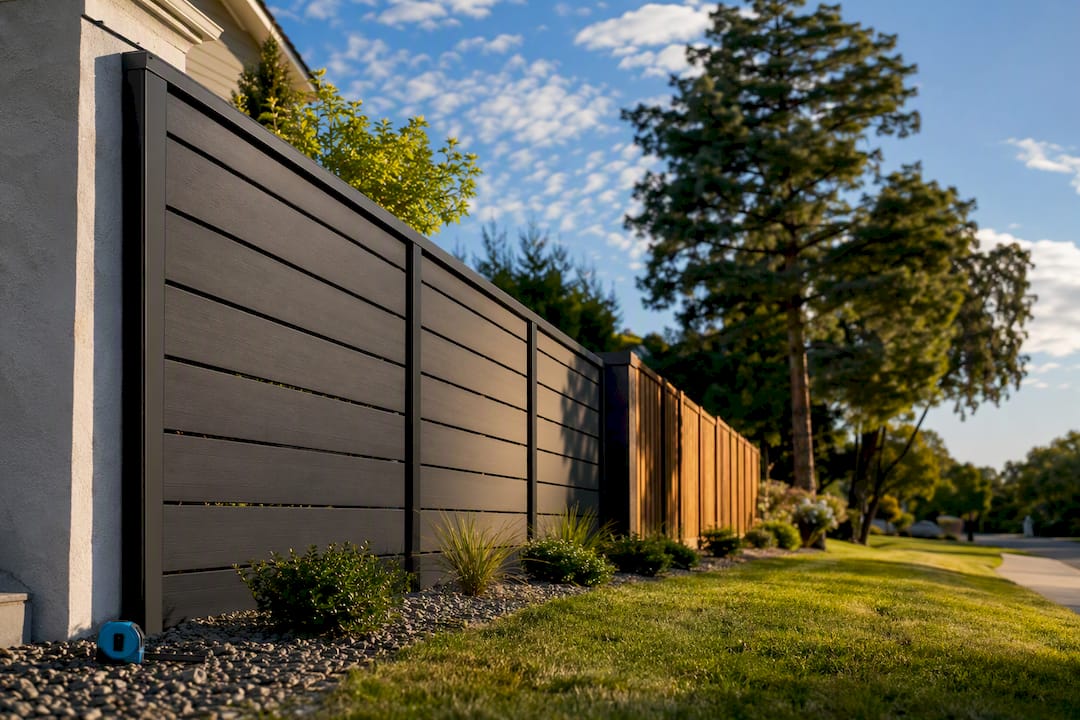
Expect a typical residential fence to run $10 to $65 per linear foot installed, with most complete projects landing between $1,500 and $9,750 depending on material and length. The single best move before calling contractors: measure your property line, sketch the run, and note gates and terrain changes first. Material choice, gate count, and ground conditions swing quotes more than anything else, and a clear site plan is what keeps three bids from coming back wildly different.
TL;DR:
- Fence costs vary widely by material, with chain link typically costing $10–$25 per foot and composite up to $65; most projects fall within $2,000–$5,000.
- High gate costs, terrain adjustments, and fence height changes can significantly increase the overall price, often by hundreds or thousands of dollars.
- Proper planning with exact measurements, site details, and a clear scope reduces bid discrepancies and prevents unexpected expenses.
- Climate influences material durability, with wood and vinyl needing specific care, while metal and composite generally last longer in diverse weather conditions.
- Accurate, line-item contractor bids depend on standardized, detailed site plans; generic estimates or verbal descriptions can lead to mismatched quotes.
Table of Contents
- How Much Does Fencing Cost Per Linear Foot?
- Which Fence Material Should You Choose?
- Why Do Fence Quotes Vary So Much Between Contractors?
- How Do You Measure and Plan a Fence Before Getting Quotes?
- What Zoning Rules and Permits Apply to Fences?
- Does Fencing Affect Wildlife and Drainage on Your Property?
- Which Fence Styles Offer the Best Privacy and Security?
- What Fence Style Fits Your Home’s Look?
- How Does Climate Affect Fence Material Choice?
- A Quick Planning Checklist Before You Call Contractors
- Get Accurate Local Fence Quotes From a Site-Specific Plan
- Sources
- FAQ
How Much Does Fencing Cost Per Linear Foot?
Fencing prices vary more by material than almost any other home improvement category, which is why two neighbors with similar-sized yards can get quotes $8,000 apart. A national installed-cost index puts the weighted median at $37.6 per linear foot across common residential materials, with chain link running cheapest at $22.5 per foot and composite topping the list near $60 per foot. Wood and vinyl sit in the middle, at roughly $39 and $41 per foot respectively.
Broader industry data shows a wider practical range. Installed costs commonly fall between $10 and $65 per linear foot, and most homeowners end up spending $2,000 to $5,000 on a full project, though jobs can dip to $500 for a short chain-link run or climb past $10,000 for a long wrought iron or composite install. A separate estimator benchmark shows basic mid-range jobs landing around $33 to $54 per linear foot nationwide, which lines up closely with the other two sources.
Here’s how that breaks down for a typical backyard:
| Material | Cost per linear foot | 200-ft backyard total |
|---|---|---|
| Chain link | $10–$25 | $2,000–$5,000 |
| Wood | $15–$45 | $3,000–$9,000 |
| Vinyl | $25–$45 | $5,000–$9,000 |
| Aluminum/metal | $30–$65 | $6,000–$13,000 |
| Composite | $30–$65 | $6,000–$13,000 |
Those ranges assume flat ground, standard post spacing, and no demolition. Removing an old fence typically adds another $3 to $8 per linear foot, and permit fees or rocky terrain can push a quote well past the table above before a single board goes up.
Which Fence Material Should You Choose?
Picking a material is really a bet on how long you’ll own the house and how much upkeep you’re willing to do. Wood costs less upfront but demands the most ongoing attention; vinyl and composite cost more to install but largely take care of themselves for a decade or longer, a trade-off confirmed across multiple material cost and maintenance comparisons.
- Wood (cedar or pressure-treated): Lasts 15 to 20 years with regular staining or sealing every 2 to 3 years; best for classic curb appeal and budget-conscious privacy fencing. Check pressure-treated wood pricing before you budget.
- Vinyl: Lasts 20 to 30 years with almost no maintenance beyond occasional washing; strong choice for pool enclosures and full privacy screens. See vinyl privacy fence costs for a per-foot breakdown.
- Chain link: Lasts 15 to 20 years, needs almost no upkeep, but offers minimal privacy; a practical pick for large acreage, dog runs, or side-yard security where looks matter less.
- Aluminum or ornamental metal: Lasts 20+ years, rust-resistant, low maintenance; suited to pool code compliance and homes wanting an open, decorative boundary rather than a solid screen.
- Composite: Lasts 25 to 30 years, resists rot and insects, costs the most upfront; makes sense for owners planning to stay put long enough to recoup the premium.
- Masonry (brick or block): Lasts 50+ years with minimal maintenance, but installation costs and labor run far higher than any wood or vinyl option; best reserved for front-yard walls or short accent sections.
Ownership horizon matters more than most buyers realize. Vinyl or composite often break even against wood around the 12 to 15 year mark once you factor in repeated staining and board replacement, so a fence you’ll own for two decades favors the pricier low-maintenance materials even if the initial quote stings. Full material and climate fit details are worth reviewing before you commit.
Why Do Fence Quotes Vary So Much Between Contractors?
Two contractors can look at the same yard and hand you numbers that differ by thousands of dollars, and it’s rarely because one is overcharging. It usually comes down to what each one assumes about gates, height, ground conditions, and scope, none of which show up clearly on a bare “EX per foot” quote.
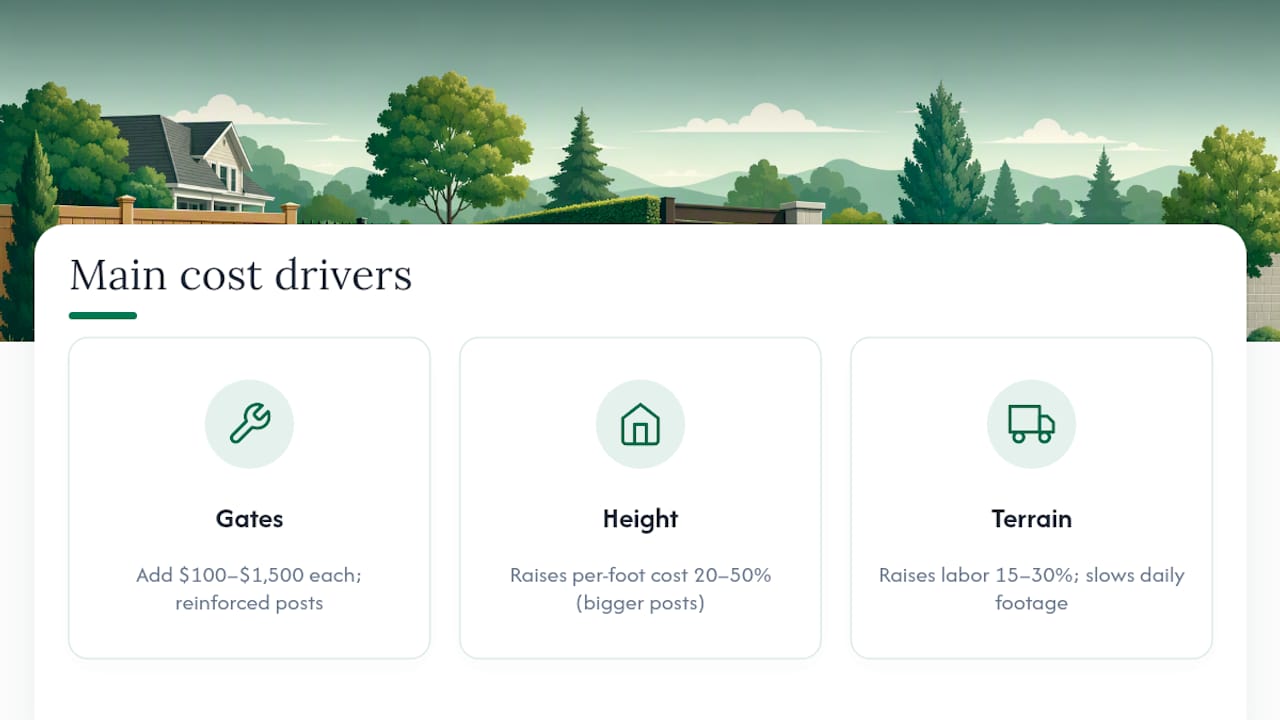
Gates are the biggest wildcard. They require reinforced posts, precise alignment, and sometimes hardware like automatic closers, and typically add $100 to $1,500 each depending on width and type. Always insist gates appear as their own line item rather than folded into the per-foot rate.
Height changes the math in a way that surprises most homeowners. Going from a 4-foot to a 6-foot fence doesn’t just add material. It can raise the per-foot cost by 20% to 50% because taller sections need bigger posts, deeper concrete footings, and extra bracing to handle wind load.
Terrain is the quiet cost driver nobody asks about upfront. Rocky or sloped lots can cut a crew’s daily footage and raise labor costs by 15% to 30% or more compared to flat, easy-to-dig ground. Post spacing plays a role too. Tighter spacing means more posts and more concrete, which can add hundreds or thousands of dollars depending on total length.
Before you sign anything, ask every contractor to itemize the same nine categories: material, posts, concrete, gates, demolition, permits, excavation, hardware, and labor. Comparing bids line by line, rather than by bottom-line total, is what actually reveals which quote reflects the real scope of your yard.
Pro Tip: Send the exact same measurements and gate count to every contractor you contact. If their itemized numbers still don’t line up, ask what assumption they made about your terrain or post spacing. That’s usually where the gap comes from.
How Do You Measure and Plan a Fence Before Getting Quotes?
A vague description like “fence my backyard” invites vague, inconsistent bids. A dimensioned plan invites accurate ones. Here’s the process that closes the gap:
- Walk the property line and measure total linear footage, including any offsets around structures or trees.
- Mark setbacks from your property boundary, since most municipalities require a few inches to a few feet of clearance.
- Note every slope, dip, or low spot along the run. Contractors need this to estimate footing depth and labor hours.
- Flag gate locations and widths, and specify whether you need a walk gate, a double-drive gate, or both.
- Photograph the site, including any existing fence for removal, tree roots, drainage issues, or utility markings already on the ground.
- Call 811 before any digging begins so utility lines get marked and contractors know where they can safely set posts.
A hand-drawn sketch works, but a satellite-drawn plan with exact dimensions and marked obstacles cuts down on the follow-up site visits and change orders that stretch out a project timeline, since contractors can price against a fixed scope instead of guessing during a walkthrough. Tools that break down boards, posts, gates, and hardware separately also make it easier to spot where one contractor’s estimate diverges from another’s.
What Zoning Rules and Permits Apply to Fences?
Most municipalities regulate fence height, material, and placement, and the rules differ enough between neighboring towns that assuming your last home’s code applies here is a mistake. Front-yard fences commonly max out at 3 to 4 feet, while backyard fences often allow 6 to 8 feet, though pool enclosures usually carry their own stricter minimum height requirement for safety.
Permits typically kick in once a fence crosses a certain height threshold, commonly 6 to 7 feet, though some jurisdictions require a permit for any new fence regardless of height. Corner lots often face additional sight-line restrictions near intersections and driveways to preserve driver visibility.
HOA rules sit on top of municipal code and can be more restrictive. An HOA might ban chain link entirely, require a specific vinyl color, or cap height below what the city allows. Check both before ordering materials, because a fence that passes city inspection but violates HOA covenants can still force a costly rebuild. Setback requirements, the distance your fence must sit from the property line, also vary by lot type and easement status, so pull your property survey before you plan the exact run.
Does Fencing Affect Wildlife and Drainage on Your Property?
A new fence changes how water, animals, and debris move across your yard, and skipping this consideration can create problems that show up months after installation. Solid privacy fencing blocks natural drainage paths, so a fence installed across a slope without gaps or grading adjustments can direct runoff toward a neighbor’s yard or pool against your own foundation.
Wildlife corridors matter more in suburban and rural lots than most homeowners expect. A solid 6-foot privacy fence can trap small animals like rabbits or box turtles inside a yard, or block deer and other larger animals from established movement paths, sometimes pushing them onto roads instead. Leaving small gaps at the base, or choosing a style like ranch rail or picket that allows some passage, reduces that pressure without sacrificing the fence’s main purpose.
Local wildlife agencies in some regions actually recommend specific fence styles near wetlands or protected corridors, so it’s worth a quick check if your property backs up to open land, a creek, or a greenbelt. Materials matter here too: treated wood can leach chemicals near waterways over time, while vinyl and metal are generally considered lower-impact choices for fence lines close to ponds or drainage easements. None of this typically requires a special permit, but factoring it in during the design stage avoids a rebuild later.
Which Fence Styles Offer the Best Privacy and Security?
Privacy and security are related but not identical, and the fence that maximizes one doesn’t always maximize the other. Solid board privacy fencing, whether wood or vinyl, blocks sightlines completely and works best when you want a backyard that feels fully enclosed. Board-on-board and shadowbox styles offer a middle ground, cutting visibility while still allowing some airflow through small gaps.
Security is more about height, climbability, and gate hardware than material alone. A 6-foot fence with no horizontal rails on the outside face is harder to scale than the same height with rails that double as a ladder. Ornamental aluminum and wrought iron don’t block sightlines but deter intrusion through height and pointed toppers, which is why they’re common around pools where visibility for supervision matters as much as containment.
Chain link, even with privacy slats woven through it, offers the weakest deterrent of the common materials, though adding height or a top rail improves that. For a home genuinely focused on both, a taller solid fence, a self-latching gate with a lock, and post spacing tight enough to prevent gaps are the three features worth prioritizing over material alone.
What Fence Style Fits Your Home’s Look?
The style you choose says as much about your house as the material does. Picket fencing, typically 3 to 4 feet with spaced vertical boards, reads as traditional and works well on front yards of colonial or craftsman-style homes. Board-on-board or solid panel fencing gives a clean, modern look and full privacy, common on contemporary builds and backyard entertaining spaces.
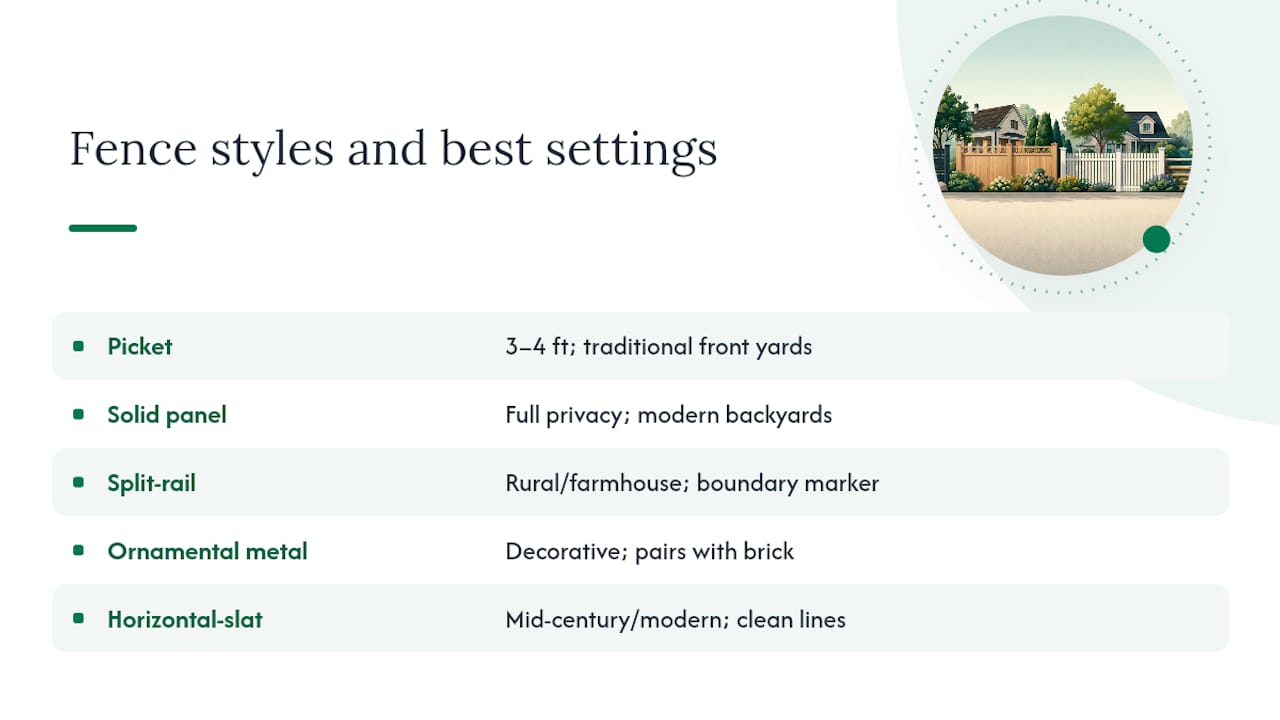
Split-rail and ranch-style fencing suits larger rural lots and farmhouse aesthetics, prioritizing boundary marking over privacy. Ornamental metal, with its thin vertical pickets and decorative finials, pairs naturally with brick or stone exteriors and formal landscaping. Horizontal-slat wood or composite fencing has become the go-to for mid-century and modern homes, since the horizontal lines echo clean architectural facades.
Matching fence style to your home’s existing trim, siding, and door finishes keeps the whole exterior looking intentional rather than mismatched. If you’re already updating other exterior elements, it’s worth thinking about material and finish choices holistically rather than picking a fence in isolation. A white vinyl fence against a home with warm wood tones can look jarring, while the same fence against light siding disappears naturally into the property line.
How Does Climate Affect Fence Material Choice?
Weather does more damage to a fence than time alone, and the material that thrives in a dry climate can fail fast in a humid or freeze-thaw one. Wood swells and contracts with moisture, so regions with heavy rain or high humidity see faster rot and warping unless the owner keeps up with sealing every 2 to 3 years.
Freeze-thaw cycles are hard on any fence with concrete footings, since repeated freezing can heave posts out of alignment over several winters. Deeper footings below the frost line reduce this risk, and it’s worth confirming your contractor accounts for local frost depth rather than using a generic post depth.
Vinyl handles humidity and rain well but can become brittle in extreme cold and may soften slightly in intense heat, though this rarely causes structural problems. Composite resists moisture damage better than wood but expands and contracts more than vinyl across large temperature swings, which matters for gate alignment in climates with big seasonal shifts. Metal fencing holds up across most climates but needs a rust-resistant coating in coastal or high-humidity areas where salt air accelerates corrosion. Choosing material with your specific climate in mind, not just your budget, is what determines whether a fence looks good at year 15 or needs replacing at year 8.
A Quick Planning Checklist Before You Call Contractors
Good bids start with good information, not the other way around. Homeowners who show up with measurements, gate counts, and a rough material preference get faster, tighter quotes than those who ask a contractor to figure it all out on-site.
Run through this before you make a single call: measure your total linear footage, check municipal codes and HOA rules for your area, call 811 to get utilities marked, pick a material based on your maintenance tolerance and ownership timeline, list every gate separately with its width, and get at least three itemized quotes to compare line by line.
— Christian
Get Accurate Local Fence Quotes From a Site-Specific Plan
Generic per-foot estimates only get you so far when your yard has slopes, existing structures, or gates that don’t fit a standard template. There are online tools that let you draw your fence line directly on a satellite map of your property, marking gates, terrain changes, and property boundaries so the plan reflects your actual lot instead of a national average.

That level of detail matters because contractors price faster and more consistently when they’re working from a fixed scope rather than a verbal description over the phone. Instead of three bids built on three different assumptions, you get quotes built on the same dimensioned plan. Run your numbers with the fence cost estimator or go straight to requesting local fence quotes once your plan is ready to share.
Sources
- Fence cost index (FenceAdvisors)
- How much does it cost to install a fence? (NerdWallet)
- Types of fences, costs and maintenance (Angi)
FAQ
Do I need a permit to install a fence?
Many municipalities require a permit once a fence exceeds 6 to 7 feet in height, and HOA approval is often required separately regardless of height. Check both your city code and HOA covenants before ordering materials.
How much should I budget per linear foot?
Plan for $10 to $65 per linear foot depending on material, with most complete projects totaling $1,500 to $9,750. Wood and chain link sit at the lower end; composite and wrought iron sit at the higher end.
Is DIY fence installation worth it?
DIY saves on labor but requires renting tools, pulling permits, and calling 811 for utility locates, and removing an old fence adds $3 to $8 per linear foot if you’re replacing an existing one. It makes the most sense for flat, obstacle-free yards with straightforward runs.
Why do gates cost extra on a fence quote?
Gates need reinforced posts and precise alignment, adding $100 to $1,500 each depending on width and hardware. Always ask contractors to list gates as a separate line item rather than folding them into the per-foot rate.
How can I get more consistent quotes from different contractors?
Provide every contractor the same measured dimensions, gate count, and material preference, ideally through a shared site plan rather than a verbal walkthrough. A tool like Propertyimprovementestimator’s satellite-based estimator helps standardize that scope across every bid you request.