Map to Cut Quote Variance and Deck Railing Cost for Homeowners
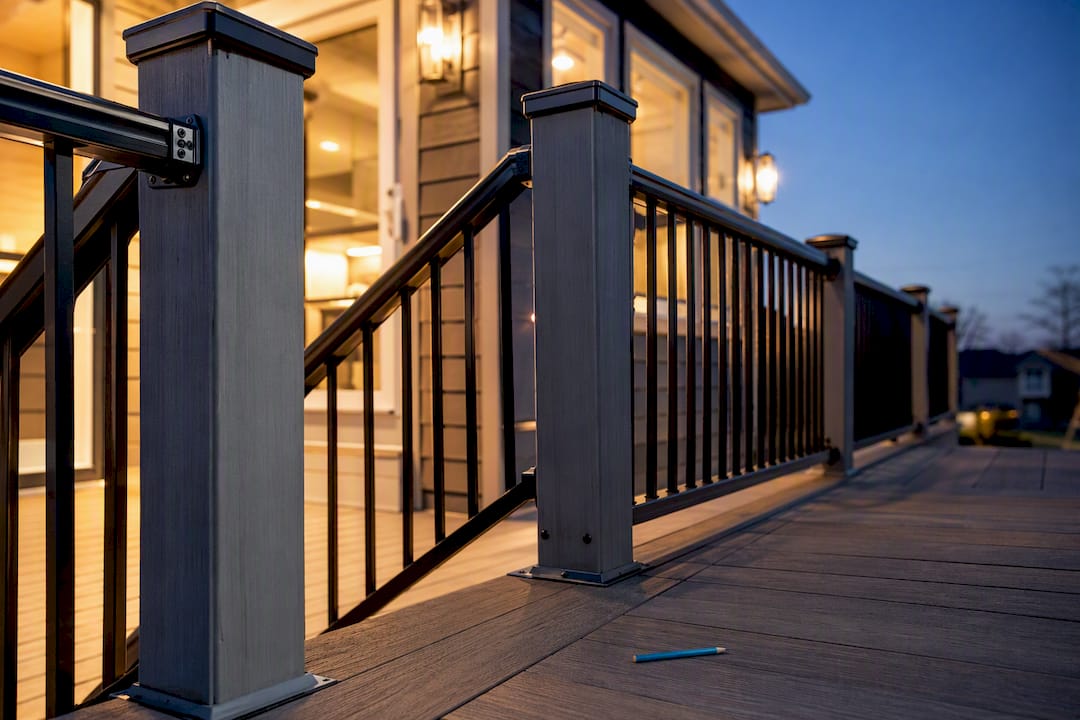
Expect to pay roughly a moderate to high range per linear foot installed for deck railing, depending on material, with most homeowners spending a mid-range amount once posts and hardware are included. Corners, stairs, and rotted posts push totals higher than a simple per-foot number suggests. Before you call a contractor, measure your railed perimeter and note every corner and stair run. That single step keeps quotes consistent and prevents change orders later.
TL;DR:
- Corner and stair runs require additional posts and hardware, adding 20 to 40 percent to the overall railing cost.
- Rotted or damaged existing posts can increase replacement costs by $20 to $120 per post, especially for cable or glass systems.
- Site-specific measurements, including corners, stairs, and post conditions, are crucial to obtaining accurate quotes and avoiding unexpected expenses.
- Contractor-installed railing projects typically cost around $2,500 on average, with labor rates ranging from a few dollars to over $20 per linear foot.
- Material choices like composite and aluminum can influence total ownership costs, with composite often cheaper long-term and aluminum maintaining a low-maintenance profile.
Table of Contents
- How Much Does Deck Railing Cost by Material?
- What Actually Changes a Railing Quote?
- What Will Railing Cost for a Typical Deck Size?
- DIY vs. Professional Installation: What’s the Real Cost Gap?
- How Do You Get an Accurate, Site-Specific Estimate?
- What Do Homeowners Get Wrong About Railing Costs?
- Get a Site-Specific Deck Railing Estimate
- Where These Numbers Come From
- Sources
How Much Does Deck Railing Cost by Material?
The per-foot number you see quoted almost never tells the whole story, but it’s still the right place to start. Installed pricing includes the posts, top and bottom rails, infill (balusters, cable, or panels), fasteners, and basic labor to set and secure the run. What it usually excludes: post replacement for rotted framing, stair-specific hardware, permit fees, and removal of an old railing system.
Here’s what installed pricing looks like across common materials in 2026, based on DeckMath’s installed cost data:
A few things worth knowing before you pick a material:
- Pressure-treated wood is the cheapest upfront but needs the most ongoing attention, and rot at the post base is the most common reason homeowners replace it early.
- Composite costs more than wood per foot but often wins on total cost of ownership once you factor out a decade of re-staining.
- Cable and glass systems carry the highest installed rates because they demand engineered posts and tighter tolerances, not just pricier materials.
- Aluminum sits in a sweet spot for owners who want low maintenance without paying glass or cable prices.
Base kit pricing (material only, no labor) tends to run lower than these installed figures. Craft-Bilt’s aluminum calculator, for example, lists standard picket kits around $48 per linear foot before installation, which is a useful sanity check if a contractor’s installed quote seems out of line.
What Actually Changes a Railing Quote?
Linear footage sets the baseline, but a handful of site conditions determine whether your final bill matches that baseline or blows past it.
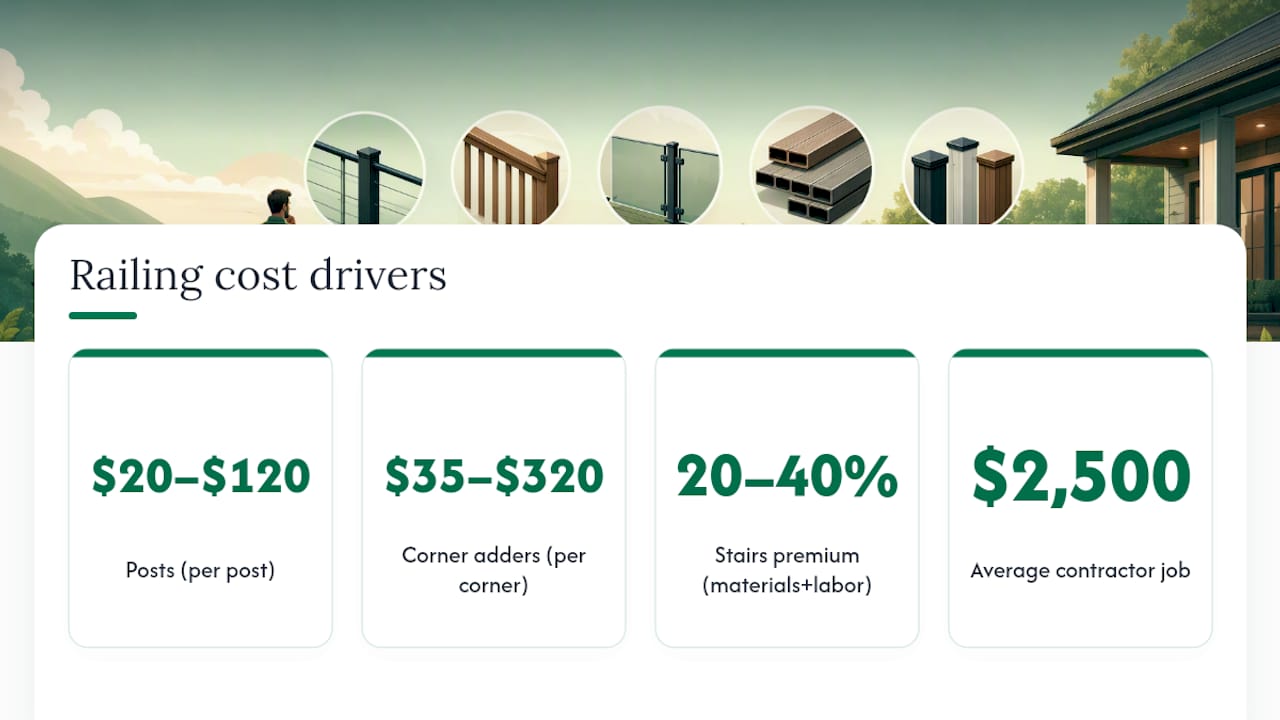
Posts. If your existing posts show rot or insect damage, budget $20 to $120 per post for replacement, depending on material. Posts for cable or glass systems cost more because they’re engineered to handle higher lateral loads.
Corners. Every 90-degree turn typically needs an extra post plus corner-specific hardware. DeckMath’s calculator models corner adders between $35 and $320 depending on the system, with cable and glass sitting at the top of that range.
Stairs. Stair runs carry a 20 to 40 percent premium on both material and labor, since the railing has to follow a raked angle and often needs a separate graspable handrail to meet code.
Mounting and removal. Fascia-mounted rails sometimes need blocking or framing reinforcement added before installation, which adds labor hours. Tearing out an old railing system before the new one goes in is a line item too, not a freebie.
Permits and access. Second-story decks or hard-to-reach lots slow labor down and raise costs. A permit cost calculator can help you budget for inspection fees before they surprise you at closeout.
One number worth remembering: contractor-installed railing projects average around $2,500 for a typical residential job, though labor alone can range from a few dollars to well over $20 per linear foot depending on region and complexity.
What Will Railing Cost for a Typical Deck Size?
To get a real budget number, calculate railed linear footage first. That means measuring the perimeter that actually needs a railing, not the whole deck footprint. Skip the side that butts against the house, and count stair openings separately rather than folding them into the main run.
Here’s how that plays out for common deck sizes, using composite as the mid-tier example and pressure-treated wood and cable as the budget and premium bookends:
These ranges reflect flat, corner-only perimeters. Add a stair run and you’re layering another 20 to 40 percent onto that segment’s cost, and each extra 90-degree turn adds a post and hardware on top of the base per-foot rate.
DIY vs. Professional Installation: What’s the Real Cost Gap?
Contractor labor for railing installation generally runs $15 to $40 per linear foot on top of materials, and that rate climbs fast with stairs, corners, or elevated decks. A labor cost calculator that factors in footprint, height, and access gives a more realistic number than a flat hourly rate.
Some systems are genuinely DIY-friendly. Pressure-treated wood and cedar railing require basic tools and forgiving tolerances, so a handy homeowner can save a meaningful chunk of the labor cost. Cable and glass systems are a different story. They need engineered anchors and precise spacing, and a mistake there is a safety issue, not just a cosmetic one.
If you’re hiring out, work through this before signing anything:
- Ask for proof of licensing and liability insurance, not just a business card.
- Confirm who pulls the permit and whether that cost is included in the bid.
- Request two or three references from railing jobs completed in the last year.
- Get the warranty terms in writing, including what’s covered on labor versus materials.
- Compare bids on identical linear footage, corner count, and stair specs, not just a bottom-line number.
A contractor hiring guide built for pool projects covers the same red flags that apply here: vague scope, no references, and pressure to sign fast.
Pro Tip: A bid that’s dramatically lower than the others usually means something’s missing, not that you found a deal. Ask what’s excluded before you celebrate the savings.
How Do You Get an Accurate, Site-Specific Estimate?
Per-foot pricing gets you in the right ballpark, but the number that actually matters comes from your specific site conditions. Before requesting quotes, walk your deck with this checklist:
- Measure every railed run separately, excluding the house-facing side.
- Count corners individually. Each one likely needs its own post.
- Measure stair runs as their own segment, not folded into the main perimeter.
- Note deck height and whether posts will need reinforcement.
- Check existing post condition and photograph anything that looks soft or discolored.
- Take wide-angle photos of the whole railed area for contractor reference.
This is where linear-foot pricing stops being useful on its own. Two decks with identical footage can price hundreds of dollars apart once you factor in stair complexity and post condition.
Mapping your project on a satellite-based deck estimator turns that checklist into precise measurements automatically, and gives contractors a bill of materials instead of a guess. Site-specific drawings and measurements consistently reduce quote variability and change orders compared to a verbal walkthrough.
Pro Tip: Send every contractor the same measurement packet. If their quotes still vary by more than 20 percent, ask what assumption they’re making differently.
What Do Homeowners Get Wrong About Railing Costs?
The biggest surprise on almost every railing project isn’t the material choice. It’s what’s hiding underneath the old railing. Posts that look fine from three feet away often turn out soft at the base once a contractor pulls the old hardware, and that discovery alone can add hundreds of dollars mid-project.
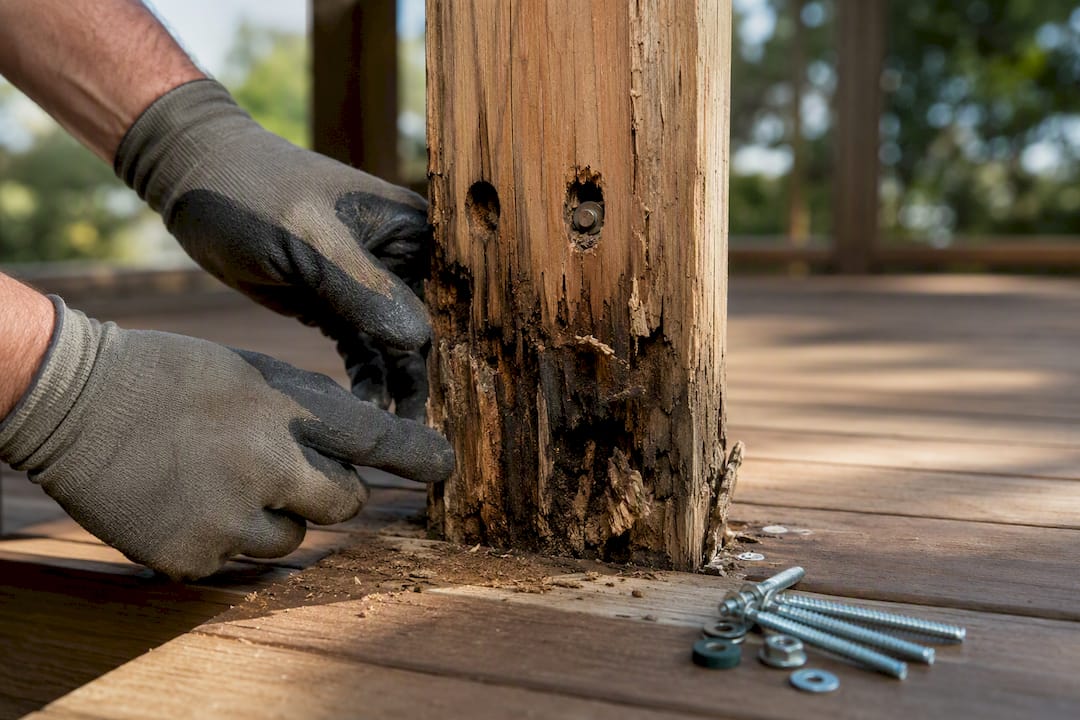
The second most common miss is corner counting. Homeowners tend to think in total footage and forget that every turn needs its own post and hardware. Stairs compound both problems at once, since they combine tricky angles with code requirements for a separate graspable handrail.
None of this means railing budgeting is guesswork. It means the smart move is treating your first measurement pass as seriously as the contractor will treat theirs.
— Christian
Get a Site-Specific Deck Railing Estimate
Generic per-foot pricing gets you close, but your actual deck has corners, stairs, and post conditions that a flat rate can’t account for. Property Improvement Estimator lets you draw your exact deck footprint on a satellite map, so the linear footage, corner count, and stair runs you send contractors are real numbers instead of guesses.

That precision matters because vague scope is exactly what causes quotes to swing wildly between contractors. When you map your railing plan on the satellite property estimator, the platform builds a bill of materials that reflects your specific project, factoring in local labor costs and the details that generic calculators miss. Contractors bidding on a mapped project scope faster and price tighter, because they’re not filling in blanks with assumptions.
If you’re planning other outdoor work alongside your railing, the same mapping approach works for a fence estimate or an outdoor lighting layout. Draw your deck now and request quotes built on real measurements instead of a phone-call guess.
Where These Numbers Come From
Guard height and baluster spacing requirements come from IRC R312, the baseline residential code. Per-foot pricing and corner/stair adders draw from DeckMath’s cost calculators and Angi’s labor cost data.
Sources
- What should labor cost installing new deck railing be? | Angi
- Composite deck railing cost 2026 — DeckMath
Recommended
- Deck Material Cost Calculator | Decking, Framing, Railings, Stairs, and Local Factors
- Deck Labor Cost Calculator | Footprint, Elevation, Stairs, Railings, Access, and Local Wages
- Deck Cost Calculator | Materials, Stairs, Railings, Elevation, and Local Costs
- Deck Estimate Calculator | Materials, Stairs, Railings, and Local Factors