Concrete Patio vs Paver Patio Cost in 2026

Choosing between a concrete patio and a paver patio involves balancing upfront costs, long-term maintenance, aesthetic preferences, and durability. Both options offer distinct advantages for outdoor living spaces, but understanding the financial implications helps homeowners make informed decisions. In 2026, material prices, labor rates, and installation complexity continue to shape the total investment required for each patio type.
This comprehensive guide breaks down the cost differences between concrete and paver patios, examining material expenses, installation labor, maintenance requirements, and long-term value to help you determine which option fits your budget and lifestyle.
Initial Installation Cost Breakdown
The most significant cost difference between concrete and paver patios appears during the initial installation phase. Concrete patios typically cost between $6 to $12 per square foot for basic installations in 2026, while paver patios range from $10 to $25 per square foot depending on materials and design complexity.

For a standard 300-square-foot patio, homeowners can expect to pay approximately $1,800 to $3,600 for poured concrete, whereas paver installations for the same area typically run $3,000 to $7,500. Premium pavers with intricate patterns or specialized materials can push costs even higher, sometimes reaching $30 to $40 per square foot.
Material Costs
Concrete material costs remain relatively stable and predictable. The basic mixture of cement, sand, aggregate, and water provides an economical foundation for outdoor surfaces. Homeowners selecting decorative finishes such as stamped concrete, colored concrete, or exposed aggregate can expect to pay $8 to $18 per square foot, narrowing the cost gap with pavers.
Paver materials vary substantially in price based on composition and quality:
- Concrete pavers: $3 to $6 per square foot for materials
- Brick pavers: $4 to $8 per square foot for materials
- Natural stone pavers: $7 to $16 per square foot for materials
- Porcelain pavers: $10 to $20 per square foot for materials
These material costs exclude installation labor, base preparation, and additional supplies such as sand, gravel, and edge restraints required for paver systems.
Labor and Installation Expenses
Labor represents a substantial portion of the total project cost for both patio types. Concrete installation typically requires less labor time because contractors pour and finish the entire surface in one or two days for most residential projects. Labor for basic concrete patios usually accounts for $2 to $4 per square foot.
Paver installation demands significantly more labor due to the meticulous process of preparing the base, laying individual units, cutting edge pieces, and securing the installation. Professional paver installation labor typically costs $5 to $10 per square foot, sometimes more for complex patterns or challenging site conditions.
Site preparation costs apply to both options and include excavation, grading, and base material installation. These expenses generally range from $1 to $3 per square foot depending on existing conditions and drainage requirements.
Long-Term Maintenance and Repair Costs
While initial installation costs favor concrete, long-term maintenance expenses present a different financial picture. Understanding the ongoing costs associated with each patio type helps homeowners calculate true lifetime value.

Concrete Maintenance Requirements
Concrete patios require periodic sealing every two to three years to protect against moisture infiltration, staining, and surface degradation. Professional sealing services cost approximately $1 to $2 per square foot, translating to $300 to $600 for a 300-square-foot patio every few years.
Cracks represent the most common concrete maintenance issue. Small hairline cracks may not affect functionality but can expand over time due to freeze-thaw cycles, soil movement, or tree root pressure. Repairing minor cracks costs $200 to $500, while significant damage requiring patching or resurfacing can run $3 to $7 per square foot.
The primary drawback of concrete repairs involves aesthetic inconsistency. Patched areas rarely match the original surface perfectly, creating visible imperfections that become more noticeable as the patio ages.
Paver Maintenance and Repairs
Paver patios require less frequent sealing—typically every three to five years—with similar per-square-foot costs as concrete. However, pavers offer a significant advantage when repairs become necessary. Individual damaged pavers can be removed and replaced without disturbing surrounding units, with replacement costs typically ranging from $5 to $15 per paver including labor.
Joint sand between pavers requires replenishment every few years as weather and use cause erosion. Polymeric sand, which resists weeds and insect intrusion better than traditional sand, costs approximately $50 to $100 to refresh a 300-square-foot patio.
The modular nature of paver systems provides additional value when underground utilities require access. Pavers can be temporarily removed and reinstalled, whereas concrete must be cut and patched, resulting in permanent aesthetic damage.
Design Flexibility and Aesthetic Value
The cost-benefit analysis extends beyond pure financial considerations to encompass design possibilities that may influence property value and personal satisfaction with the outdoor space.
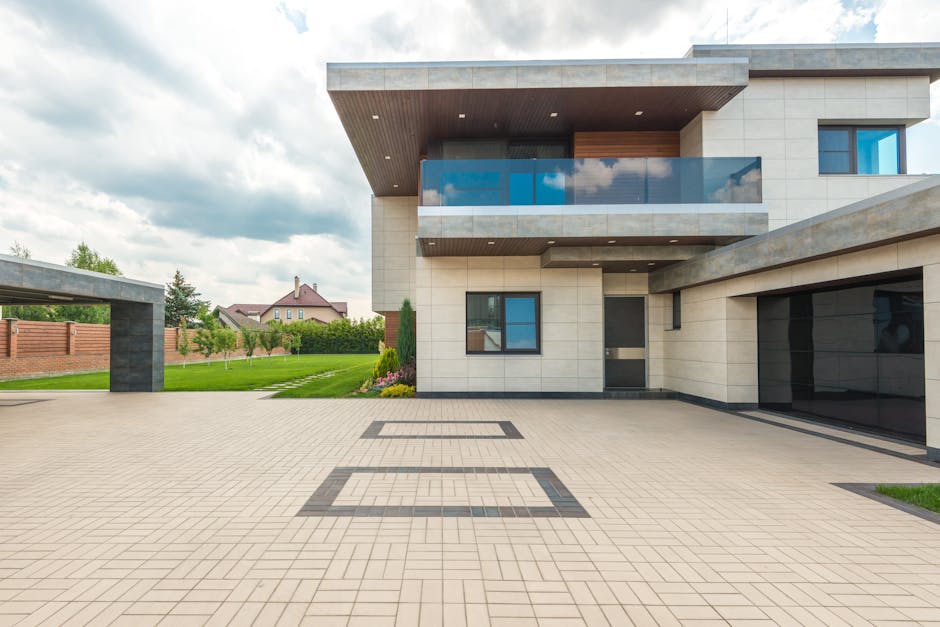
Concrete offers customization through various finishing techniques. Stamped concrete can mimic the appearance of stone, brick, or tile at a fraction of the cost of genuine pavers. Colored concrete provides design flexibility beyond standard gray, while exposed aggregate creates attractive textured surfaces. These decorative options increase costs to $10 to $18 per square foot but deliver unique aesthetic results.
Pavers inherently provide superior design versatility through the combination of different colors, sizes, shapes, and patterns. Herringbone, basketweave, circular, and random patterns create visual interest impossible to achieve with poured concrete. This design flexibility comes at a premium but contributes to property value and curb appeal.
From a resale perspective, both well-maintained concrete and paver patios add value to properties. However, high-quality paver installations often command higher perceived value among potential buyers due to their premium appearance and reputation for longevity.
Durability and Climate Considerations
Climate significantly impacts both the performance and cost-effectiveness of concrete versus paver patios. Understanding how each material responds to local weather patterns helps homeowners avoid expensive premature replacements.
In regions experiencing freeze-thaw cycles, concrete faces substantial challenges. Water infiltrating small cracks expands when frozen, causing progressive damage that accelerates deterioration. This cycle necessitates more frequent repairs and potentially complete replacement after 15 to 25 years in harsh climates.
Pavers demonstrate superior freeze-thaw performance because individual units can shift slightly without cracking. The joints between pavers accommodate minor movement, and damaged individual units can be replaced economically. In cold climates, the long-term cost advantage often shifts toward pavers despite higher initial installation expenses.
Hot, arid climates present different considerations. Concrete develops surface cracks as it expands and contracts with temperature fluctuations, though the damage generally progresses more slowly than in freeze-thaw environments. Pavers perform consistently across temperature ranges, maintaining their structural integrity and appearance with minimal maintenance.
Drainage represents another practical consideration affecting longevity and maintenance costs. Permeable paver systems allow water to filter through joints into the ground, reducing standing water and ice formation. Traditional concrete creates impermeable surfaces requiring proper grading and drainage infrastructure to prevent water accumulation that can undermine the slab.
DIY vs Professional Installation Impact
Labor costs represent a significant portion of total project expenses, leading some homeowners to consider do-it-yourself installation. The feasibility and potential savings differ substantially between concrete and paver projects.
Concrete installation presents considerable challenges for DIY enthusiasts. Proper site preparation, accurate mixing ratios, timely pouring and finishing, and appropriate curing procedures require specialized knowledge and equipment. Mistakes during concrete installation often prove costly to correct and may necessitate complete removal and replacement. Most homeowners benefit from professional concrete installation despite the labor expense.
Paver installation offers more realistic DIY opportunities for motivated homeowners with adequate time and physical capability. While labor-intensive, the process involves repeatable tasks that can be learned and executed methodically. Mistakes typically affect smaller sections and can be corrected by removing and relaying pavers. Homeowners completing their own paver installation can reduce total project costs by 40% to 60%, bringing expenses closer to or below professional concrete installation.
Professional installation ensures proper techniques, appropriate warranties, and efficient completion timelines. For both material types, professional work typically includes guarantees against installation defects, providing peace of mind worth the additional expense for many property owners. You might also be interested in comparing the cost to install an asphalt driveway in 2026, which involves similar considerations regarding professional vs. DIY work.
Planning Your Patio Investment in 2026
Making the optimal choice between concrete and paver patios requires evaluating multiple cost factors beyond initial installation. Budget-conscious homeowners often select basic concrete for immediate savings, accepting higher potential maintenance costs and limited repair options. Those prioritizing long-term value, design flexibility, and easier maintenance frequently choose pavers despite the steeper upfront investment.
Regional factors significantly influence cost-effectiveness. Material and labor prices vary by location, with urban areas typically commanding premium rates for both options. Local climate conditions affect long-term durability and maintenance requirements, potentially shifting the economic advantage toward one material type.
Modern planning tools help homeowners visualize options and estimate costs before committing to either patio type. Digital property improvement planning platforms allow users to design outdoor spaces directly on property maps, compare material options, and obtain accurate cost projections based on specific project parameters and local pricing. For example, understanding the different types of deck materials and their cost can provide a useful comparison for alternative outdoor living spaces.
When requesting contractor quotes, provide detailed specifications including patio dimensions, preferred materials, desired design elements, and site conditions. Obtaining multiple estimates enables effective cost comparison and helps identify fair market pricing for your area. Another common outdoor improvement, like fence installation cost per foot in 2026, also requires careful planning and multiple quotes. According to guidance from construction industry experts at organizations like the American College of Sports Medicine, proper planning and professional consultation lead to better project outcomes and long-term satisfaction.
Conclusion: Balancing Cost and Value
The concrete versus paver patio decision ultimately depends on budget priorities, aesthetic preferences, climate conditions, and long-term property plans. Concrete offers lower initial costs ranging from $6 to $12 per square foot for basic installations, making it attractive for budget-conscious projects. Paver patios command higher upfront investments of $10 to $25 per square foot but provide superior design flexibility, easier repairs, and often better long-term durability.
Homeowners planning to remain in their properties long-term may find pavers deliver better lifetime value despite higher initial costs, particularly in climates with freeze-thaw cycles. Those seeking economical short-term solutions or working with tight budgets often choose concrete, especially when decorative finishes aren't priorities.
Both options create functional, attractive outdoor living spaces when properly installed and maintained. Careful planning, accurate cost estimation, and quality installation ensure your patio investment enhances property value and provides years of enjoyment regardless of which material you ultimately select. If you're considering other recreational additions, you might want to look into how much does a basketball court cost in 2026.