What Thickness Should a Concrete Driveway Be?
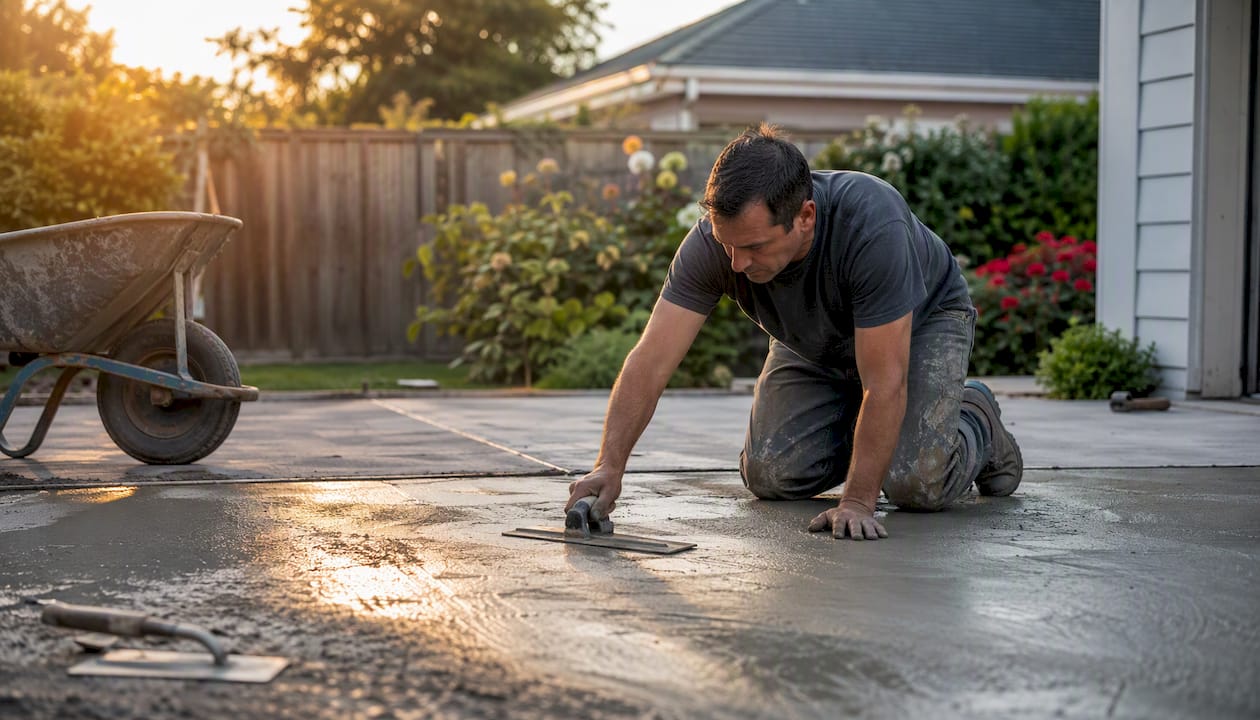
Pour 4 inches for a driveway that only sees passenger cars, on a properly compacted base. Bump that to 5 inches if you expect regular truck, SUV, or RV traffic, or if your soil is anything less than solid. Go to 6 inches or more for commercial loads, oversized vehicles, or a street-facing apron that codes often single out separately.
A few situations override the baseline every time:
- Clay-heavy or poorly draining soil
- Steep driveway slopes with drainage concerns
- Frequent RV parking or turning movements
- Municipal apron requirements at the street
An increase in concrete thickness can add materially to both cost and load capacity, with extra thickness enhancing load-bearing performance significantly, as supported by Concrete Network.
Pro Tip: Don’t let a contractor quote thickness alone. Ask what base depth and compaction come with it. A thick slab on a soft base still fails.
Key Takeaways
The right concrete driveway thickness depends on vehicle weight and traffic frequency, soil conditions, and climate, not a single universal number.
| Point | Details |
|---|---|
| Baseline thickness | Pour 4 inches for passenger car driveways on a properly compacted base. |
| Upgrade triggers | Move to 5 inches for trucks, RVs, freeze-thaw climates, or marginal subgrade. |
| Heavy-duty threshold | Use 6 inches or more for commercial loads, regular RV parking, or poor soils. |
| Base matters most | A compacted, properly sized granular base prevents settlement more than thickness alone. |
| Get a site-specific number | Property Improvement Estimator’s calculators turn your chosen thickness into a mapped, site-specific material and cost estimate for contractor quotes. |
Table of Contents
- How Slab Thickness Controls Load Capacity and Cracking
- When Is 4 Inches Enough for a Driveway?
- When Should You Upgrade to 5 Inches?
- When Do You Need 6 Inches or Thicker?
- Rebar, Wire Mesh, or Fiber: Which Reinforcement Do You Need?
- How Deep Should the Base Be Under a Driveway?
- How Far Apart Should Control Joints Be?
- What Concrete Strength and Air Content Do Driveways Need?
- Why Curing Matters as Much as Thickness
- Do Driveway Edges and Aprons Need Extra Thickness?
- How Much Does Extra Thickness Add to the Cost?
- Do Heated Driveways or Steep Slopes Change the Thickness You Need?
- What Are the Most Common Driveway Installation Mistakes?
- How Do You Check the Thickness of an Existing Driveway?
- What Should You Tell Your Contractor Before Getting a Quote?
- How Do You Turn a Thickness Decision Into an Accurate Estimate?
- A Conservative Approach Protects Homeowners From Costly Redos
- Get a Site-Specific Driveway Estimate Before You Call Contractors
- Sources
How Slab Thickness Controls Load Capacity and Cracking
Every time a tire rolls across your driveway, it pushes down on a small point and the slab has to spread that load out before it reaches the soil underneath. A thin slab bends more under that point load, and repeated bending is what opens hairline cracks into real ones over a few winters.
Thickness and base work as a team, not separately. A 6 inch slab poured over an uncompacted, spongy subgrade will still crack and settle, because the support underneath hasn’t changed even though the concrete on top has.
- Thicker slabs distribute point loads over a wider area, cutting peak stress at the surface.
- A stiff, well compacted base reduces flex regardless of slab thickness.
- Thickness gains are largely wasted without adequate support below.
Going from 4 to 5 inches roughly doubles resistance to fatigue cracking from repeated heavy loads, according to SlabCalc’s driveway guide, even though the material cost increase is closer to 20%.
When Is 4 Inches Enough for a Driveway?
A 4 inch slab is the standard minimum for single-family driveways used mainly by cars and light SUVs, when the subgrade underneath is already competent and drains well. Concrete Network lists this as the baseline for typical residential use, and it holds up fine when everything under and around the concrete is done right.
For a 4 inch slab to last, you need:
- A compacted granular base, typically 4 to 6 inches
- Wire mesh reinforcement placed correctly, not resting on the subgrade
- Control joints cut to proper depth and spacing
- Adequate curing time before the slab takes any real load
Pro Tip: Before agreeing to a 4 inch spec, ask your contractor to do a simple proof roll, driving a loaded truck over the compacted base. Soft spots that pump or rut mean the subgrade needs more work before concrete goes down, regardless of slab thickness.
When Should You Upgrade to 5 Inches?
Step up to 5 inches when your driveway sees more than the occasional truck, when you park an RV or boat trailer even a few times a year, or when you live somewhere winters bring real freeze-thaw cycles. Marginal subgrade, the kind that’s not bad enough to flag but not great either, is another common reason contractors recommend the extra inch.
The performance gain is real. A 5 inch slab flexes less under repeated heavy loads, which means fewer fatigue cracks over 15 to 20 years. Many contractors treat 5 inches as the sweet spot between cost and durability, since it meaningfully reduces point-load damage without the added expense of a full 6 inch, rebar-reinforced slab.
- Ask whether moving to 5 inches also means changing from mesh to rebar.
- Confirm the base depth increases along with slab thickness, not just the concrete.
- Get the psi and air entrainment specs in writing, not just the thickness number.
When Do You Need 6 Inches or Thicker?
Reserve 6 inches and up for heavy trucks, regular RV parking or turning movements, commercial or engineered driveways, and very poor soils or deep frost zones. These aren’t marginal upgrades. They’re structural requirements once loads or ground conditions cross a certain line.
At this thickness, the design changes in several ways at once:
- Rebar grids become standard, not optional, replacing wire mesh
- Base depth typically increases beyond the 4 to 6 inch range used for lighter slabs
- Joint spacing and layout shift to handle higher loads
- Overall cost per square foot rises noticeably from both material and labor
Pro Tip: If you’re planning anything in the 6 inch-plus range, especially on a slope or with unusual soil, get a soils report before you finalize the design. A geotechnical assessment costs far less than repouring a failed driveway.
Rebar, Wire Mesh, or Fiber: Which Reinforcement Do You Need?
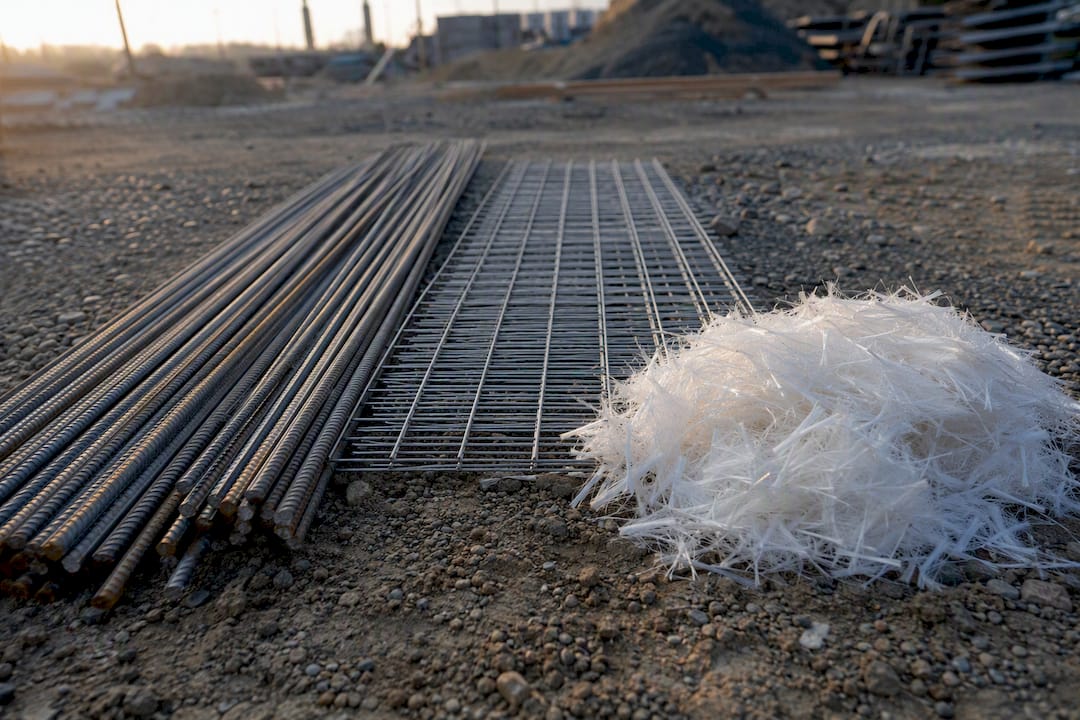
Reinforcement doesn’t make concrete stronger the way thickness does. Its job is to hold cracks together once they form, keeping them tight and hairline instead of letting them widen and let water in.
Wire mesh is the common choice for 4 inch slabs and still works at 5 inches in lighter-duty situations. Once you’re at 5 inches with heavier expected loads, or anywhere in the 6 inch range, Concrete Network notes that #4 rebar grids become the standard, spaced according to the slab’s load requirements. Synthetic fibers mixed into the concrete itself add another layer of crack control and can improve the finished surface, though they don’t replace mesh or rebar in higher-load slabs.
- Wire mesh: standard for 4 inch, light 5 inch driveways
- Rebar grids: expected at 5 to 6 inch slabs under heavier loads
- Fiber: supplemental crack control, not a substitute for mesh or rebar
Pro Tip: Reinforcement only works if it sits in the middle of the slab, not on the ground before the pour. Ask contractors how they support the mesh or rebar during placement. Chairs or blocks under the steel are a good sign; steel laid flat on dirt is a red flag.
How Deep Should the Base Be Under a Driveway?
The gravel base underneath your slab matters as much as the concrete itself. Tennessee Concrete Association points out that most driveway failures trace back to poor base compaction rather than insufficient slab thickness, which is why this step gets so much attention from experienced installers.
Clay soils generally need deeper base sections and better drainage planning than sandy soils, since clay holds water and swells with freeze-thaw cycles.
- Ask for compaction testing, not just a visual check
- Request geotextile fabric over soft or mixed soils
- Confirm the site slopes away from the house and garage
Pro Tip: Walk the site after excavation but before gravel goes down. Standing water, spongy soil, or visible clay pockets are warning signs worth raising with your contractor before the base gets covered up.
How Far Apart Should Control Joints Be?
Control joints tell the concrete where to crack on purpose, instead of cracking wherever it wants. Concrete Network recommends cutting joints to a depth equal to one-quarter of the slab thickness, so a 4 inch slab gets a 1-inch deep cut, and spacing joints no more than about 10 feet apart on standard 4 inch driveways.
- Sawcut depth: 1/4 of total slab thickness, every time
- Spacing: tighter for thinner slabs, wider for thicker ones
- Avoid long, skinny panels or triangular shapes, both crack unpredictably
Pro Tip: Square or near-square panels perform far better than narrow rectangles. If your contractor’s joint layout includes thin slivers of concrete, ask them to revise it before the pour, not after.
What Concrete Strength and Air Content Do Driveways Need?
Most residential driveways call for concrete in the 3000 to 4000 psi range, with higher psi reserved for heavier-duty slabs or harsher climates. The Portland Cement Association recommends air entrainment, typically 6 to 8%, for any driveway exposed to freeze-thaw cycles, since entrained air gives water somewhere to go when it expands as ice.
- Standard driveway mix: 3000 to 4000 psi
- Freeze-thaw regions: 6 to 8% air entrainment
- Admixtures like plasticizers improve workability without adding water
Skipping air entrainment in a cold climate is one of the fastest ways to see surface scaling within a few winters, even on a slab poured at the right thickness.
Why Curing Matters as Much as Thickness
A driveway that’s cured poorly will underperform its design thickness every time. Concrete needs to stay moist for the first 3 to 7 days after the pour, either through wet curing, curing blankets, or a sprayed-on curing compound. Skip this step and the surface dries too fast, leaving it weaker and more prone to scaling than the mix design intended.
Sealing is a separate decision, usually made 28 days after the pour once curing is complete; a detailed overview of coating and sealing steps can be found in the driveway epoxy coating steps: a homeowner’s guide. A quality sealer reduces water and deicing salt penetration into the surface, extending the life of the slab.
Pro Tip: Put curing method and timeline directly in your contract. “Cure per manufacturer specifications” without a defined method or duration is too vague to hold anyone accountable.
Do Driveway Edges and Aprons Need Extra Thickness?
Edges take more stress than the middle of the slab, which is why many designs thicken the perimeter by 1 to 2 inches, extending that thickened section 4 to 8 inches inward from the edge. At the street, many municipalities require an even thicker apron, often 5 to 6 inches, separate from the driveway’s main thickness. Lowe’s notes that projects planned for vehicle traffic need this kind of extra attention that a basic patio slab never requires.
- Check local code before finalizing apron thickness
- Match heights carefully where new concrete meets sidewalks or garage floors
- Use dowels or keyways at transitions to prevent differential settling
Pro Tip: Pull your municipal permit requirements before your contractor finalizes drawings. Apron specs are a common surprise that shows up mid-project otherwise.
How Much Does Extra Thickness Add to the Cost?
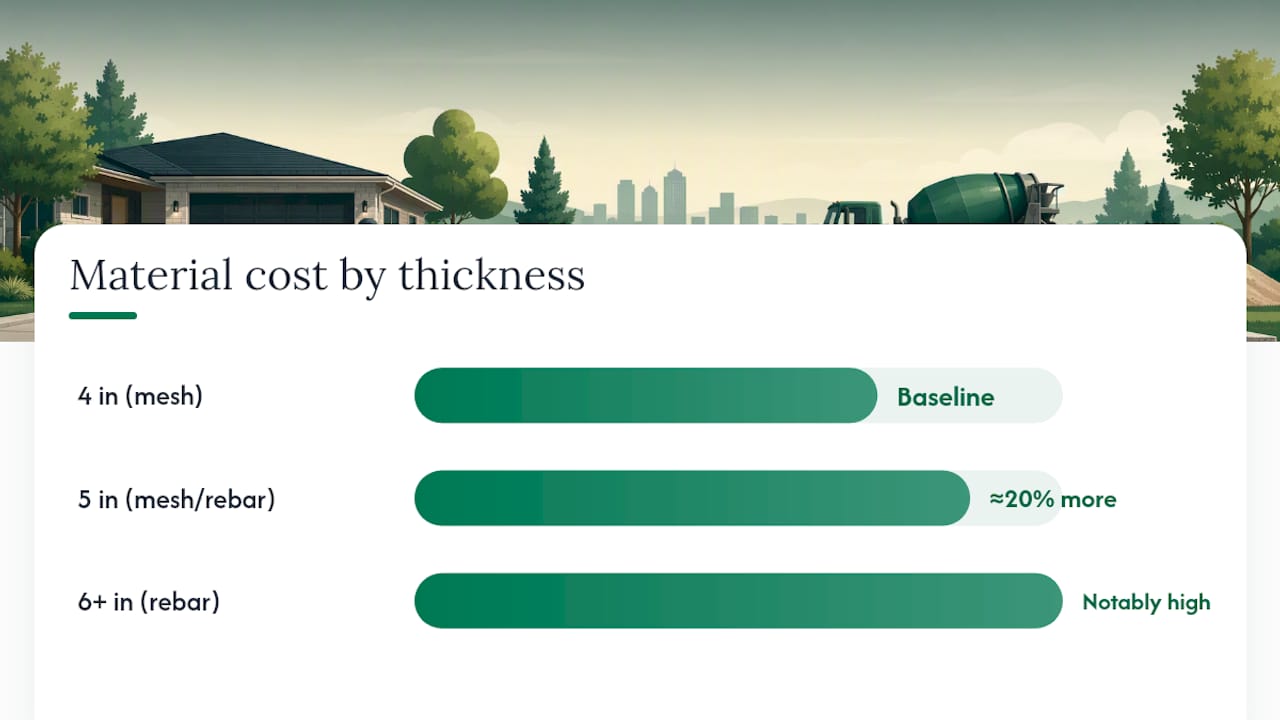
Going from 4 to 5 inches adds roughly 20% to material costs, largely from the extra concrete volume, according to Concrete Network. Adding rebar instead of mesh raises labor costs further, since rebar takes more time to place and secure correctly.
| Thickness | Typical Reinforcement | Relative Material Cost |
|---|---|---|
| 4 inches | Wire mesh | Baseline |
| 5 inches | Wire mesh or rebar | About 20% more than baseline |
| 6+ inches | Rebar grid | Notably higher than baseline |
Local material prices, access for concrete trucks, and regional labor rates all shift these numbers. A concrete cost calculator that factors in your specific dimensions gives a far more accurate number than any general rule of thumb.
Pro Tip: Run your dimensions through a volume calculator before your first contractor meeting. Walking in with your own numbers makes it much easier to spot a quote that’s padded or missing scope.
Do Heated Driveways or Steep Slopes Change the Thickness You Need?
Heated driveways need extra depth to embed hydronic tubing or electric heat cables without weakening the slab above them, and that work has to coordinate with electrical or plumbing trades before the pour. Steep slopes bring their own challenges: water runs downhill fast, so subdrains and a thicker base often matter more than the slab thickness itself.
Decorative finishes like stamped or colored concrete generally don’t change the required depth, but they do shrink your working window during finishing, since color and texture work both need to happen before the surface sets too far.
Pro Tip: For heated or sloped driveways, get a design detail specific to that condition, not a generic driveway spec. These are situations where a standard 4 or 5 inch recommendation doesn’t automatically apply.
What Are the Most Common Driveway Installation Mistakes?
Most failures trace back to a handful of repeat offenders, and none of them are exotic.
- Under-compacting the base to save time
- Using the wrong aggregate size for the soil conditions
- Placing mesh or rebar directly on the ground instead of supported above it
- Skipping joints entirely or spacing them too far apart
- Adding extra water at the truck to make placement easier, which weakens the mix
- Rushing curing time to open the driveway to traffic sooner
Pro Tip: Before final payment, walk the finished driveway and check for a consistent joint pattern, no standing water after a hose test, and a surface free of visible honeycombing or excessive trowel marks.
How Do You Check the Thickness of an Existing Driveway?
If you’re evaluating a driveway that’s already in place, an exposed edge or expansion joint often lets you measure thickness directly with a tape measure. For a more precise reading, a small core sample pulled by a professional gives an exact number, useful if you’re negotiating a home purchase or planning a replacement.
Look for a spiderweb crack pattern, spalling at the surface, or visible settling. These usually point to base failure rather than a thickness problem alone.
Pro Tip: Photograph any cracking or settlement now, with a tape measure in frame for scale. That documentation speeds up contractor bids and can support insurance claims if storm damage is involved.
What Should You Tell Your Contractor Before Getting a Quote?
Give every contractor the same spec so their quotes are actually comparable: slab thickness, reinforcement type, concrete psi, air entrainment percentage, base depth and compaction target, and joint spacing.
Then ask directly:
- What percentage will you compact the base to?
- Are you using wire mesh or rebar, and why?
- What’s the mix psi and air entrainment percentage?
- Who inspects and documents compaction before the pour?
Pro Tip: Ask for a photo or short video of the compacted base before concrete arrives. It takes the contractor two minutes and gives you a record if problems show up later.
How Do You Turn a Thickness Decision Into an Accurate Estimate?
Once you’ve settled on a thickness, the next step is converting it into real numbers: total driveway area, base depth, reinforcement type, and local material costs all factor into what you’ll actually pay.
To get a site-specific estimate:
- Draw your driveway’s exact dimensions on a satellite map
- Select your target thickness (4, 5, or 6 inches)
- Choose base depth and reinforcement type
- Pull in local material and labor costs for your area
Property Improvement Estimator’s concrete estimate calculator walks through these inputs directly on a map of your property, so the output reflects your actual driveway rather than a generic square footage guess.
Pro Tip: Save your estimator output as a PDF or link and attach it to every quote request you send. Contractors respond faster and more accurately when they’re bidding against the same numbers.
A Conservative Approach Protects Homeowners From Costly Redos
When the numbers are close, choose the thicker slab. The cost difference between 4 and 5 inches is modest compared to the cost of tearing out and repouring a driveway that failed early. Base preparation deserves the same conservative instinct: it’s cheaper to over-compact now than to fix settlement in three years.
Use a calculator before you finalize anything, and confirm your local code minimums directly with your municipality rather than relying on general guidance alone.
Get a Site-Specific Driveway Estimate Before You Call Contractors
Every recommendation in this guide gets more useful once it’s applied to your actual property, not a generic square footage. Property Improvement Estimator lets you draw your driveway’s exact shape and dimensions on a satellite map of your own property, then apply your chosen thickness, base depth, and reinforcement type to generate a site-specific material and cost estimate.

That estimate becomes the scope package you hand to contractors, complete with measurements and specs, instead of a vague description over the phone. It cuts down on mismatched quotes and back-and-forth clarifications, since every contractor bids against the same drawing and numbers.
Pro Tip: Attach your estimator output directly to your quote requests. Contractors can review exact dimensions and specs before they even visit the site.
Start your satellite property estimate and turn your thickness decision into contractor-ready numbers today.
Sources
- How Thick Should a Concrete Driveway Be? - Concrete Network
- Complete Guide to Concrete Driveways (Planning to Pouring)
- How to build a concrete pad - Lowe’s
Recommended
- Concrete Estimator | Property Improvement Estimator
- Concrete Material Cost Calculator | Mix, Thickness, Reinforcement, Base, Sealer, and Local Factors
- Concrete Labor Cost Calculator | Slab Size, Thickness, Finish, Reinforcement, Access, and Local Wages
- Concrete Estimate Calculator | Slabs, Driveways, Thickness, and Local Factors