Chain Link Fences in Pittman: a Planning Guide

Chain link fencing has been a practical staple of American property boundaries for generations, and in a place like Pittman it remains one of the most cost-effective ways to enclose a yard, secure equipment, or define the edge of a lot. Whether you are fencing a residential backyard, a small commercial lot, or a sports area, understanding how chain link systems are built, what they cost, and how local conditions affect installation will help you plan with confidence before you ever call a contractor. This guide walks through the components, use cases, planning considerations, and estimating steps involved in a chain link fence project, with an emphasis on how to scope the work accurately in 2026. For a closer look at how neighboring communities approach the same task, see this Chain Link Fences in Lockhart: a Planning Guide.
What a Chain Link Fence Actually Consists Of
Chain link is a system rather than a single product, and knowing its parts makes it easier to compare quotes and spot shortcuts. A typical installation includes:

- Fabric — the woven wire mesh itself, commonly sold in heights from about 3 feet to 12 feet and in gauges that range from light residential wire to heavy commercial or industrial grades. Smaller gauge numbers mean thicker wire.
- Line posts — vertical supports set at regular intervals along the fence run, usually spaced around 8 to 10 feet apart depending on height and wind exposure.
- Terminal posts — heavier corner, end, and gate posts that carry the tension of the fabric and are typically braced to resist pulling.
- Top rail and tension wire — the top rail provides structure and appearance; a bottom tension wire (or sometimes a bottom rail) keeps the fabric taut at ground level.
- Fittings and hardware — tension bands, brace bands, rail ends, eye tops, and ties that connect the components.
- Gates — walk gates, drive gates, or double swing gates sized to the opening they serve.
- Coatings and finishes — galvanized steel is the baseline; vinyl-coated fabric and posts in black, green, or brown are popular where appearance matters.
The gauge of the wire and the wall thickness of the posts are the two specifications that most affect durability and price. A quote that lists only a fence height without gauge and post weight is incomplete, and comparing two such quotes is difficult. Ask for the specifications in writing.
Where Chain Link Makes Sense in Pittman
Chain link is rarely chosen for curb appeal alone. Its strengths are cost, visibility, durability, and low maintenance, which is why it appears in a wide range of settings:
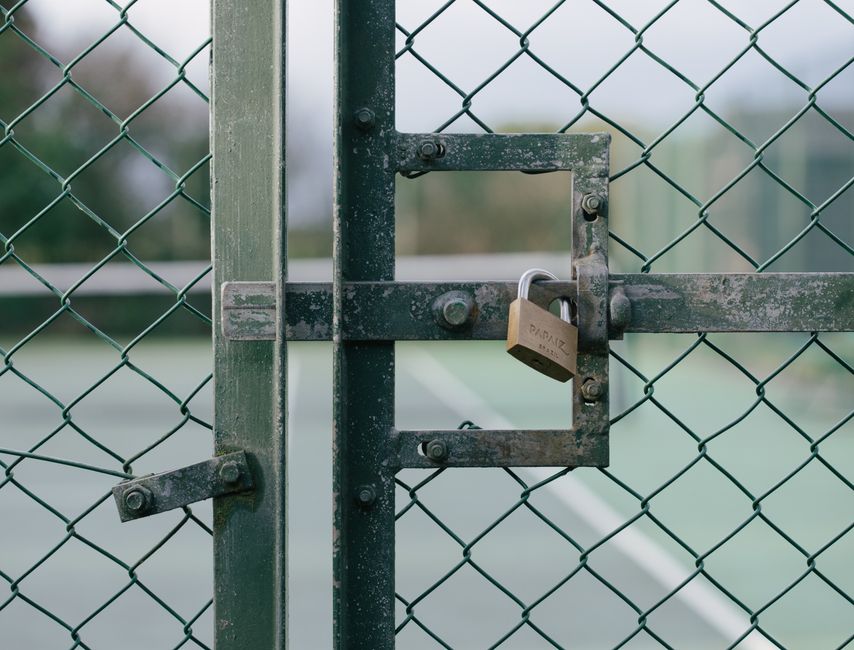
- Residential boundaries — marking property lines, containing pets, and creating a safe play area for children.
- Sports and recreation areas — tennis courts, batting cages, basketball courts, and ballfield backstops, where high fabric and heavy posts are standard. The American College of Sports Medicine and similar organizations emphasize safe, well-maintained activity spaces, and fencing is part of that infrastructure.
- Commercial and industrial lots — equipment yards, storage areas, and parking perimeters where security and sightlines both matter.
- Agricultural and utility uses — garden enclosures, livestock containment in some applications, and screening around utility equipment.
- Pool enclosures — where local code allows chain link, it can serve as a barrier, though many jurisdictions require specific heights, self-closing gates, and non-climbable designs for pool safety. Always confirm code requirements before designing.
Where privacy or aesthetics are the priority, chain link can be adapted with privacy slats, windscreen fabric, or planted screens, though these additions change both the look and the budget. Communities such as those addressed in this Chain Link Fences Fairview Shores: a Planning Guide face many of the same tradeoffs between security and appearance.
Planning Considerations Before You Build
Good fence projects start with questions that have nothing to do with wire. Working through them early prevents expensive redesigns later.

Property lines and setbacks
Confirm the exact property line before setting posts. A survey may be necessary, and fences placed even slightly over a line can create disputes. Local rules may also require setbacks from the line, from sidewalks, or from utilities.
Permits and codes
Many municipalities require a permit for fences above a certain height, for corner-lot visibility triangles, or for pool barriers. Height limits commonly fall between 4 and 6 feet in front yards and up to 8 feet in back yards, but these vary widely. Verify with the local building department rather than assuming.
Underground utilities
Call 811 or the local utility notification service before digging. Buried gas, electric, water, and communications lines are common in established neighborhoods, and post holes are dug at regular intervals along the entire run.
Soil and terrain
Post footings need to reach below the frost line where freezing occurs, and rocky or expansive soils may require different excavation approaches. Sloped ground requires either stepped fabric (racking the fence in panels) or a sloped top rail, and gates must be hung level even when the fence follows a grade. Projects that pair fencing with grading and flatwork often benefit from reviewing guidance like Birdsboro Borough: Outdoor Project Planning Guide before finalizing a site plan.
Wind and height
Taller fences and fences with privacy slats or windscreen capture more wind load. Post spacing, post weight, and footing depth should reflect that. A 10-foot fence with solid screening is a different engineering problem than a 4-foot residential fence.
Appearance and neighbors
Chain link is see-through, which is often the point, but the "good side" question is less contentious than with solid fences. Vinyl coating color and post caps are the main aesthetic levers.
Cost Drivers and How to Estimate Scope
Chain link is generally the least expensive fencing option per linear foot, but the range is wide because the variables multiply. The main cost drivers are:
- Total linear footage — the perimeter length, adjusted for gates and corners.
- Height — taller fences need heavier posts and more fabric, and the cost rises faster than the height itself.
- Wire gauge and coating — heavier gauge and vinyl coating add cost.
- Gate count and type — walk gates are relatively inexpensive; wide drive gates and automated operators are not.
- Site conditions — rock, slope, tree removal, and fence-line clearing all add labor.
- Removal of an existing fence — disposal and concrete removal are separate line items.
- Add-ons — privacy slats, tension wires, barbed wire (where permitted), and windscreen.
Planning ranges are best built bottom-up: measure the perimeter, count the corners and gates, choose height and gauge, then apply local labor rates. This is exactly the kind of calculation a map-based estimating tool is designed to support. Property Improvement Estimator (PIE) lets a user draw the fence line directly on a property map, calculate the scope, and generate a planning price range before requesting quotes from local contractors. The advantage is that every bidder is quoting the same design rather than interpreting a vague description, which makes comparison far more meaningful.
For contractors, the same tool works in reverse: a clearly defined design attached to a lead signals a serious, informed customer, which tends to improve the quality of the conversation and reduce wasted site visits.
Installation Basics and What to Verify in a Quote
Understanding the installation sequence helps homeowners evaluate contractors and understand timelines.
A standard chain link installation proceeds roughly as follows: the line is laid out and corners and gates are marked; post holes are dug to the required depth and diameter; posts are set in concrete and allowed to cure; terminal posts are braced; rails and tension wires are installed; fabric is unrolled, stretched, and tied; gates are hung and adjusted; and the site is cleaned. A small residential project may take a day or two of active work, while larger or sloped sites take longer, and concrete curing adds time before tensioning in some methods. Post footings are concrete work in their own right, so it is worth reviewing resources such as this guide to Concrete Work in Campton Hills, Il to understand how footing quality affects the finished fence.
When reviewing a quote, verify:
- Fabric height, gauge, and coating specified in writing
- Post diameter and wall thickness, with larger terminal posts called out
- Post spacing and footing depth
- Concrete for footings (not just tamped earth)
- Gate sizes, hardware, and whether hinges and latches are included
- Permit responsibility and any HOA approval requirements
- Warranty terms on materials and workmanship
- Cleanup and disposal of old fencing, if applicable
Cheap quotes often economize on wire gauge, post weight, or footing depth, all of which shorten the fence's service life. A slightly higher bid with better specifications is frequently the better value.
Maintenance, Longevity, and Common Pitfalls
Chain link is low maintenance but not maintenance-free. Galvanized fabric will eventually show rust at cut ends and damaged coating, and vinyl-coated systems can chip. Occasional inspection and touch-up painting of damaged spots extends life. Key maintenance points include:
- Checking tension and re-tightening ties and tension bands where fabric sags
- Clearing vegetation along the base to reduce moisture and hide pest habitat
- Inspecting gate hinges, latches, and post stability annually
- Repairing bent top rails and damaged fabric promptly to prevent cascading failure
Common pitfalls to avoid: skipping the utility locate, setting posts too shallow, stretching fabric over uneven ground without adjusting panels, and neglecting gate clearance on sloped sites. Another frequent mistake is ordering privacy slats after installation without checking whether the posts were sized for the added wind load.
With reasonable care, a well-installed galvanized chain link fence can serve for decades, and the fabric itself is fully recyclable steel, which is a point in its favor for environmentally minded property owners.
Conclusion
Chain link fencing in Pittman is a straightforward, economical way to secure and define a property, provided the project is planned before it is priced. Confirm property lines, permits, and utilities; choose height, gauge, and coating deliberately; count gates and corners; and build a scope you can hand to multiple contractors for comparable bids. The most common failures in fence projects are planning failures, not installation failures, and a clear design is the best defense. Whether you are a homeowner planning a backyard enclosure or a contractor preparing a lead, starting with a measured, mapped scope turns a vague idea into a real project with a realistic budget, and that is where a tool like PIE fits naturally into the process.