What a Basketball Court Really Costs to Build
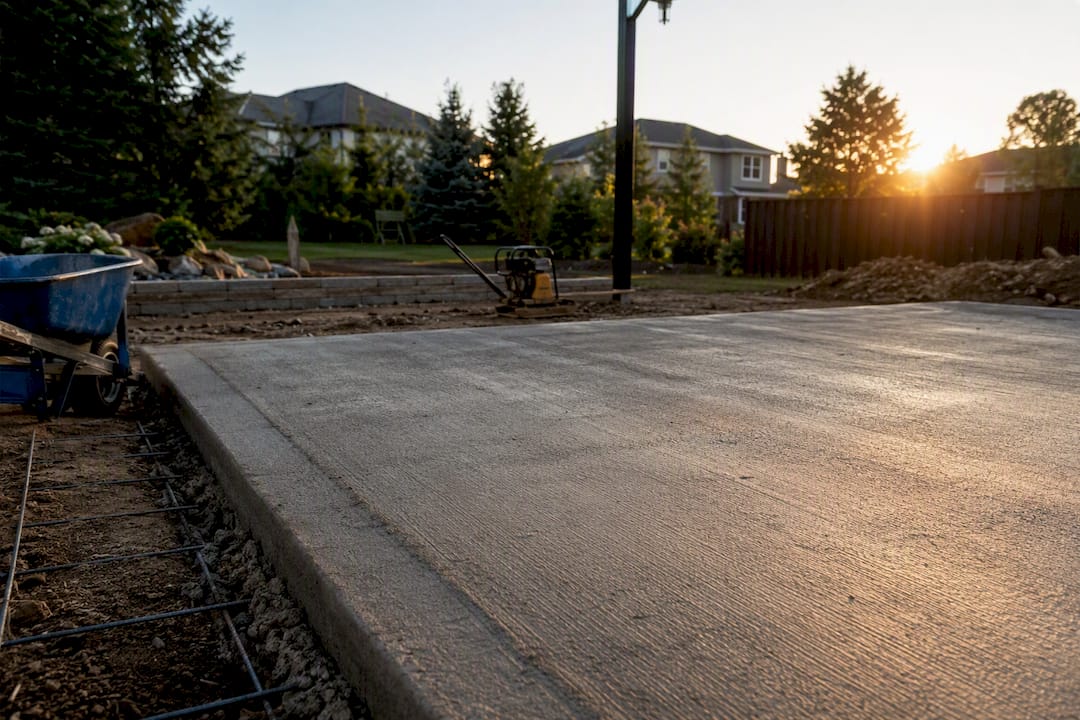
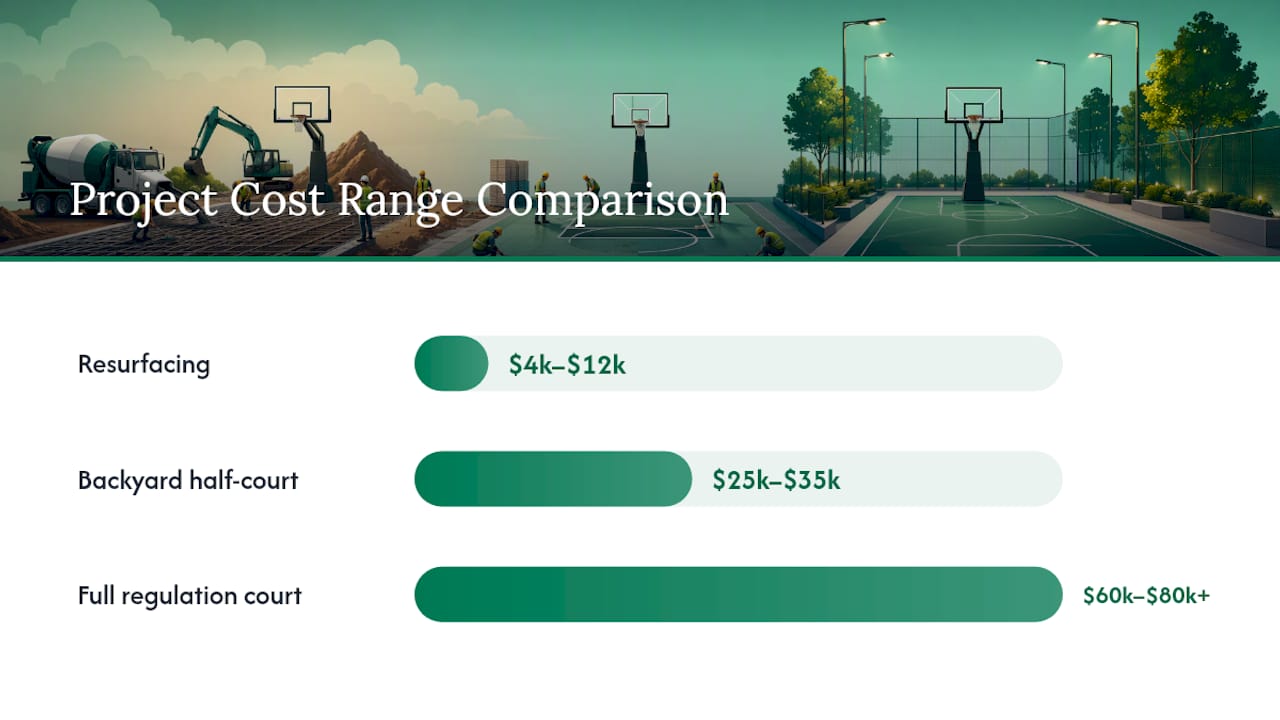
Resurfacing an old court typically runs $4,000 to $12,000. A driveway half-court lands around $15,000 to $25,000. A backyard half-court with real amenities runs $25,000 to $45,000, and a full outdoor regulation court commonly hits $60,000 to $80,000 or more (source). Indoor courts are the wild card: flooring and structural work can push a modest home setup well past $45,000.
The single biggest swing factor isn’t the hoop or the paint job. It’s what’s underneath the surface.
- Resurface existing court: $4,000–$12,000
- Driveway half-court: $15,000–$25,000
- Backyard half-court: $25,000–$45,000
- Full outdoor court: $60,000–$80,000+
- Indoor court: highly variable, often $10,000–$45,000+ depending on flooring and building work
If your quote comes in dramatically below these ranges, someone is skipping site prep, using a thin base, or leaving out drainage. That decision tends to cost more later than it saves now.
Key Takeaways
Basketball court cost depends less on square footage alone and more on site conditions, base quality, and surface system, all of which a mapped, itemized quote reveals before you sign a contract.
| Point | Details |
|---|---|
| Know your baseline range | Backyard half-courts run $25,000–$45,000; full courts commonly hit $60,000–$80,000 or more. |
| Budget for labor separately | Labor typically makes up 40%–60% of total project cost, so compare that line item across bids. |
| Don’t skimp on the base | Proper slab thickness, reinforcement, and drainage cost more upfront but prevent expensive rework later. |
| Indoor adds structural cost | Flooring, subfloor systems, HVAC, and building work can push indoor projects well past outdoor pricing. |
| Get three itemized quotes | Use a property-map tool like Propertyimprovementestimator’s basketball court calculator so every bid reflects identical dimensions and scope. |
Table of Contents
- Basketball Court Cost by Project Type and Square Footage
- What Drives the Price: Site Prep, Base, and Labor
- Indoor Court Costs: Flooring, Subfloors, and Structural Work
- Budgeting for Hoops, Lighting, Fencing, and Other Add-Ons
- How to Get Accurate Quotes and Avoid Cost Surprises
- Why Most Cost Guides Undersell the Real Variable
- Get a Site-Specific Estimate Before You Call a Single Contractor
- FAQ: Basketball Court Cost Questions Homeowners Ask
- Sources
Basketball Court Cost by Project Type and Square Footage
Square footage is the starting point for any real budget, but it’s not the whole story. A 30 by 30 foot backyard half-court and a 94 by 50 foot full court aren’t just different sizes, they’re different construction projects with different site prep, drainage, and labor demands.
Here’s how the numbers typically shake out:
- Resurfacing: $4,000–$12,000, mostly labor and coating material on an existing slab
- Driveway half-court: $15,000–$25,000, often built on existing concrete or asphalt with minimal grading
- Backyard half-court (basic): $25,000–$35,000, new base and standard acrylic surface
- Backyard half-court (full-featured): $35,000–$45,000, adds fencing, lighting, and a premium surface
- Full outdoor regulation court: $60,000–$80,000+, full slab, drainage, and complete accessory package
For quick math, most backyard game courts fall into an industry-standard all-in range of roughly $25 to $35 per square foot, covering base, surface, and basic accessories. Bare surfacing alone can run as low as $6 per square foot for simple asphalt coatings, while premium modular tile or cushioned acrylic systems climb toward $35 per square foot installed.
Pro Tip: Multiply your court’s exact square footage by both ends of the per-square-foot range before you call a single contractor. That gives you a sanity check for every bid that comes back.
A 1,000 square foot half-court at $25 to $35 per square foot lands right at $25,000 to $35,000, consistent with the ranges above. A full 4,700 square foot regulation court at similar per-foot pricing explains why costs jump past $60,000 fast. Size drives cost, but so does everything you build into that footprint.
What Drives the Price: Site Prep, Base, and Labor
Three line items decide most of your final number: what’s under the ground, what’s under the surface, and who’s doing the work. Get any of these wrong on paper and your “great deal” quote turns into a change order six weeks into the project.
Site preparation comes first and varies the most. Clearing brush, grading for proper slope, and installing drainage typically runs $2,000 to $15,000, but if your lot needs a retaining wall or major regrading, that figure can climb by another $5,000 to $20,000. Sloped yards, heavy clay soil, and poor natural drainage all add cost here before a single yard of concrete gets poured.
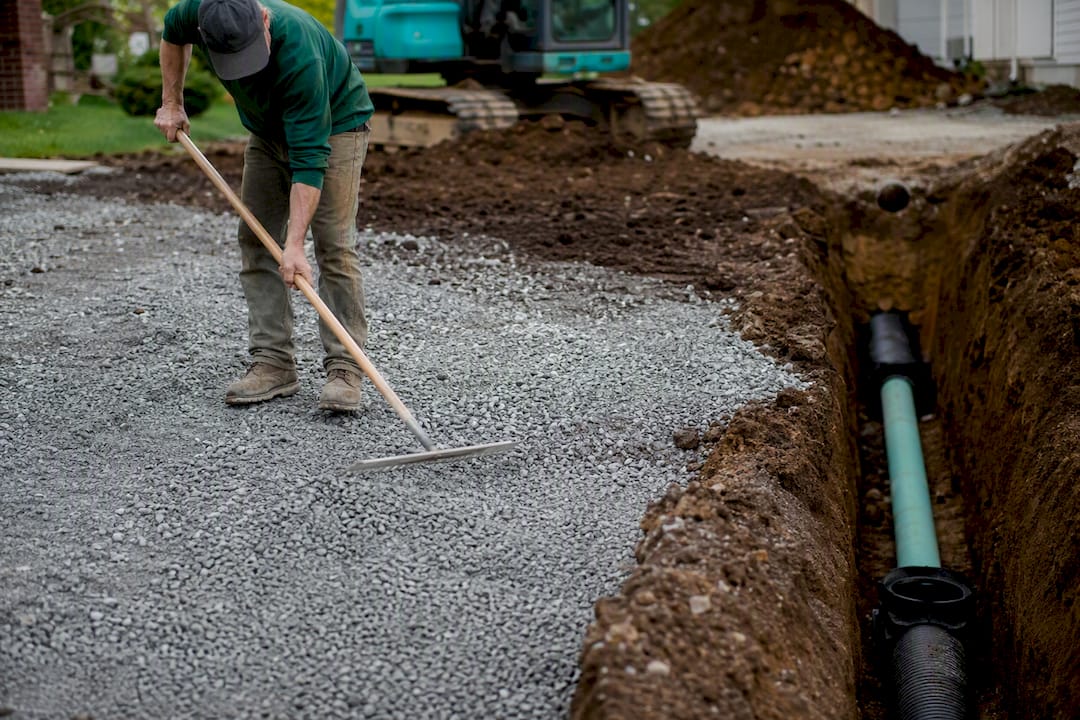
The base or slab is where quality decisions matter most. A basic 4 inch concrete slab with minimal reinforcement might work for casual weekend use, but a court meant to last decades needs a thicker slab, rebar or wire mesh, deeper sub-base compaction, and engineered drainage. Concrete slabs alone commonly run $4 to $10 per square foot before any surfacing goes on top. Asphalt bases cost less upfront but tend to crack sooner in freeze-thaw climates, which shows up as a maintenance bill later rather than a construction bill now.
Surface systems stack on top of that base, and here’s where the tradeoffs get real:
- Acrylic coatings: Cheapest option, good color customization, needs recoating every 4 to 8 years
- Cushioned acrylic: Adds shock absorption for joint comfort, moderate cost premium
- Modular tiles: $7 to $15 per square foot installed, with a 15 to 20 year expected lifespan and easier spot repairs
Labor ties it all together, and it’s bigger than most homeowners expect. Labor commonly represents 40% to 60% of total project cost, which means the contractor you hire matters as much as the materials you choose. A general contractor managing subcontractors often adds a 10% to 20% markup on top of the labor itself, while a specialty sport court installer typically bakes that coordination into a single line item. Neither is automatically wrong, but knowing which model you’re paying for helps you compare quotes honestly.
The tradeoff underneath all of this is simple: spending more on base compaction and drainage upfront reduces long-term repair costs. Cracked slabs, standing water, and heaving surfaces almost always trace back to shortcuts taken during site prep, not the surfacing material itself.
Indoor Court Costs: Flooring, Subfloors, and Structural Work
Indoor courts don’t play by outdoor rules. You’re not just buying a playing surface, you’re often buying a building, a subfloor system, and climate control on top of it.
Flooring choice sets the baseline. Maple hardwood is the traditional gym standard and the most expensive per square foot. Laminate and sealed concrete cost considerably less and hold up fine for recreational use, though they lack the give that protects joints during hard play. A partner guide on home gym flooring breaks down how surface hardness and maintenance needs differ across these materials.
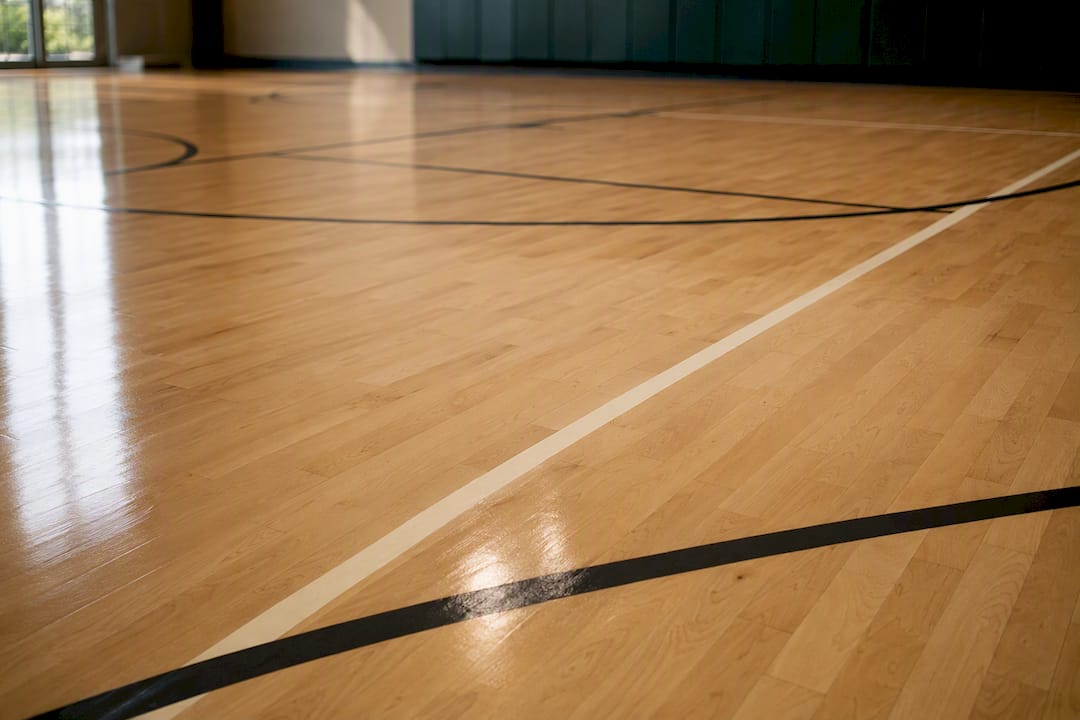
Subfloor systems matter more indoors than most people realize. Sprung, engineered, and portable subfloor systems each serve a different purpose. A sprung floor absorbs impact and protects joints during frequent, intense play, while a portable system trades some performance for flexibility and lower cost. The right choice depends on how hard the court gets used, not just budget.
Because of all this, indoor court costs span an unusually wide range. A residential half-court with modest flooring can land at $10,000 to $45,000, while a full turnkey indoor court, including HVAC, insulation, lighting, and permitting, often runs far higher once you’re building or substantially modifying a structure.
Converting an existing garage or outbuilding is almost always cheaper than building new, since you’re skipping the roof, walls, and foundation costs entirely. If your space needs new structural work to fit a regulation court, budget accordingly. That’s construction cost, not sport court cost.
Budgeting for Hoops, Lighting, Fencing, and Other Add-Ons
Accessories are where budgets quietly balloon. Nobody plans to overspend on a hoop, but the range between options is enormous.
- Hoop systems: In-ground and wall-mounted units run $550 to $5,000 or more installed, depending on adjustability and pole construction
- Lighting: Basic wired LED fixtures start around $2,000, while full pole-mounted systems with multiple fixtures can reach $40,000 for larger courts
- Fencing: Typically $4,000 to $12,000 depending on material and linear footage, with chain-link on the low end and ornamental fencing pushing the high end
- Striping and paint: Usually $200 to $1,500, cheap enough to defer if you’re watching cash flow
Lighting deserves special attention if you want evening play. A basic two-fixture LED setup covers casual shooting, but full illumination for actual games requires pole placement, wiring runs, and sometimes permitting, which is why the range stretches so wide.
How to Get Accurate Quotes and Avoid Cost Surprises
Getting comparable bids is harder than it sounds, because two contractors quoting “a half-court” can mean completely different scopes of work. Here’s how to fix that before you sign anything.
- Get three detailed quotes minimum. Industry guidance recommends three separate bids, each itemizing site prep, base specifications, surfacing material, and warranty terms separately.
- Draw your exact footprint before calling anyone. A property-map visual estimator lets you mark your court’s precise dimensions and location, so every contractor bids on identical scope instead of guessing from a phone call description.
- Map the realistic timeline. Site prep and grading typically take one to two weeks, base or slab work another one to two weeks including cure time, surfacing installation a few days, and striping less than a day. Add time for permit review, which varies by jurisdiction.
- Ask pointed questions. What’s the base thickness and compaction spec? Is there a written drainage plan? What’s covered under warranty, and for how long?
- Watch for red flags. Vague compaction specs, no mention of drainage, and warranty terms that only cover materials (not installation) are common signs of an under-scoped bid.
Pro Tip: Send the same property-map drawing to every contractor you contact. When all three bids reference identical dimensions and site conditions, price differences tell you something real about quality and scope, not just guesswork on their end.
Planning 12 to 18 months ahead gives you room for soil testing, permitting, and off-peak scheduling, which often comes with lower labor rates than a rushed spring install.
Smart Ways to Trim Cost Without Cutting Corners
Some savings are genuinely smart. A smaller footprint, phasing lighting or fencing into a second-year project, and choosing acrylic over premium modular tile all lower upfront cost without compromising the court’s structural integrity.
Other savings backfire. A thinner-than-recommended base, skipped drainage, or a bargain surface material tends to show up as cracking, pooling, or premature wear within a few years, turning a small initial saving into a bigger repair bill.
- Clear brush and debris yourself before contractors arrive to shave labor hours
- Leave excavation, grading, and slab work to licensed professionals
- Defer lighting or a scoreboard to year two if cash flow is tight
- Never skip the drainage plan, even on a budget build
Pro Tip: If a bid is dramatically cheaper than the others, ask specifically about base thickness and drainage before assuming you found a deal.
Why Most Cost Guides Undersell the Real Variable
The conventional advice on basketball court cost treats it like a shopping list: pick a size, pick a surface, add up the per-square-foot number. That approach fails homeowners because it skips the one variable that actually separates a $25,000 court from a $45,000 one on paper identical dimensions: what happens before the surface ever goes down.
I’d argue site prep and base work deserve more attention than surface material in almost every homeowner’s decision process. A cheap surface on a properly compacted, well-drained base will outlast an expensive surface on a shortcut base, every time. Yet most quotes bury site prep as a small line item and spotlight the flashy acrylic color options instead.
If you take one thing from this, prioritize the drainage and base conversation with every contractor before you ask about surface colors or hoop brands. Get your dimensions drawn precisely, get three quotes that itemize the boring stuff, and treat the accessory budget as flexible. The structural decisions aren’t.
Get a Site-Specific Estimate Before You Call a Single Contractor
Propertyimprovementestimator gives you something a phone call to a contractor never can: an exact, dimensioned map of your court before anyone shows up to quote it. Instead of describing your backyard over the phone and hoping the contractor pictures it correctly, you draw the footprint, dimensions, and layout yourself on a satellite view of your own property.
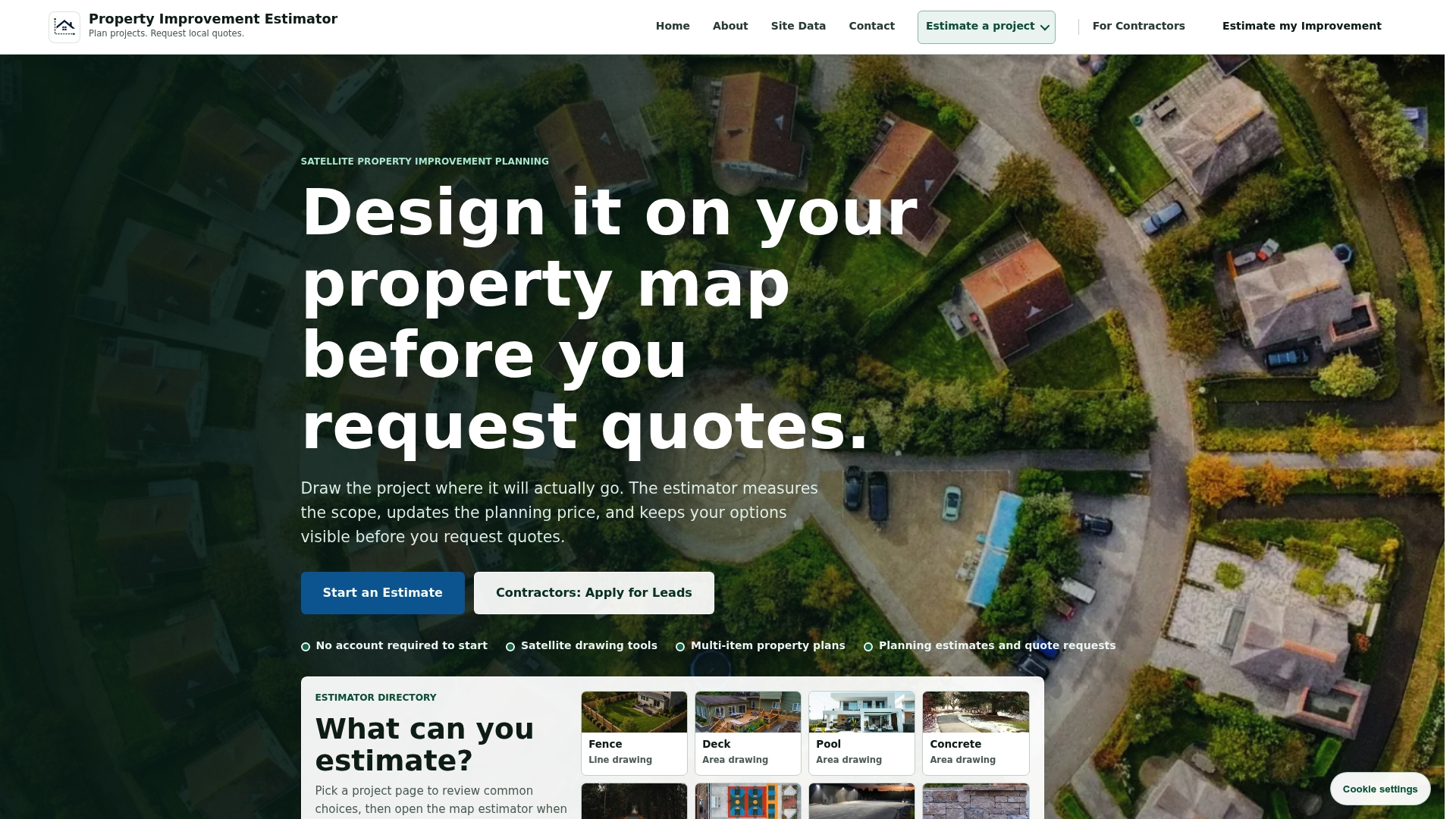
That precision matters because vague scope is exactly what causes wildly different quotes for the same project. Draw your half-court or full court on the satellite property cost estimator, mark where fencing and lighting should go, and share that exact plan with every contractor you contact. Add fencing quotes or an outdoor lighting estimate to the same project if you’re planning those accessories too. Start your court plan today and request quotes that are actually comparing the same scope of work.
FAQ: Basketball Court Cost Questions Homeowners Ask
What’s the average cost to build a basketball court in a backyard? A backyard half-court typically runs $25,000 to $45,000 depending on surface choice, fencing, and lighting. A full backyard court, if space allows, commonly reaches $60,000 to $80,000 or more.
How much does it cost per square foot to build a basketball court? Most backyard courts fall in the $25 to $35 per square foot range all-in, though basic asphalt surfacing alone can run as low as $6 per square foot, and premium modular tile systems can reach $35 per square foot installed.
Is it cheaper to build an indoor or outdoor basketball court? Outdoor courts are almost always cheaper because they skip building structure, HVAC, and insulation costs. Indoor residential half-courts still commonly run $10,000 to $45,000, and full indoor builds often cost significantly more once structural work is included.
How much does it cost to resurface an existing basketball court? Resurfacing typically costs $4,000 to $12,000, covering surface prep and a new acrylic coating on an existing, structurally sound slab.
What adds the most unexpected cost to a basketball court project? Site preparation, especially drainage and grading, causes the most budget surprises. Poor natural drainage or a sloped lot can add $5,000 to $20,000 beyond a basic estimate.
How many quotes should I get before choosing a contractor? Get at least three detailed quotes, each itemizing site prep, base specifications, and warranty terms, so you’re comparing identical scope rather than guessing at what each bid actually includes.
Sources
- How Much Does a Backyard Basketball Court Cost in 2026? (Full Breakdown)
- Concrete basketball court cost: sizes, surfaces, and labor - LegalClarity
- How much does an indoor basketball court cost? — Junckers Hardwood
- Basketball or Tennis Court Installation: A Homeowner’s Complete Guide | Angi
- Basketball Court Cost: How Much Does It Cost to Build a Basketball Court? — Precision Sports CT
Recommended
- Basketball Court Cost Calculator | Half Court, Full Court, Surfacing, and Local Costs
- Basketball Court Estimator | Full and Half Court Planning
- Sport Court Estimate Calculator | Pickleball, Basketball, Tennis, Lighting, and Local Factors
- Sport Court Material Cost Calculator | Base, Surface, Lines, Equipment, Fence, and Lighting