What a Backyard Remodel Really Costs in 2026
A basic backyard refresh usually costs several thousand dollars, a mid-range remodel typically reaches up to tens of thousands, and a full luxury transformation with features like a pool or outdoor kitchen begins in the high tens of thousands and can go higher. On a per-square-foot basis, plan for $4 to $20 depending on materials and features you choose.
Those numbers are the starting point, not the final word. Yard size, region, soil condition, and how much demolition you need all swing the total in either direction.
- Basic refresh: a moderate budget range
- Mid-range remodel: a substantial investment level
- Luxury/full remodel: a high-end budget starting point
Quick math: A 1,000-square-foot yard at the mid-range rate of $8 to $25 per square foot puts you in the $8,000 to $25,000 range before permits, site prep, or contingency get added in.
Before you call a contractor, measure your yard and sketch out what you actually want built. Set aside 10% to 20% of your total budget as contingency. That single habit prevents more mid-project panic than anything else on this list.
Key Takeaways
A realistic backyard remodel budget depends on matching your must-have features to a tier, then adding 10% to 20% contingency before requesting bids.
| Point | Details |
|---|---|
| Set your tier first | Basic refresh runs $5,000 to $15,000, mid-range $25,000 to $75,000, luxury $75,000+. |
| Use per-square-foot math | Plan $4 to $8/sq ft basic, $8 to $25/sq ft mid-range, $25+/sq ft premium projects. |
| Budget for site prep | Grading and drainage alone can add $1,000 to $10,000 before any finish materials go in. |
| Phase the work | Infrastructure first, hardscape second, softscape and features last to avoid rework. |
| Get a site-specific quote | Property Improvement Estimator turns a satellite drawing of your yard into a tailored estimate contractors can bid on directly. |
Table of Contents
- Backyard Remodel Cost by Budget Tier
- How Much Does a Backyard Cost Per Square Foot?
- What Drives Backyard Remodel Costs Up the Most?
- How Should You Budget and Phase a Backyard Remodel?
- Real Backyard Remodel Budget Examples
- How Do You Get an Accurate Backyard Remodel Estimate?
- What I’d Prioritize First If I Were Planning This
- Turn Your Yard Sketch Into a Real Quote
- Sources
Backyard Remodel Cost by Budget Tier
Your budget tier determines what’s realistically on the table, and skipping straight to Pinterest inspiration before you know your tier is how projects blow past their number in week one.
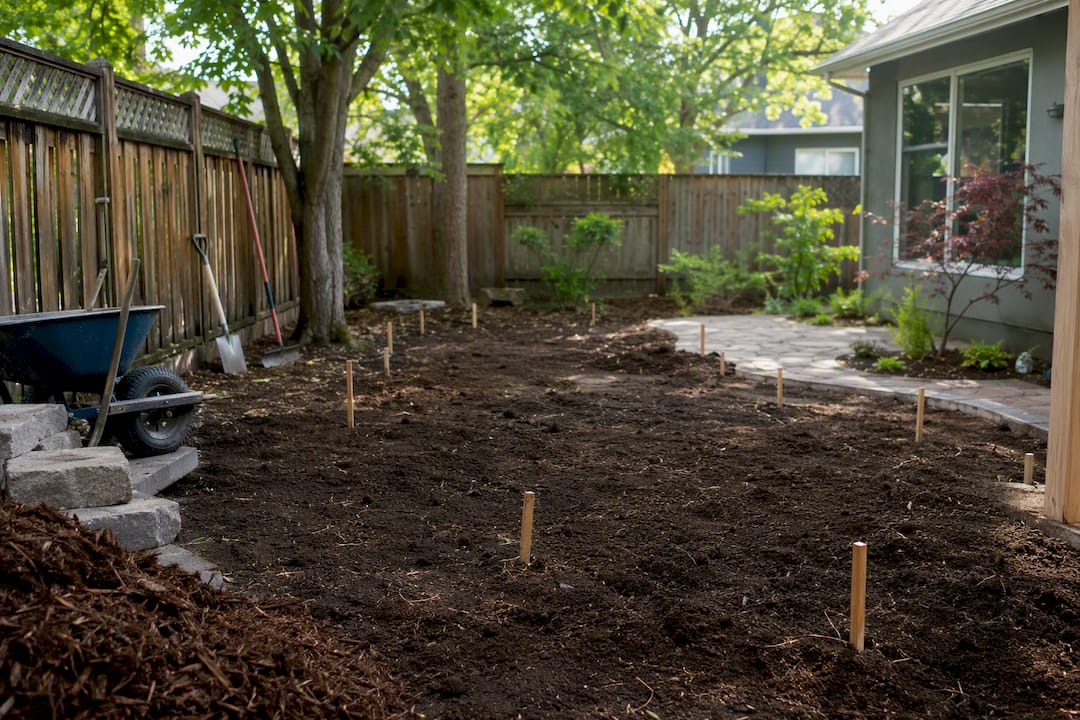
Basic refresh ($5,000 to $15,000). This tier covers new sod or seed, a small paver or gravel patio, foundation plantings, and mulch. You’re not moving dirt in a major way or running new utility lines. Think curb-appeal-level change: a tidier lawn, a place to put two chairs, some color along the fence line.
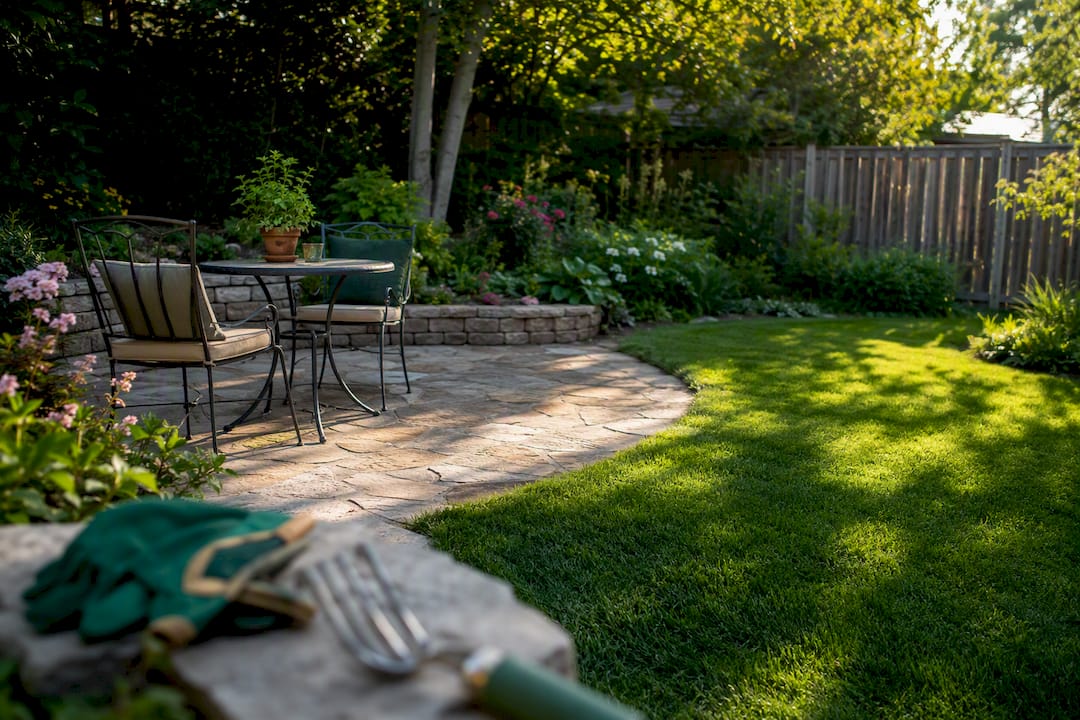
Mid-range remodel ($25,000 to $75,000). This is where most backyard renovation cost conversations actually happen. You add a real paver or concrete patio, a composite deck, a basic irrigation system, and low-voltage landscape lighting. Retaining walls or a fire pit often fit here too, depending on how ambitious you get with each element.
Luxury or full remodel ($75,000 and up). Outdoor kitchens, pools, pergolas, extensive hardscape, and multi-zone lighting live in this tier. So does anything requiring structural engineering, like a raised patio over a sloped lot or a pool house.
- Basic: sod, small patio, plantings ($5k to $15k)
- Mid-range: paver patio, composite deck, irrigation, lighting ($25k to $75k)
- Luxury: outdoor kitchen, pool, extensive hardscape ($75k+)
Yard size pulls these ranges around more than most homeowners expect. A quarter-acre lot in a mid-range tier might land near the top of that $75,000 ceiling simply because there’s more square footage to cover, while a small urban backyard doing the same scope of work often costs less in total dollars but more per square foot. Region matters just as much: labor rates and material costs in coastal metros routinely run 20% to 40% above what the same project costs in a lower-cost inland market.
How Much Does a Backyard Cost Per Square Foot?
Per-square-foot pricing is the fastest way to sanity-check a contractor’s bid before you’ve even seen a formal quote. Basic work runs about $4 to $8 per square foot, mid-tier projects land at $8 to $25, and premium builds with heavy hardscape or custom features push past $25 per square foot.
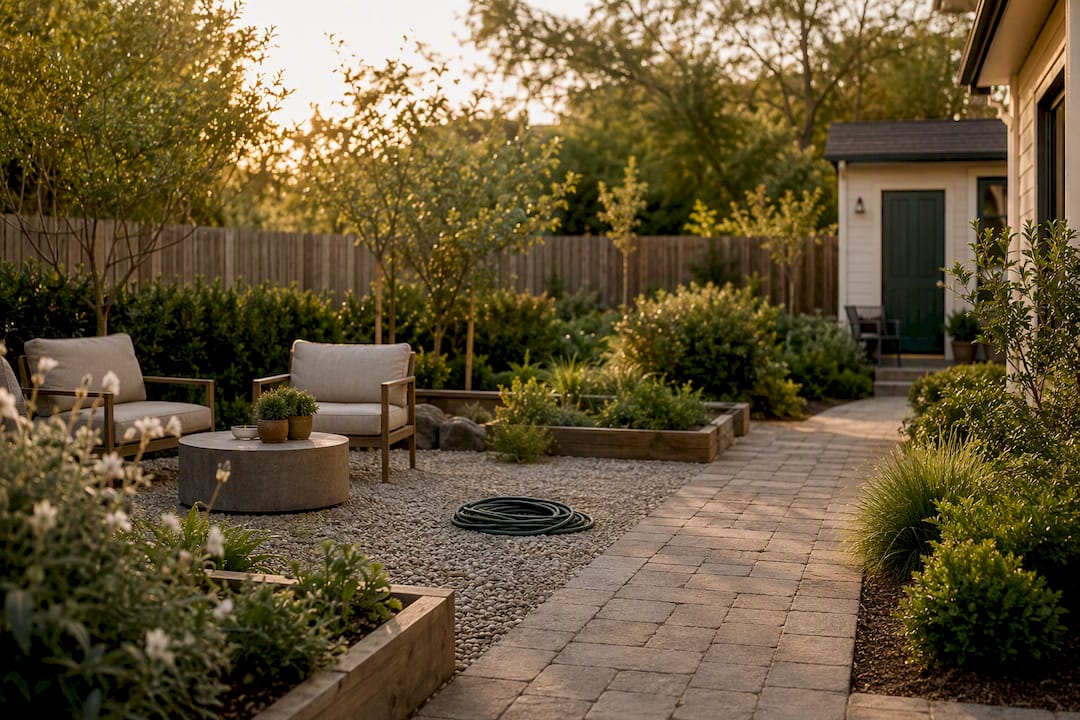
Quick stat: A 1,500-square-foot backyard renovation at mid-tier rates falls within a moderate to substantial cost range before additional expenses like permits and site preparation.
Common per-feature ranges, drawn from current industry cost guides:
- Paver or concrete patio: $10 to $50+ per sq ft depending on material
- Composite deck: $25 to $55 per sq ft installed
- Outdoor kitchen: $8,000 to $25,000+ for a functional built-in setup
- Irrigation system: $1,500 to $4,000 for an average residential lot
- Landscape lighting: $1,000 to $5,000 depending on fixture count and wiring
- Fencing: $15 to $40 per linear foot depending on material and height
Here’s the part that surprises a lot of homeowners: smaller yards often cost more per square foot, not less. A contractor’s mobilization fee, equipment delivery, and minimum labor charge don’t shrink just because the job site does. Those fixed costs get spread across less total area, so a compact 400-square-foot courtyard renovation can carry a higher unit price than a sprawling half-acre project with the same feature list.
What Drives Backyard Remodel Costs Up the Most?
Site prep is usually the first place a budget gets blown, and it’s the part almost nobody accounts for when they’re pricing a project from a magazine photo. Grading and drainage work alone can run $1,000 to $10,000 or more, especially if your yard has poor slope, standing water, or a high water table.
- Site prep: grading, drainage correction, demolition, and stump/root removal
- Utilities and permits: trenching for gas, water, or electrical lines plus permit fees
- Material choice: natural stone costs more upfront than pavers but needs less long-term upkeep
- Access difficulty: a backyard reachable only through a narrow side gate adds labor hours fast
Permits alone can add hundreds to a few thousand dollars depending on your municipality and whether the project touches electrical or plumbing systems. Demolition of an old deck, pool, or overgrown landscaping adds cost before a single new material goes in the ground, and labor typically eats 40% to 60% of any hardscape-heavy budget.
Pro Tip: Ask your contractor for a written breakdown of site prep costs before signing anything. If a bid doesn’t separate grading and demolition from the finish work, you have no way to know which part of the price is negotiable.
How Should You Budget and Phase a Backyard Remodel?
Build your contingency in before you get a single bid, not after the first change order shows up. Most industry guides recommend setting aside 10% to 20% of your total budget specifically for surprises like rock in the excavation zone or a drainage issue nobody could see until digging started.
- Phase 1: Infrastructure. Grading, drainage, permits, and any utility rough-ins happen first, since reworking finished hardscape to fix a drainage mistake costs far more than doing it right the first time.
- Phase 2: Hardscape. Patios, decks, walls, and any structural features go in once the ground underneath is stable and properly sloped.
- Phase 3: Softscape and features. Plantings, lighting, irrigation heads, and furniture finish the project once the bones are in place.
Infrastructure work typically takes one to three weeks depending on lot size and soil conditions. Hardscape installation runs two to six weeks for a mid-range project. Softscape and finishing touches often wrap in under a week once the heavy lifting is done.
Pro Tip: If your budget is tight, phase across two seasons rather than cutting corners on materials. Spreading the timeline lets you afford better hardscape now and add plantings or lighting next spring.
Real Backyard Remodel Budget Examples
Numbers on a page mean more once you see them add up to a total. Here’s how three different scopes break down.
Small project, basic tier: A homeowner refreshing a 600-square-foot backyard adds a 200-square-foot gravel patio ($1,600), fresh plantings and mulch ($1,800), and a simple drip irrigation loop ($1,500). Subtotal: $4,900.
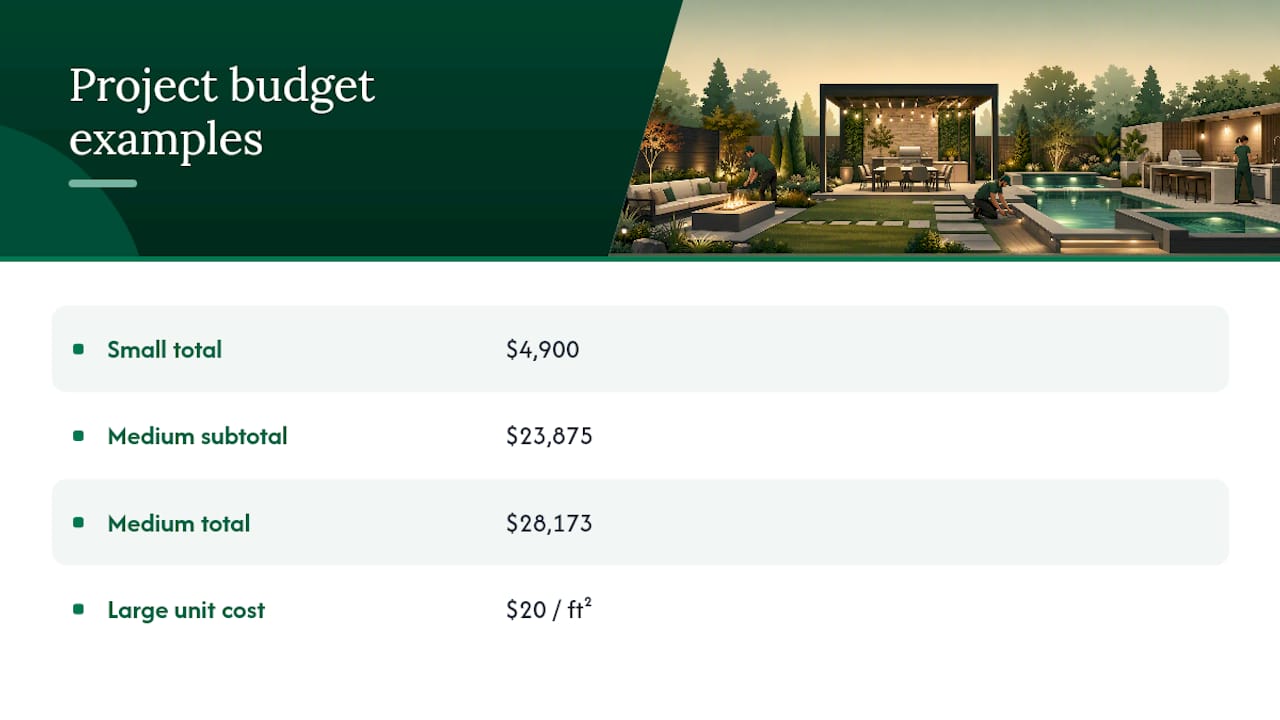
Medium project, mid-range tier: A 1,200-square-foot yard gets a 300-square-foot paver patio ($9,000), a 250-square-foot composite deck extension ($9,375), landscape lighting ($3,000), and irrigation ($2,500). Subtotal: $23,875. Add 18% contingency ($4,298) for a total of roughly $28,173, which lines up closely with documented mid-range project totals for similar suburban lots.
Large project, luxury tier:
That per-square-foot math from the medium example ($23,875 ÷ 1,200 sq ft, or roughly $20 per square foot before contingency) is the exact calculation you can run on your own yard once you know your target scope.
How Do You Get an Accurate Backyard Remodel Estimate?
Generic online calculators give you a range. What actually gets you a quote you can trust is a scope tight enough that a contractor can’t misread it. Start with a checklist:
- Measure your yard and sketch it, noting existing structures and property lines
- Mark utility lines, access points, and any slope or drainage issues
- Separate your must-haves from your nice-to-haves before requesting bids
- Photograph tricky access points like narrow gates or sloped side yards
Bids that omit measurements, photos, and a basic drawing are the leading cause of change orders once work actually starts. If a contractor’s scope doesn’t specify materials, dimensions, and site conditions in writing, assume the final invoice will look different from the quote.
This is exactly the gap Property Improvement Estimator’s drawing tools were built to close. Instead of describing your yard over the phone, you draw fences, decks, patios, or a pool directly on a satellite map of your property, and the platform pairs those dimensions with local cost data to generate a site-specific estimate. Contractors receive the full scope packet, drawings and measurements included, so their bid reflects your actual project instead of a generic guess.
Pro Tip: Ask every contractor the same three questions: who pulls the permit, what’s the warranty on labor versus materials, and what’s the estimated timeline if weather delays hit. Comparing identical answers across bids is the only fair way to judge price differences.
What I’d Prioritize First If I Were Planning This
If you’re staring at a bare backyard and a budget that feels too small for everything on your wish list, spend on infrastructure before anything decorative. Grading, drainage, and a well-built patio base outlast every trend in outdoor furniture and lighting, and they’re the parts nobody can see once the project is done, which is exactly why people skip them. A $10,000 budget focused on plants and refreshed hardscaping can transform how a yard feels to live in. Chase impact first, add the extras once the bones are solid.
— Christian
Turn Your Yard Sketch Into a Real Quote
Property Improvement Estimator gets you a site-specific number instead of a generic range pulled from a national average that has nothing to do with your slope, your access gate, or your local labor rates.
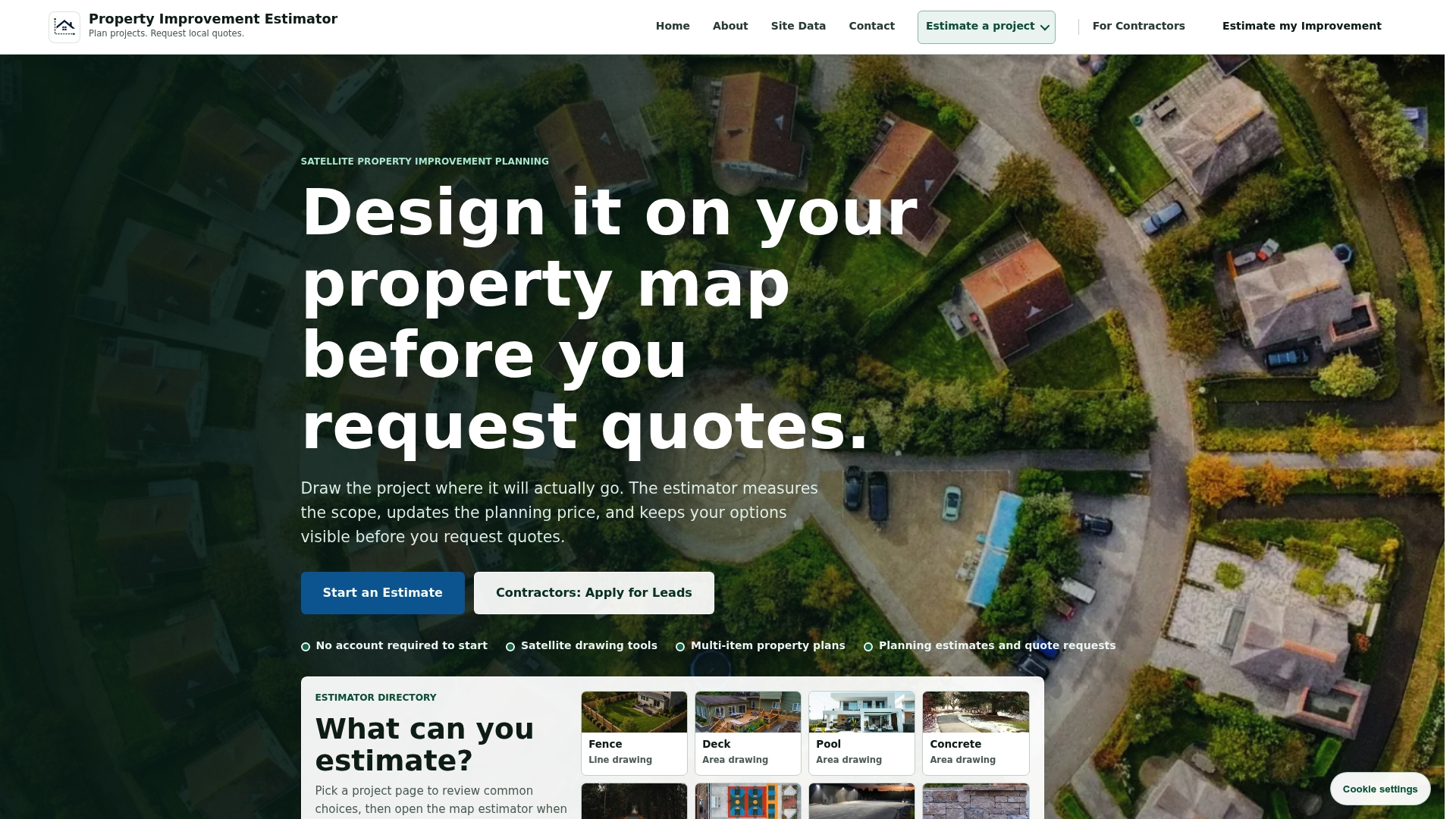
Draw your yard on the satellite map, place the patio, deck, fence, or pool exactly where you want it, and the platform calculates an estimate using your actual dimensions and regional pricing data. That drawing becomes the scope packet your contractor receives, which means the bid you get back matches the project you actually described instead of one they guessed at over the phone. If you’re weighing deck materials, check the deck cost calculator for a feature-specific breakdown, or if a pool is part of the plan, the pool estimator factors in excavation and permit variables specific to that project type.
Ready to see your own numbers? Start your site-specific estimate and turn your backyard sketch into a quote request contractors can actually bid on accurately.
Sources
- 2026 Backyard Renovation Costs: Full Pricing & Budget Guide
- Backyard Renovation Cost: This Is How to Calculate It | Architectural Digest