Homeowners: Map to Compare Asphalt vs Concrete Driveway Costs Over 30 Years
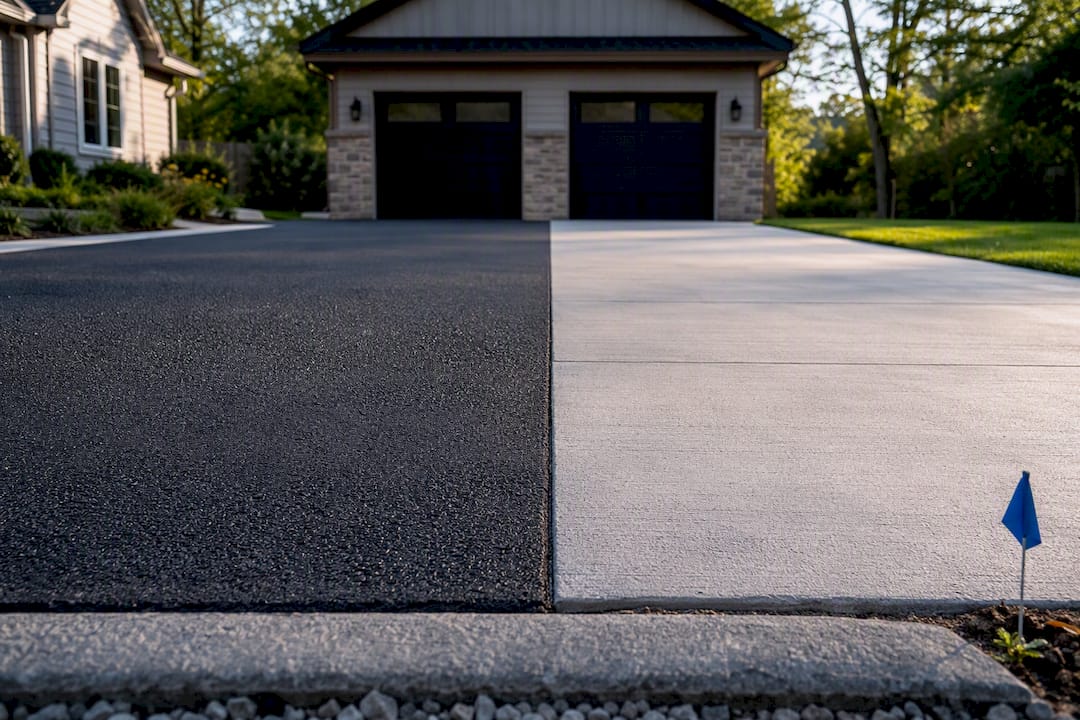
There’s no universal winner in the asphalt vs concrete driveway debate. The right choice comes down to your climate and how long you plan to stay put. If you’re in a cold, snowy region and expect to move within 10 years, asphalt usually wins on upfront cost. If you’re staying 15 years or more, or you live somewhere hot and want stronger curb appeal, concrete tends to pay off. The numbers and checklist below explain why.
TL;DR:
- Asphalt is generally more affordable upfront, costing around $5,258 on average for installation, but lasts only 15 to 20 years without major repairs.
- Concrete costs roughly $6,400 to $9,000 for a typical driveway and can last up to 40 years with less frequent maintenance.
- Climate plays a crucial role, as asphalt resists freeze-thaw damage better in snowy regions, while concrete handles high heat and sun exposure more effectively.
- Regular sealcoating and overlays extend asphalt lifespan, while concrete requires sealing and careful panel repair to avoid costly fixes.
- Decorative concrete boosts curb appeal but comes at a higher price, and base preparation quality significantly influences long-term driveability for both materials.
Table of Contents
- Asphalt vs Concrete Driveway Cost and Lifespan Compared
- How Do Heat, Freeze-Thaw Cycles, and Road Salt Affect Each Material?
- What Maintenance Does Each Driveway Type Actually Need?
- Which Material Looks Better and Holds Curb Appeal?
- How Long Does Installation Take and Why Does Base Prep Matter?
- How Do You Choose Between Asphalt and Concrete Driveways?
- How Property Improvement Estimator Helps You Plan Before You Bid
- A Quick Take on Getting This Decision Right
- Get a Site-Specific Estimate Before You Call a Contractor
- Where These Numbers Came From
- Sources
Asphalt vs Concrete Driveway Cost and Lifespan Compared
Asphalt costs less to install, but concrete tends to outlast it by a wide margin. NerdWallet’s data puts average asphalt installation around $5,258 versus roughly $6,400 for concrete, with asphalt lasting 15 to 20 years and concrete stretching to 30 or 40. HomeCostLab’s breakdown shows per-square-foot ranges of $5 to $12 for asphalt and $6 to $15 for concrete, and its lifecycle modeling suggests concrete often comes out cheaper once you stretch the comparison past 30 years.
For a typical 600-square-foot driveway, that translates to something like this:
- Asphalt: roughly $3,000 to $7,200 installed, plus periodic resealing and one likely overlay before replacement.
- Concrete: roughly $3,600 to $9,000 installed, with minimal resurfacing needs but a bigger bill if a panel eventually needs replacement.
- Decorative concrete (stamped or stained): adds a meaningful premium over plain gray slab work, according to Bob Vila’s comparison.
If you plan to own the home for a longer term, concrete’s higher initial cost often balances out through lower maintenance and longer durability. Asphalt’s upfront cost advantage is more apparent short term and lessens over time.
How Do Heat, Freeze-Thaw Cycles, and Road Salt Affect Each Material?
Climate does more to decide this comparison than almost any other factor. Asphalt flexes with temperature swings, which helps it resist the cracking that freeze-thaw cycles cause in more rigid surfaces. That same flexibility works against it in extreme heat, where the surface can soften and show tire ruts during long summer stretches. Concrete holds its shape under high heat far better, but it’s vulnerable to spalling (surface flaking) when deicing salt combines with repeated freezing, especially in slabs poured without proper air entrainment.
Here’s how that plays out by region:
- Sun Belt climates: Concrete generally performs better since heat softening isn’t a concern for asphalt’s main rival, but neither material struggles as much here.
- Snow Belt climates: Asphalt’s flexibility and salt tolerance usually make it the safer long-term bet.
- Temperate zones: Either material can work well; the deciding factor shifts toward budget and lifespan expectations.
Pro Tip: If you’re set on concrete in a snowy climate, ask your contractor about air-entrained mix and skip the deicing salt entirely. Calcium chloride alternatives are gentler on the slab.
What Maintenance Does Each Driveway Type Actually Need?
Asphalt asks for more frequent attention, but each visit costs less. Concrete asks for less frequent attention, but a bigger repair bill when something finally goes wrong.
- Asphalt sealcoating: Plan on resealing every few years to block water infiltration and slow oxidation. Skipping this is the single fastest way to shorten an asphalt driveway’s life.
- Asphalt overlays: Once the surface gets rough or shows widespread cracking, a fresh overlay often costs less than full replacement and buys several more years, a point HomeCostLab highlights as one of asphalt’s practical advantages.
- Concrete sealing: Optional but recommended periodically to guard against staining and salt damage; it’s a lighter maintenance load than asphalt overall.
- Concrete panel repair: Cracked or heaved panels sometimes need full replacement rather than patching, which is pricier per square foot than an asphalt patch, per ConcreteCalculate’s breakdown.
Base preparation matters more than either surface material. A driveway poured or laid over a poorly compacted gravel base will crack and fail early no matter which material sits on top.
Which Material Looks Better and Holds Curb Appeal?
Concrete wins on customization. You can stamp it, stain it, tint it, or score it into patterns that mimic pavers or natural stone. Asphalt gives you one look: smooth black, with color limited to how fresh the sealcoat is.
- Decorative concrete finishes cost more but tend to boost perceived home value and curb appeal, a trade some homeowners find worth the premium according to Bob Vila.
- Asphalt patches and repairs are usually less visually obvious than a mismatched concrete panel replacement.
- Cracks show up dark and obvious on light-colored concrete; asphalt patches tend to blend in better since the whole surface is already dark.
- If resale appeal matters more than budget, decorative concrete or brick-style pavers are worth pricing out before committing to plain asphalt.
If you’re weighing broader outdoor upgrades alongside the driveway, a coastal-style curb appeal refresh shows how finish choices ripple across a whole property’s look.
How Long Does Installation Take and Why Does Base Prep Matter?
Both materials follow a similar preparation and installation sequence involving excavation, base preparation, forming or laying, and curing. Asphalt typically becomes drivable in a few days, while concrete takes about a week before light traffic and longer before heavy loads.
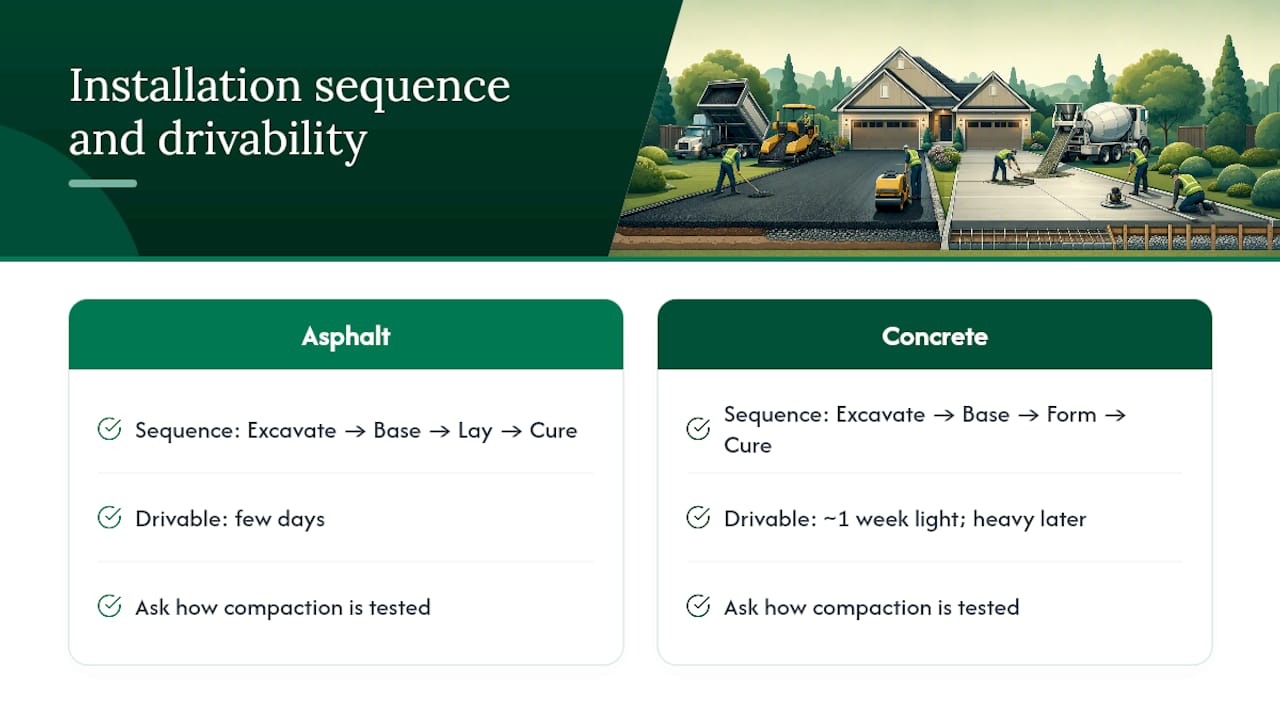
Steep slopes, poor site access, and mature trees near the pour area all add cost and time. Pro Tip: Ask every contractor how they test compaction, not just what base depth they plan to use. A number without a test is just a claim.
How Do You Choose Between Asphalt and Concrete Driveways?
Start with the factors that won’t change no matter which contractor you hire: your climate, how long you’ll own the home, your upfront budget versus your tolerance for lifetime cost, and how much maintenance you’re actually willing to do.
Then interview contractors with specific questions, not general ones:
- What base depth are you installing, and how do you test compaction?
- Will you reinforce the slab or asphalt layer given my soil and slope?
- What’s your drainage plan, and where does runoff go?
- What warranty covers cracking or settling, and for how long?
Watch for red flags: a vague answer about base prep, a bid dramatically lower than competitors, or a contractor who can’t produce references. If your driveway sees light use and you want a lower-maintenance, permeable option, ask about permeable pavers, which handle drainage differently than solid slabs and can reduce runoff issues that neither asphalt nor concrete solves well on their own.
How Property Improvement Estimator Helps You Plan Before You Bid
Generic per-square-foot averages only get you so far. Local material costs, soil conditions, and site access can shift your real number well outside any national range. An online property improvement estimator lets you draw your actual driveway footprint on a satellite map of the property and run it through material-specific calculators.
- Use the asphalt estimator or concrete estimator to model your exact dimensions instead of a generic size assumption.
- Compare asphalt and concrete side by side using the same footprint, so the numbers reflect the specific lot, not a national average.
- Factor in overlay and sealcoating costs later using the asphalt sealcoating calculator for long-term budgeting.
Running these numbers before you request bids gives you a baseline to catch a lowball quote that’s skipping base prep to win the job.
A Quick Take on Getting This Decision Right
Climate plus years in the home settles this more often than people expect. The mistakes I see repeated most: choosing by color or price alone, letting a contractor skimp on base depth, and ignoring where water actually drains. A renter-minded owner in Minnesota picks asphalt. A forever-home owner in Arizona wanting curb appeal picks stamped concrete. Everyone in between should run the numbers before deciding.
— Christian
Get a Site-Specific Estimate Before You Call a Contractor
This type of tool is useful once you’ve narrowed the asphalt vs concrete decision but before you pick a contractor. Instead of guessing from national cost ranges, users can draw their actual lot on a satellite map, mark where the driveway goes, set dimensions, and compare asphalt against concrete using real site conditions and local pricing.
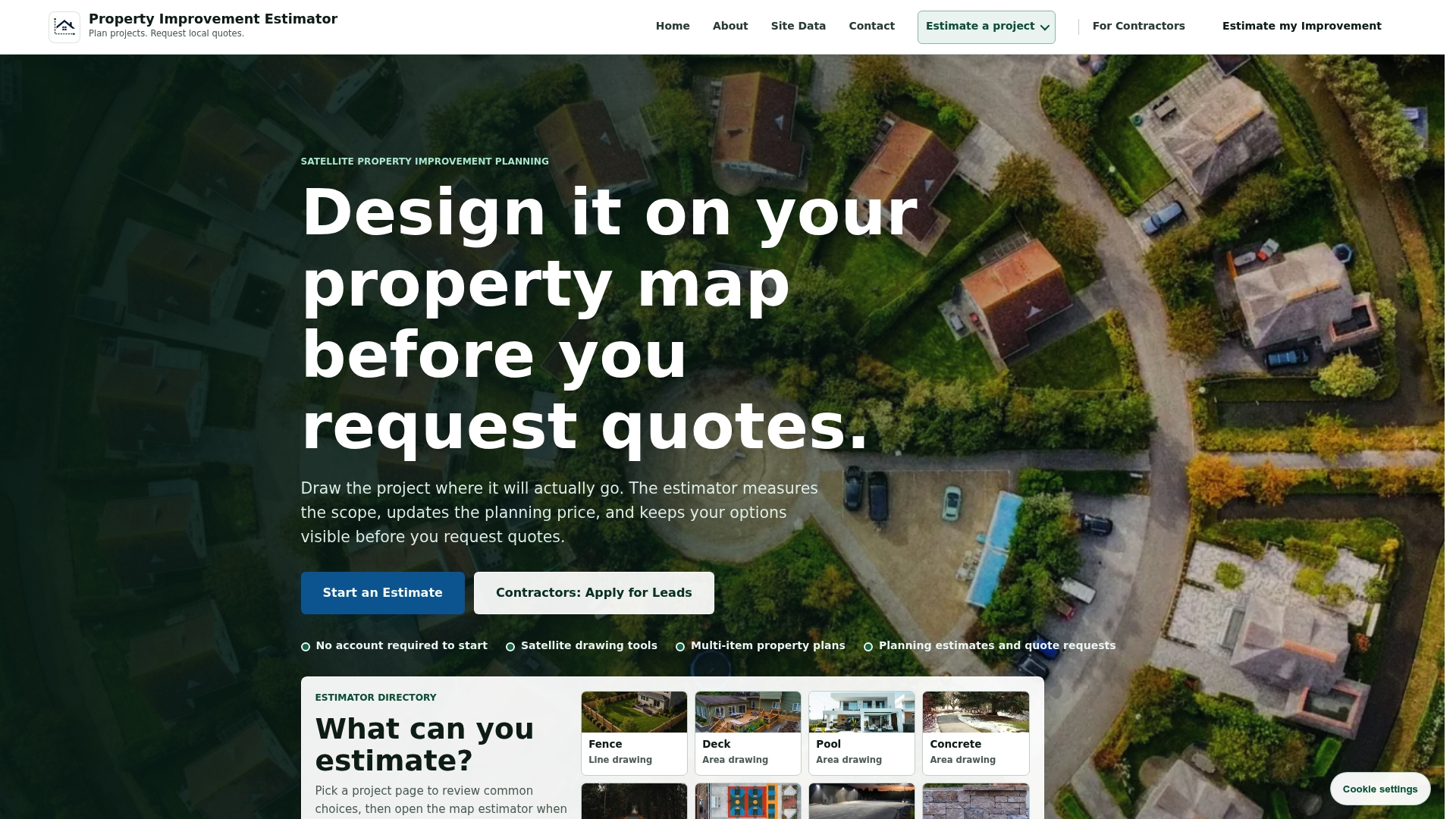
Start by mapping your property, setting your driveway’s exact footprint, and testing both material options through the concrete estimate calculator or the asphalt tools above. Such an estimator exists on a dedicated site and helps homeowners prepare for contractor conversations with real numbers, not guesses. When you’re ready, request a site-specific estimate and use it to compare bids apples to apples.
Where These Numbers Came From
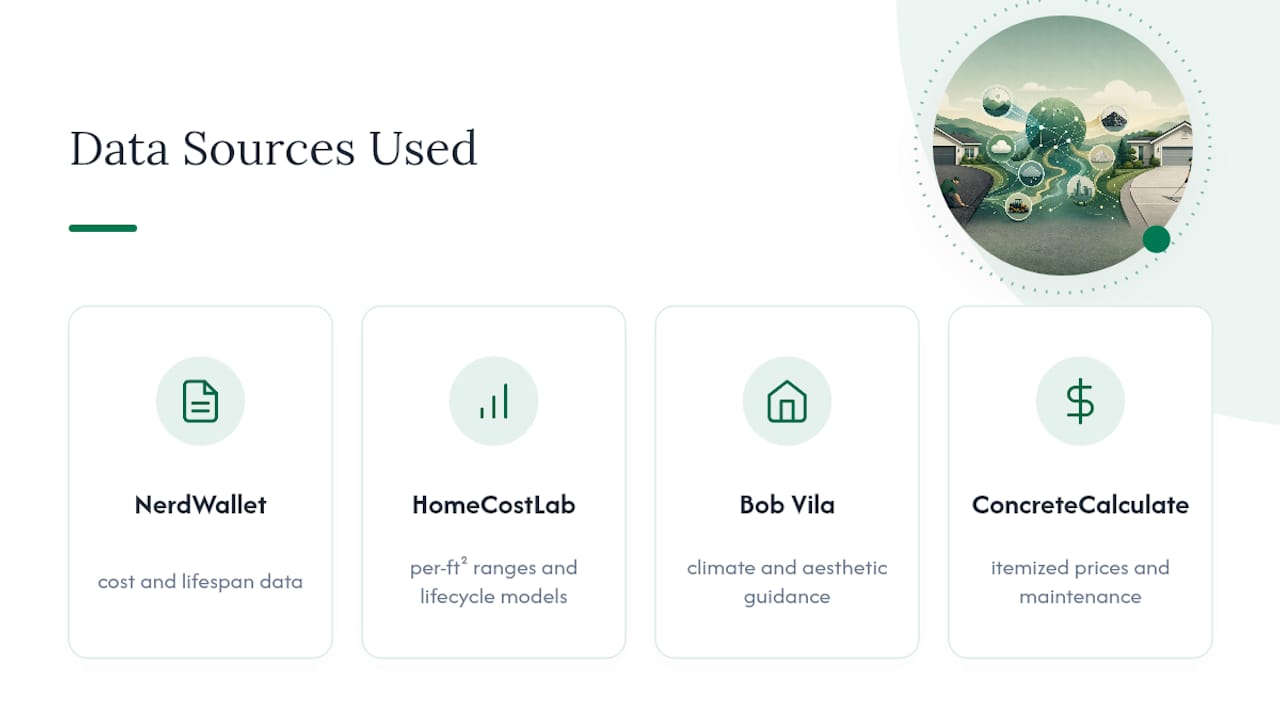
The cost and lifespan figures throughout this guide draw from NerdWallet’s cost and lifespan data, HomeCostLab’s per-square-foot ranges and lifecycle modeling, Bob Vila’s practical climate and aesthetics guidance, and ConcreteCalculate’s itemized price comparisons and maintenance breakdowns.
Sources
- Asphalt vs. Concrete Driveway Cost in 2026: Which Material is Better? - NerdWallet
- Concrete vs Asphalt Driveway Cost 2026: Which Is Worth It? | HomeCostLab
- Concrete vs Asphalt: Which Makes a Better Driveway - Bob Vila
- Concrete vs Asphalt Cost: 2026 Price Comparison Guide
Recommended
- Asphalt Cost Calculator | Estimate Driveways, Overlays, Sealcoating, and Local Costs
- Asphalt Material Cost Calculator | Asphalt Depth, Base, Overlay, Sealcoating, and Local Factors
- Asphalt Permit Cost Calculator | Driveways, Parking, Drainage, Right-of-Way, and Local Review
- Concrete Estimator | Property Improvement Estimator