Asphalt Grading in Bethesda, Md: a 2026 Guide

If you own a home or commercial property in Bethesda, Maryland, the quality of your asphalt surfaces depends on something most people never see: the grading beneath and around them. Asphalt grading is the process of shaping, leveling, and sloping the ground and the pavement layers so that water drains correctly, the surface stays stable, and the asphalt lasts for decades instead of a few short seasons. In a region known for humid summers, freeze-thaw winters, and heavy spring storms, grading is not a cosmetic detail — it is the foundation of every driveway, parking lot, and private road in Montgomery County.
This guide explains what asphalt grading involves, why it matters so much in Bethesda's climate and terrain, how much it typically costs, and how homeowners and contractors can plan and estimate a grading project before committing to a bid.
What Is Asphalt Grading?
Asphalt grading covers two related but distinct tasks. The first is subgrade preparation: shaping the soil, gravel, and crushed stone base so the pavement has a level, well-compacted foundation with a consistent slope. The second is surface grading: adjusting the finished asphalt so water flows away from structures rather than pooling on the surface or seeping into the base.

A properly graded asphalt surface usually has a slope of roughly 2% — about a quarter inch of fall per horizontal foot — directing water toward a street, swale, or drainage inlet. Too little slope and water ponds, eventually seeping into cracks and undermining the base. Too much slope and the asphalt becomes uncomfortable to walk or drive on, and water moves fast enough to cause erosion at the edges.
Grading work typically includes:
- Excavation and soil conditioning — removing unsuitable soil and replacing it with compactable material.
- Base course installation — laying and compacting crushed aggregate in lifts to a specified depth.
- Fine grading — achieving precise elevation and slope before paving.
- Drainage integration — tying the surface into gutters, French drains, catch basins, or existing storm systems.
- Final surface correction — milling, patching, or overlaying to restore proper fall on an existing surface.
Each step affects the next. Poor subgrade compaction, for example, will telegraph through even the best asphalt mix within a year or two, producing ruts, depressions, and alligator cracking.
Why Grading Matters in Bethesda's Climate
Bethesda sits in a transitional climate zone. Summers are hot and humid, winters bring repeated freeze-thaw cycles, and the region receives roughly 40 inches of rain per year, often in intense bursts. That combination is unusually hard on asphalt.

Water is the primary enemy of pavement. When water penetrates the surface and reaches the base, it weakens the aggregate and the subgrade. During a freeze, that trapped moisture expands, pushing the pavement upward. When it thaws, the soil loses strength and the asphalt settles unevenly. Repeat this cycle a few dozen times over a Bethesda winter and even a well-built driveway can develop potholes and heaving.
Proper grading addresses this in three ways:
- It moves water off the surface quickly, reducing the time water has to infiltrate cracks and joints.
- It keeps the base dry, preserving the load-bearing capacity of the aggregate and subgrade.
- It directs water away from foundations, garages, and retaining walls, protecting structures as well as pavement.
Bethesda's terrain adds another layer of complexity. Many lots slope noticeably, and properties near streams, ravines, and the Potomac watershed face strict stormwater management requirements. Local regulations in Montgomery County often require that new or expanded impervious surfaces — including driveways and parking areas — manage runoff on-site rather than discharging it onto neighboring properties or into storm sewers. Correct grading is usually the first and most cost-effective way to comply.
Signs Your Asphalt Needs Regrading
Grading problems rarely appear overnight. They develop gradually, and the warning signs are easy to overlook until damage becomes expensive. Watch for:
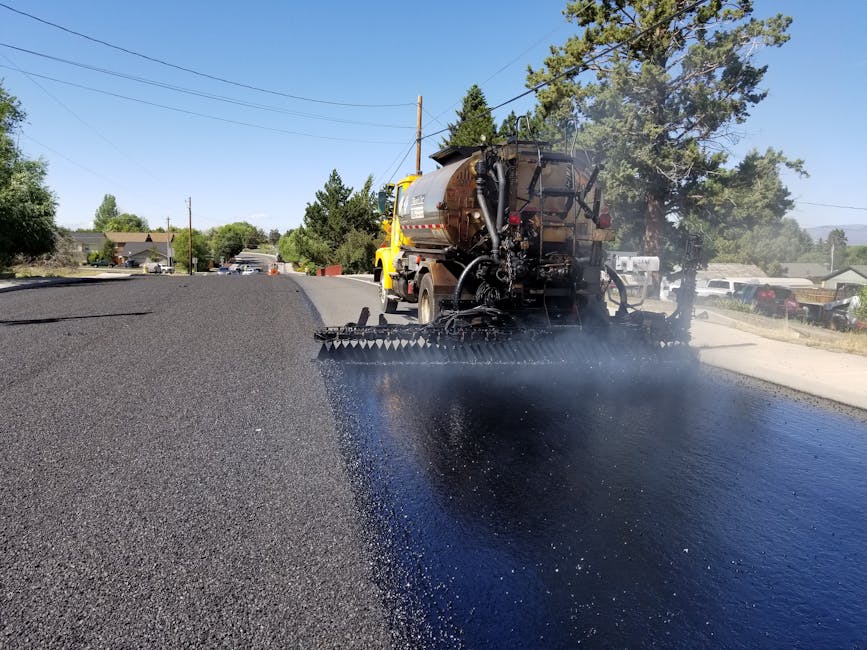
- Standing water after rain, especially in the same spots every time.
- Ponding near the garage or foundation, which signals the surface slopes toward the building instead of away.
- Widespread cracking, particularly the interconnected "alligator" pattern that indicates a failing base.
- Depressions and ruts where tires travel, often caused by subgrade settlement.
- Heaving or lifting in winter, followed by settlement in spring.
- Crumbling edges where water has eroded the shoulder and base.
- Weeds and grass growing through cracks — a sign that water and organic material have entered the pavement structure.
If two or more of these apply, a grading evaluation is worthwhile. In many cases, corrective grading combined with a fresh surface layer costs far less than full replacement, but the window for that option closes as base damage spreads. Property owners researching nearby projects often find useful comparisons in guides such as this Asphalt Driveway Vernon Center: 2026 Guide.
How Asphalt Grading Projects Are Planned and Estimated
Planning a grading project in Bethesda involves several variables that drive both scope and cost. Understanding them helps property owners compare bids fairly and avoid surprise change orders.
Key cost factors
- Area and dimensions — square footage is the primary driver, but shape matters too. Curved, irregular driveways require more labor and waste less material efficiently than simple rectangles.
- Existing surface condition — a driveway that can be regraded and overlaid is far cheaper to fix than one requiring full removal and reconstruction.
- Excavation depth — deeper base requirements mean more hauling, more aggregate, and higher disposal costs.
- Drainage work — adding catch basins, French drains, or connecting to storm systems adds significant cost but often prevents recurring problems.
- Access and site constraints — narrow lots, steep slopes, retaining walls, and landscaping that must be protected all increase labor.
- Permits and stormwater compliance — Montgomery County may require permits or sediment control measures for larger projects.
- Season and scheduling — asphalt placement requires warm, dry conditions, so spring and fall book up quickly in the Bethesda area.
Typical scope elements
A well-written proposal for asphalt grading should specify the subgrade preparation method, base aggregate type and compacted depth, finished slope target, drainage provisions, asphalt thickness and mix design, and edge treatment. If a bid omits these details, ask for them in writing. Vague proposals are the leading cause of disputes on driveway and parking lot projects.
Physical activity and outdoor space planning go hand in hand for many homeowners, and resources like the American College of Sports Medicine can help property owners think about how surfaces like sport courts, walking paths, and play areas fit into an active lifestyle — useful context when deciding how much of a lot should be paved versus left permeable.
Using a design-and-estimate tool
One of the most effective ways to plan a grading project is to sketch it directly on a map of your property before calling anyone. Property Improvement Estimator (PIE) provides an online tool that lets users design and plan outdoor improvement projects — including asphalt driveways, parking areas, concrete, sport courts, lighting, fences, decks, pools, and retaining walls — directly on a property map. Users can calculate the scope of their project, view planning price ranges, and then request local quotes based on their specific designs.
For homeowners, this means arriving at a contractor conversation with dimensions, layout, and budget expectations already in hand. For contractors, it means receiving more qualified leads with clearer project parameters, which reduces time spent on site visits that go nowhere. Either way, the estimate improves because the design is concrete rather than hypothetical. A similar planning approach is outlined in this Asphalt Driveway Pine Brook: Costs & Planning Guide.
Step-by-Step: What a Professional Grading Project Looks Like
Understanding the sequence helps property owners evaluate whether a contractor is following best practices.
- Site assessment and surveying. The contractor evaluates existing elevations, drainage patterns, soil conditions, and any utility lines. In Bethesda, this often includes checking for older clay soils that drain poorly.
- Demolition and removal (if needed). Failed asphalt and unsuitable base material are excavated and hauled away.
- Subgrade preparation. The exposed soil is graded to the designed elevation, moisture-conditioned, and compacted in lifts.
- Base installation. Crushed stone or graded aggregate is placed in layers, each compacted before the next is added.
- Fine grading and verification. Elevations and slopes are checked, often with laser levels or GPS-guided equipment, to confirm water will flow as intended.
- Drainage installation. Catch basins, trench drains, or swales are set and tied into the appropriate discharge point.
- Paving. Hot-mix asphalt is placed at the specified thickness, compacted, and finished.
- Curing and clean-up. The surface cures for a period before vehicle traffic resumes, and the site is restored.
Skipping or rushing any of these steps — particularly compaction and fine grading — is the most common reason new asphalt fails prematurely.
Cost Expectations and Maintenance in Bethesda
As of 2026, asphalt grading and paving costs in the Bethesda area tend to run higher than national averages because of labor rates, permitting requirements, and the region's challenging soils. Property owners should expect grading alone — without a new asphalt surface — to represent a meaningful share of the total project, and full reconstruction to cost substantially more than a simple overlay.
Rather than quoting a single national figure, the more reliable approach is to build a project estimate based on your specific lot. Because grading costs depend so heavily on square footage, excavation depth, drainage work, and access, two driveways of identical size in the same Bethesda neighborhood can differ in price by thousands of dollars. For a closer look at how these numbers break down on comparable projects, see this Asphalt Driveway Paving on Broome's Island.
Once grading is complete and new asphalt is in place, maintenance protects the investment:
- Sealcoating every two to three years after the initial cure period.
- Crack filling promptly, before water reaches the base.
- Keeping gutters and drains clear so water exits the property as designed.
- Avoiding heavy loads on driveways during hot weather, when asphalt softens.
- Inspecting after winter for new heaving, settling, or edge erosion.
These steps preserve the grading work and extend pavement life well beyond what untreated asphalt achieves.
Frequently Asked Questions
How do I know if my driveway needs regrading or full replacement?
If water ponds consistently, the surface slopes toward your foundation, or you see widespread alligator cracking, the base is likely compromised. A contractor can test elevations and core the pavement to determine whether a regrade and overlay will suffice or whether full reconstruction is required. Regrading is generally viable when damage is limited to the surface layer.
Does Bethesda require permits for asphalt grading?
Requirements depend on the scope of work and how much impervious surface is involved. Projects that alter drainage patterns, add significant new paving, or affect stormwater runoff may require permits or approved sediment control plans from Montgomery County. Reputable contractors will tell you what applies to your project before work begins.
What slope should asphalt have?
Most residential driveways are built with roughly a 2% slope, or about a quarter inch per foot, directed away from structures. Steeper slopes drain faster but can be uncomfortable and prone to erosion; flatter slopes risk ponding. The right target depends on your lot's layout and where water can legally discharge.
Can grading fix drainage problems without replacing the asphalt?
Sometimes. If the asphalt is structurally sound but the surrounding grade or drainage system is the problem, regrading soil, adding swales, or installing French drains can resolve it. If the pavement itself slopes the wrong way, correcting it usually requires removing and repaving at least the affected area.
How long does a grading project take?
Most residential driveway projects take a few days to a week, depending on size, excavation depth, and weather. Larger commercial parking lots and projects requiring permits or extensive drainage work can take several weeks. Asphalt placement itself must wait for dry conditions and adequate temperatures.
Conclusion
Asphalt grading is the invisible work that determines whether a Bethesda driveway or parking lot survives a decade of freeze-thaw cycles or starts failing within a couple of years. Correct slope, solid compaction, and thoughtful drainage protect not just the pavement but the foundations, garages, and landscapes around it. Because costs vary so widely with square footage, base depth, drainage needs, and site access, the smartest first step is to design your project and establish a planning price range before soliciting bids. Whether you are a homeowner planning a driveway replacement or a contractor scoping new work, mapping the project in advance produces better estimates, clearer proposals, and pavement that performs the way it should.